




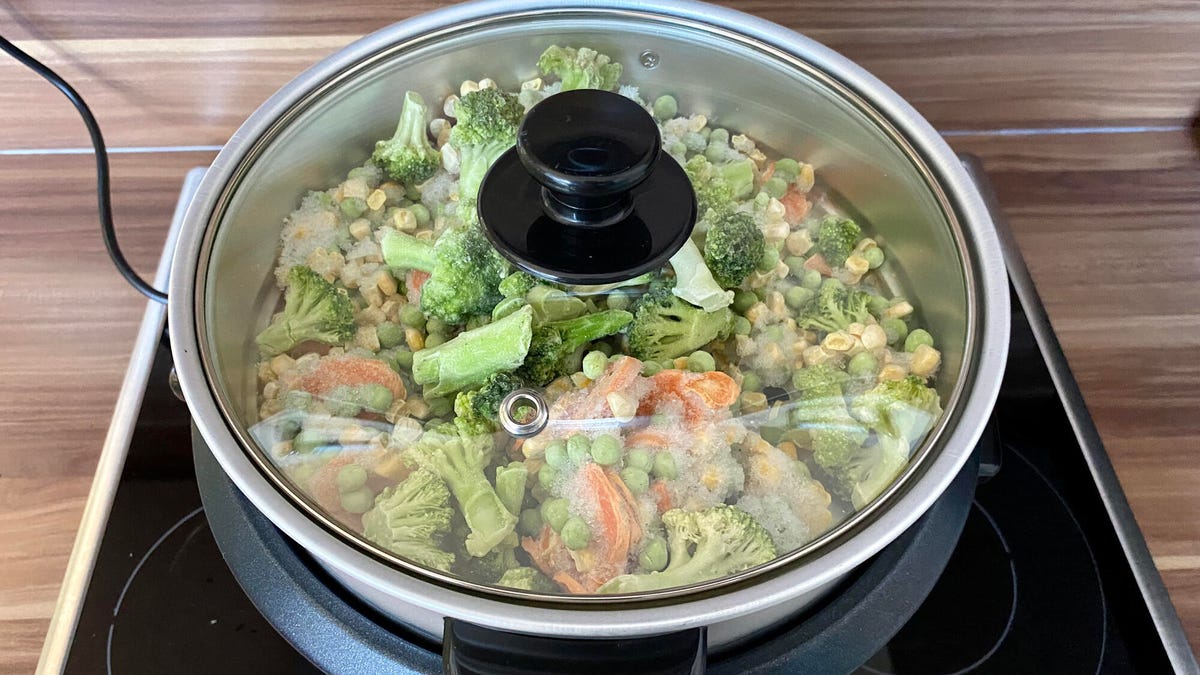
Among countertop appliances, few have such a singular purpose built right into their name as the rice cooker. Easiest way to cook rice? A rice cooker, obviously. Unlike other handy countertop kitchen appliances such as air fryers, blenders and slow cookers, the rice cooker tells you not only what it does, but exactly what you should put in it.
But the name “rice cooker” doesn’t tell you everything you can put in it, however. From basic on/off rice cookers to multi-function, fuzzy logic models, rice cookers can indeed do a great deal more than just cook rice. From breakfast to dessert, the rice cooker can support a number of culinary projects and ambitions throughout the day that go way beyond rice.
I queried recipe developers and culinary pros for those preparations where they swear by the rice cooker. With their input, here are 12 ways to use a rice cooker that may surprise you.
1. Other grains
Oatmeal couldn’t be easier than when made in a rice cooker.
At its core, a rice cooker cooks rice by relying on a water-to-grain ratio and switching from cook to warm mode once the water has been fully absorbed. To that end, any grain that relies on this method can also be made in the rice cooker, such as quinoa, barley and farro, to name just a few.
Oatmeal is also a grain whose prep can be relegated to the rice cooker, making for a fuss-free breakfast. “A rice cooker is my favorite way to make steel-cut oats because it maintains steady heat and requires zero stirring, which prevents scorching,” says Shawna Clark, founder of Healthy Foodie Girl. “I recommend lightly spraying the insert with oil and using the porridge or brown rice setting if available,” she says, “since oats foam more than rice and benefit from slower cooking.” In that vein, the rice cooker can even be used for a warm overnight oats breakfast, a marked improvement on overnight oats made in the fridge.
2. Savory oats
As a variation on the grain theme, with a little light sautéing that can also be done directly in the rice cooker, savory oats also make for a good rice cooker project. “I’m a savory breakfast gal at heart and this is one of my top three breakfasts,” says Farwin Simaak, recipe developer at Love and Other Spices.
If your rice cooker has a sear/sauté function, this is made easier, but even in a conventional rice cooker, you can get onion going for a few minutes for this savory preparation. “Sauté your onion and optional garlic in butter,” says Simaak, “and use old-fashioned rolled oats, and broth instead of water for flavor.” Once the water has been absorbed and the savory oats are cooked, “serve with poached eggs, a drizzle of chili oil and a sprinkle of chopped green onions,” she says.
3. Egg custard/frittata
Rice cookers can easily handle an egg frittata.
Unlike the air fryer, which requires a pan within the cooking chamber, your rice cooker insert is already a pan for liquid ingredients. “I use my rice cooker to set egg custards,” says Ed McCormick, founder of Cape Crystal Brands. “Not scrambled eggs, but smooth, sliceable preparations.” Egg custards can be sweet or savory in nature. The latter are especially ideal for producing even shapes to add to breakfast sandwiches.
“The rice cooker heat is steady,” says McCormick. “That’s the main thing — nothing spikes, nothing scorches. I’ve ruined enough custards on the stove to notice the difference.” With cheese, veggies and/or meat, your egg custard becomes a frittata. You can use a separate pan in the rice cooker, especially if you’re aiming for a smaller portion. If you’re cooking directly in the insert, be sure to spray the pan with cooking spray or grease it with butter or oil. And for best custard-setting results, “leave the lid alone,” McCormick advises. “Opening it early is where things go wrong.”
4. Garlic confit
There is virtually no end to the culinary uses for punchy garlic confit.
Confit is a fancy term for food that has been cooked slowly in its own fat. Duck confit may be the banner item for such a preparation, and while you could probably do it in the rice cooker with enough patience, an everyday preparation that’s rice cooker gold is garlic confit.
“I use my rice cooker to make confit garlic,” says Kyle Taylor, founder of He Cooks. “It’s handy because it holds a gentle, steady heat without me babysitting a pot.” For best results, he recommends keeping the garlic fully submerged in oil, and only using the warm setting if your cooker runs hot.
Transforming firm cloves of garlic into something deeply aromatic and spreadable, without the effort of mincing, will likely have you using your rice cooker for this purpose regularly. “You can basically use garlic confit in any application you would otherwise use garlic,” says Taylor. “It offers a more mellow, sweet, and complex flavor,” and he recommends using the finished confit in aioli, sauces, vinaigrettes, or just spreading it directly on toast.
5. Boiled eggs
Speaking of eggs, I have previously championed using an air fryer for easy boiled eggs. If the thought of “boiling” eggs without water makes you uneasy, consider using a rice cooker for this purpose. “A rice cooker is basically just a pot with a lid,” says Lindsey Chastain, founder of The Waddle and Cluck, which makes it ideal for low-lift preparations like boiled eggs.
The rice cooker’s gentle heat is especially good for soft-boiled eggs. “The eggs work better if you use the steam basket in the rice cooker,” she says, if your model includes one, “but you can also just pop them in water.”
6. Dumplings
Your rice cooker doubles as a steamer for making easy dumplings while your rice or grains cook below.
If it weren’t called a rice cooker, it could also be accurately referred to as a slow cooker or even a steamer, making it ideal for dumplings.
“Dumplings — particularly soup dumplings — are another favorite in a rice cooker since it functions similarly to a steamer, with moist, even heat,” says kitchen appliance specialist Kate Vine of Dinners Done Quick. “They steam really well, and you can add veggies in, too, if you want a full meal,” she says. “Space the dumplings out, add at least 1/2 cup water to the basin, and if you want brown bottoms, add a little oil after the water is fully cooked out and let them sit for 2 to 3 minutes to brown.”
Asian cookbook author Patricia Tanumihardja also recommends the rice cooker for a next-level, singular dumpling. “I tried making the viral, one-pot dumpling known as Asian lasagna in my rice cooker and it turned out perfect,” she says. “No fiddling with a steamer or a bain marie in the oven. Love it!”
7. Queso/fondue
A rice cooker is essentially a small slow cooker, making it the perfect vessel to keep a cheese dip warm and melty.
You can also put your rice cooker to use when hosting with this genius hack. “A rice cooker is my favorite way to keep queso or cheese dip warm and perfectly smooth,” says Emmy Clinton of Entirely Emmy. “The consistent gentle heat and ‘warm’ setting keep the cheese from hardening or separating, keeping the texture perfect all night,” she says. Keep your queso or fondue only on warm, and stir every so often to keep the heat evenly distributed. “You can also add small amounts of cream, milk or Greek yogurt” if the dip starts to thicken, says Clinton.
8. Soups, stews and curries
Many rice cookers come equipped with slow-cook functions or timers that let you set and forget for a long time, making them ideal for simmered preparations like soups, stews and curries, or for reheating these dishes in a gentle, even way. (More basic rice cooker models may be able to handle the workload for these, but will likely require more babysitting or more time.) Many of the experts I queried pointed to various preparations.
“I also make rendang (Indonesian beef curry) in the rice cooker,” says Tanumihardja. “It doesn’t dry out as much as it does when cooked on the stove, but I like my rendang saucy anyway,” she says. “It’s great because it’s mostly hands-off, and there’s no danger of it burning. Every time the button pops, you’ll be reminded to stir the dish.”
“The rice cooker is my favorite place to make French onion soup,” adds Chastain. “Just add the cheese for the last few minutes and it turns out perfectly.”
9. One-pot meals
With some careful layering and strategizing, your rice cooker can also be used for entire one-pot meals, especially those with a rice base.
“I’ve also made full meals in the rice cooker such as Hainanese chicken and rice and black bean spareribs,” says Herman Chan of Herman at Home. “All you do is wash the rice, add liquid, seasonings and protein on top of the rice, then turn on the rice cooker,” he says. “Once the rice cooker is done, you have perfectly cooked rice and protein ready to eat.”
You can experiment with what you add to the rice for complete dinners. “I will mix uncooked rice with meat, aromatics and seasonings in the pot and cook it as usual,” says Tanumihardja. “I will either steam vegetables on top of the rice mixture in a steamer basket,” she says, “or add it in toward the end of the cooking time.”
10. Dessert
My rice cooker basque-style cheesecake was tasty.
Steamed or simmered desserts in a variety of styles are also potential fodder for your rice cooker. “Personally, I’ve made the Asian dessert taro sago in the rice cooker,” says Chan, referring to the dessert soup that contains taro, tapioca and coconut milk. “It simmers the dessert until it reaches the perfect consistency,” he says. As noted in the “egg custards” heading above, dessert custards and bread puddings are also well represented in the canon of rice-cooker recipes.
11. Cake
Yes, even cake can be made in a rice cooker, especially Japanese-style fluffy sponge cakes. “In Asian culinary culture, we often steam our cakes instead of baking them in an oven,” says Tanumihardja. “I discovered that I can basically steam my cakes in the rice cooker instead,” she says. “It requires less setup time, fewer dishes to wash, and it’s hands-off. I just push the cook button and I can go off and do other things.”
Note that for rice cooker cake, including cheesecake, you need to use a recipe that is appropriate for your size of rice cooker. Cake flour is also important here, and if you have a basic model without a timer, steam or cake function, it may take a lot of waiting and restarting the rice cooker once it automatically switches to “warm” mode.
12. Chocolate fondue
And as the final “ta-da” on unique rice cooker uses, “Chocolate fondue is one of my favorite unexpected ways to use a rice cooker,” says Clinton. “It gives gentle and steady heat that melts the chocolate evenly without burning it,” without the need to babysit a double boiler.
“My trick is to use the cook setting briefly to melt the chocolate, then switch your rice cooker to the warm setting once the chocolate is completely melted,” she adds. “Be sure to keep an eye on it, and stir frequently while it’s melting.” Once it’s finished, you can stir in coconut oil, cream or heavy cream to achieve a perfectly fluid texture.
Read the full article here