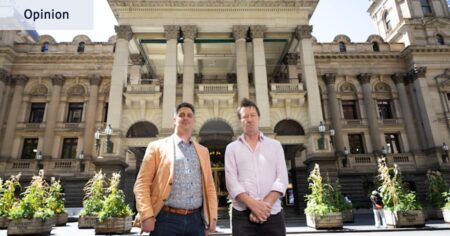





She said police should consider charging those responsible: “A slap on the wrist won’t cut it.
“Not a week goes by that we’re not getting headlines like this. It’s always women that are being targeted in this way,” McLean said.
Loading
“The level of disrespect to young women is appalling.”
A 15-year-old student from Catholic boys’ school Salesian College, in Chadstone, was expelled last week for producing deepfake, explicit images of a teacher at the school, using AI, the Herald Sun reported.
A deepfake is an image or video in which a person’s face or body has been digitally altered to make it appear they are somebody else, or they are doing or saying something that never actually happened.
Creating them of fellow students is considered a new form of bullying, and was first noted to be happening in Australia last year. In October, the national eSafety office warned schools to overhaul their safety policies after the phenomenon arrived in Australian schools from the US.
eSafety Commissioner Julie Inman-Grant warned that the first reported cases were “just the tip of the iceberg”.
In a statement issued on Tuesday, Bacchus Marsh Grammar said video content that includes images of students from the school had been produced and circulated, and the school takes the matter very seriously.
“The wellbeing of Bacchus Marsh Grammar students and their families is of paramount importance to the school and is being addressed.”
Richardson told this masthead the school was offering support to girls and their families, and that should Bacchus Marsh Grammar students be discovered as the source of the images, appropriate action would be taken.
Loading
Susan McLean said the parents of young people creating deep fake explicit images had to take responsibility for their children’s actions.
“You have a responsibility for making sure your child isn’t inflicting harm on anyone else,” she said.
Sharing digitally altered deepfake pornographic images could attract a jail term of up to six years, or seven years for those who also created them, under new laws announced by federal Attorney-General Mark Dreyfus this month.
Dreyfus said at the time that digitally created and altered sexually explicit material was a deeply distressing form of abuse, particularly against women and girls.
McLean said that such serious consequences should be considered for those who created the fake nude images of the Bacchus Marsh girls, saying “sharing child abuse images can be a jailable offence”.
Get the day’s breaking news, entertainment ideas and a long read to enjoy. Sign up to receive our Evening Edition newsletter here.
Read the full article here