



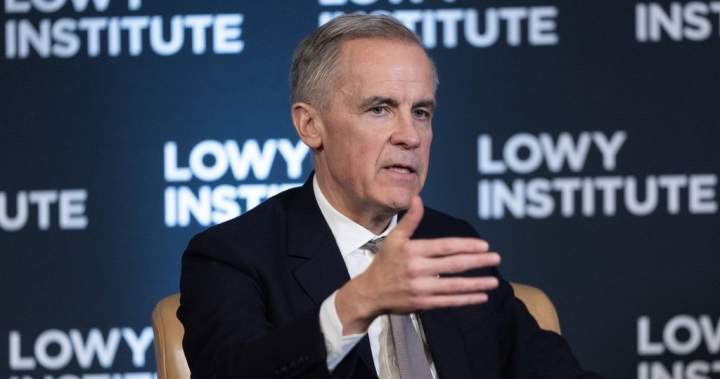
If you want to understand Prime Minister Mark Carney’s approach to foreign policy, meet the chartered professional accountant he put in charge of it.
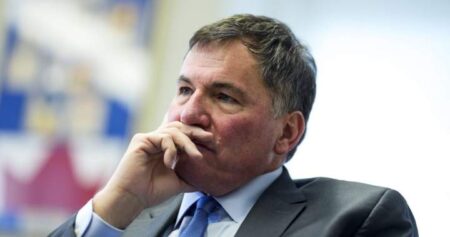
Arun Thangaraj, formerly the deputy minister of Transport Canada, was appointed to the top bureaucratic role at Global Affairs Canada on Wednesday morning.
Thangaraj’s previous stint at the department was as its chief financial officer, and his foreign policy experience also includes a time as deputy chief financial officer at the Canadian International Development Agency.
The shuffle is another data point in what we can reasonably, by now, call Carney’s foreign policy — one driven by transactional relationships, that prioritizes economic growth, and stands up for Canadian “values” only when feasible.
That might be what Carney was talking about at Davos in January, when he said Canada would deal with “the world as it is,” not as “we wish it to be.”
Canadian foreign policy over the last year and a half has been driven, inescapably, by Donald Trump’s dissolution of the U.S. as a superpower that guaranteed stability and security for its allies. Trump’s trade war has forced Canada to seek out new deals with other major economies. The alternative is economic “subordination” to an increasingly chaotic and lawless regime, Carney suggested in his much-celebrated speech.
That’s obliged Carney to try and smooth over differences with China — which just last year he called the greatest national security threat to Canada — and India, whose government Carney’s predecessor alleged was connected to the assassination of a Canadian Sikh leader in British Columbia.
Carney’s pragmatism also extends to the Trump regime, agreeing with the U.S. administration when there is little direct cost to Canada for doing so — as evidenced by the government’s initial full-throated support of Trump’s bombing campaign in Iran.

Get daily National news
Get the day’s top news, political, economic, and current affairs headlines, delivered to your inbox once a day.
That support has since been walked back to bring Canada’s position more in line with the international community, but it’s not exactly a “Chretien staying out of Iraq” moment.
“It is a foreign policy based on short memory,” said Stephen Saideman, the chair of international affairs at the Norman Paterson School at Carleton University, of Carney’s approach.
“We’re not going to care what countries did to us in the near past … We won’t let foreign interference in our elections affect our foreign policy; foreign policy will be based on lessening our dependence on the United States. That’s the most central focus at this point in time, dealing with the Trump problem. And that means forgetting our grievances with India and China.”
Saideman cautioned against constructing a unified theory of Carney’s foreign policy — a “Carney Doctrine,” as Global Affairs Minister Anita Anand called it earlier this week. Instead, he views the moves as discrete and opportunistic. Or “pragmatic,” as Carney might himself say.
“If you’re being opportunistic and transactional, there may not be a pattern besides being opportunistic and transactional,” Saideman said.
Carney’s overtures have seen success, thawing relations with Beijing in January and striking new deals with India’s Narendra Modi last week.
And if the prime minister is paying any price for abandoning a “values-based” foreign policy, it’s not apparent from recent public polling. For months, Carney has enjoyed a strong advantage over Pierre Poilievre’s Conservatives, who have struggled to find an effective strategy to differentiate themselves from a suddenly more centre-right sounding Liberal party.
Recent polling by Abacus Data shows a relatively optimistic view among voters on Canada’s direction, with 42 per cent saying the country is on the right track, compared to just 17 per cent who believe the world is heading in the right direction.
Roland Paris, the director of the Graduate School of Public and International Affairs at the University of Ottawa, agreed that Trump’s chaotic reshaping of the world order has given Carney the latitude to pursue new relationships that may have given the Canadian public pause in the past.
“He has been single-mindedly been seeking to diversify Canada’s trade, to deepen partnerships, to build new ones. He’s changed the relationship with China, he’s changed the relationship with India,” Paris said in an interview.
“I would say that there is something quite distinct (about Carney’s foreign policy), and it is just his single-minded focus on strengthening the Canadian economy and reducing dependence on the United States.”
A decade ago, Stephane Dion — Justin Trudeau’s first foreign affairs minister — outlined a philosophy he called “responsible conviction” as a guiding principle of the new Liberal government’s foreign policy. It basically boiled down to yes, Canada has convictions and values, but it is also responsible for its actions and its words. And sometimes that means making decisions that grate against those values.
It was a poetic way of explaining a more prosaic issue of why the Liberal government would go ahead with a $15 billion deal to sell light-armoured vehicles to Saudi Arabia, signed by the previous Conservative government.
It also appeared like an attempt to solve a fundamentally Canadian foreign policy question: how to claim the moral high ground without making the sacrifices required to hold it.
In retrospect, 2016 seems like a much simpler time — when Canada could take for granted that the U.S. would be there as a world power to guarantee our security and promote trade; and Ottawa could still participate in what Carney called the “fiction” of a rules-based world order.
In 2026, Carney appears to have licence to deal with “the world as it is” — or at least how he sees it.
“There’s nothing like the potential of losing something valuable that you’ve taken for granted to sharpen the mind. And I think that that’s what happened with the Canadian public and political class,” Paris said.
© 2026 Global News, a division of Corus Entertainment Inc.
Read the full article here