



As U.S. forces press deeper into Iran with no end in sight, the economic shockwaves are already hitting American farmers, with some unable to even buy fertilizer at any price.
The war zone sits at the crossroads of the world’s fertilizer supply. Since the United States and Israel launched strikes on Iran a week ago, maritime traffic through the Strait of Hormuz has ground to a near standstill. The waterway moves roughly 20 percent of the world’s daily oil and a quarter of its nitrogen fertilizer.
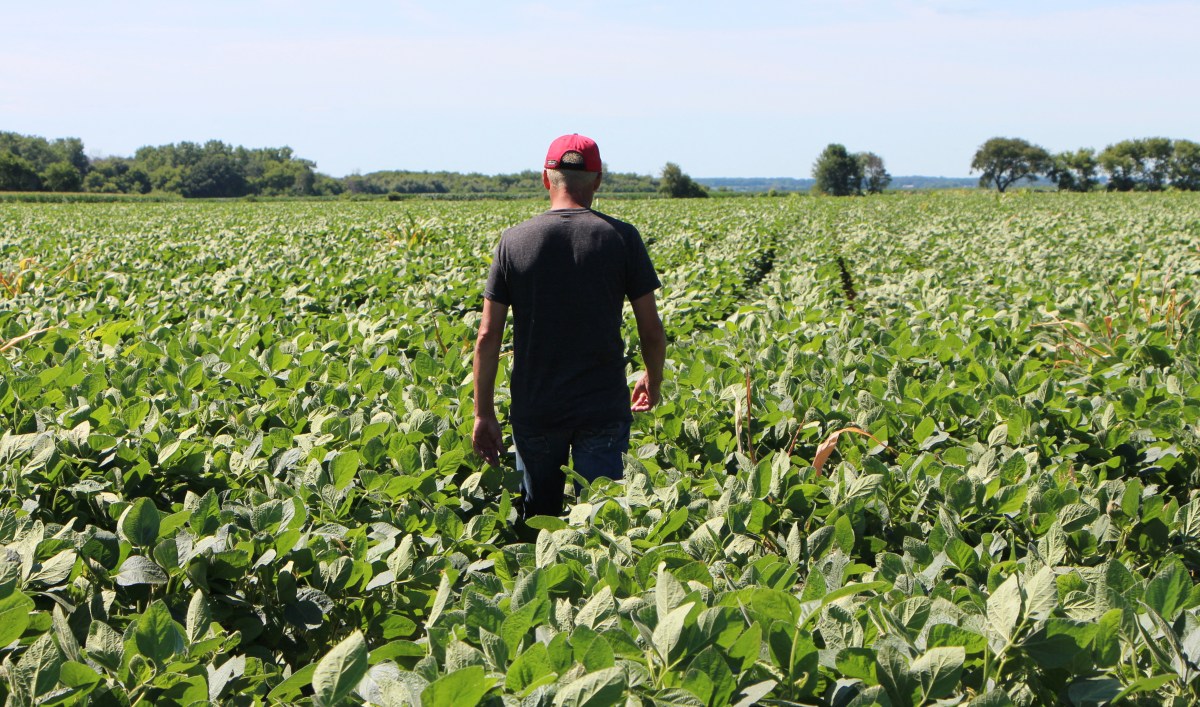
Chet Edinger, a corn and soybean farmer from Mitchell, South Dakota, saw it coming. As soon as the news broke, he rushed to lock in one last load of urea, the most widely used nitrogen fertilizer, the morning the strikes began. He paid 22 percent more than he had late last year, the highest price he had ever seen.
Days later, the market froze entirely.
“You can’t even buy it right now if you wanted to,” he told Newsweek. “Because all the supplies are tied up with their existing customers.”
The Fertilizer Cliff
Josh Linville has watched fertilizer markets for decades. The vice president of fertilizer at commodities brokerage StoneX said what is happening now is unlike anything he has seen.
Urea barge prices at the Port of New Orleans jumped from $475 per ton the week before the strikes to $683 by March 6. Iran controls 10 to 12 percent of global urea exports. Qatar, which accounts for roughly 11 percent of global supply, shut down liquefied natural gas production after an Iranian drone struck its Ras Laffan facility. Natural gas is the essential feedstock for nitrogen fertilizer.
There is no country waiting in the wings to fill the gap.
“Between the Middle East, European low production rates, and the lack of Chinese exports until August, global supplies of urea are in trouble,” Linville told Newsweek. “Big trouble.”
The price, he said, will keep climbing until farmers stop buying. “The only part of the equation that can be changed is demand, and the best way to do that is to push the price until it breaks.”
His team has already revised its U.S. corn acreage projection down to 93 million acres from a pre-war estimate of 95 million.
The fertilizer shock is not arriving alone. Diesel has surged to a national average of $4.60 a gallon since the conflict began, up 83 cents in a single week.
John Boyd, founder of the National Black Farmers Association, filled up his tractor Monday morning and paid $4.69 a gallon.
“You’re looking at $469 every time I fill up,” he told Newsweek. “And that’s a lot of money to a farmer who hasn’t paid last year’s seed bill.”
Boyd is carrying an $80,000 seed bill of his own. His organization currently has 170 pending farm foreclosures among its members. The war, he said, is landing on top of years of damage the administration has already done.
“In soybeans alone, we lost $54 billion from the president’s tariffs,” he said. “What they’re proposing with a $12 billion relief package is a drop in the bucket.”
Edinger said the same compounding effect is playing out in his fields. Chemistries made in China, fertilizers sourced overseas— all of it got more expensive under the tariffs. The war pushed it further.
“Now with the war going on, they’re even higher,” he said. “This is kind of like adding insult to injury on top of the tariffs.”
A Crisis Built Over Years
Tariffs. Economic uncertainty. And now war. For many farmers, the Iran conflict is not a shock so much as the latest entry in a long list of crises they did not choose over the past 15 months.
Farmers had already grown critical of the administration over a deal that quadrupled Argentine beef imports, undercutting domestic producers at a time when the U.S. cattle herd sat at a 75-year low. Farm bankruptcies filed under Chapter 12 are up 46 percent compared to 2024.
Dan Osborn, an independent Nebraska Senate candidate who has spent months talking to farmers across the state, said the rot set in long before the first strike on Iran. He recently spoke with a soybean farmer who told him the administration’s $12 billion relief package would cover seed, chemicals, and fuel for next year, but nothing for the losses already suffered this year.
“A lot of our farmers are just out,” Osborn told Newsweek. “And now, with the increasing prices of fertilizer and fuel, that bailout is going to fall even more short.”
Osborn said the more serious threat is what comes after the bankruptcies. As small farmers go under, corporate operations absorb their land. The people who live on that land, drink its water, and have a stake in keeping it clean are replaced by investors focused on quarterly returns.
“This is going to turn into a crisis pretty quickly,” he said. “Two percent of our population feeds the rest of us. And the consolidation of our agriculture industries is a huge problem.”
A USDA spokesperson told Newsweek that the administration has already provided $12 billion in one-time Farmer Bridge Assistance payments to help farmers cope with market disruptions, high input costs, and lingering effects from past trade policies.
“This program is designed to give producers flexibility in how they use the funds,” the spokesperson said, noting it comes on top of more than $30 billion in aid provided since January 2025. They added that years of high fertilizer prices—even before the current conflict—have highlighted the need for a more competitive marketplace, with new suppliers helping both farmers and the U.S. economy.
“Important to note that years of high prices—long preceding the current conflict—have sent clear economic signals that American farmers need options. New entrants make the fertilizer marketplace more competitive, farmers more competitive, and the U.S. more competitive,” the spokesperson said.
The Bill Comes Due
The pain does not stop at the farm gate. Every pound of beef that moves from a ranch to a feedlot, from a feedlot to a packing plant, from a packing plant to a grocery store, travels on diesel.
Derrell Peel, an agricultural economist at Oklahoma State University, said the cattle industry is feeling the uncertainty more than the reality right now. Futures markets for feeder and live cattle dropped sharply this week. Packing plants, already losing money for two years, face even tighter margins.
“The uncertainty is probably the biggest impact in the short run,” Peel told Newsweek. “If this looks more permanent or long-lived, then there will be some more permanent adjustments.”
Andrew Griffith, an agricultural economist at the University of Tennessee, said higher fertilizer prices will show up first in hay production, as ranchers apply less nitrogen to pastures and fields.
“Failure to produce an adequate quantity of hay could have longer-term repercussions,” he told Newsweek. “It will be more associated with the cost of moving meat and poultry products.”
Boyd, the National Black Farmers Association founder, said consumers should not expect to be insulated for long.
“The American consumer may not see the price hike tomorrow,” he said. “But they’re going to feel the pinch in the coming months. Corn, wheat, and soybeans touch just about every canned good in a supermarket.”
Some farmers like Chet Edinger agree and warn that freight costs will push grocery prices up within 30 days. The bigger wave, he says, tied to this season’s crops, will take roughly nine months to reach store shelves. His deeper fear is what comes after that. Fertilizer for next year’s crop starts moving in July. If the Strait of Hormuz remains choked, the fall could be worse than anything farmers are seeing now.
“If this becomes a forever war, like our government is known to do,” he said, “this will greatly affect next year’s prices.”
Read the full article here