




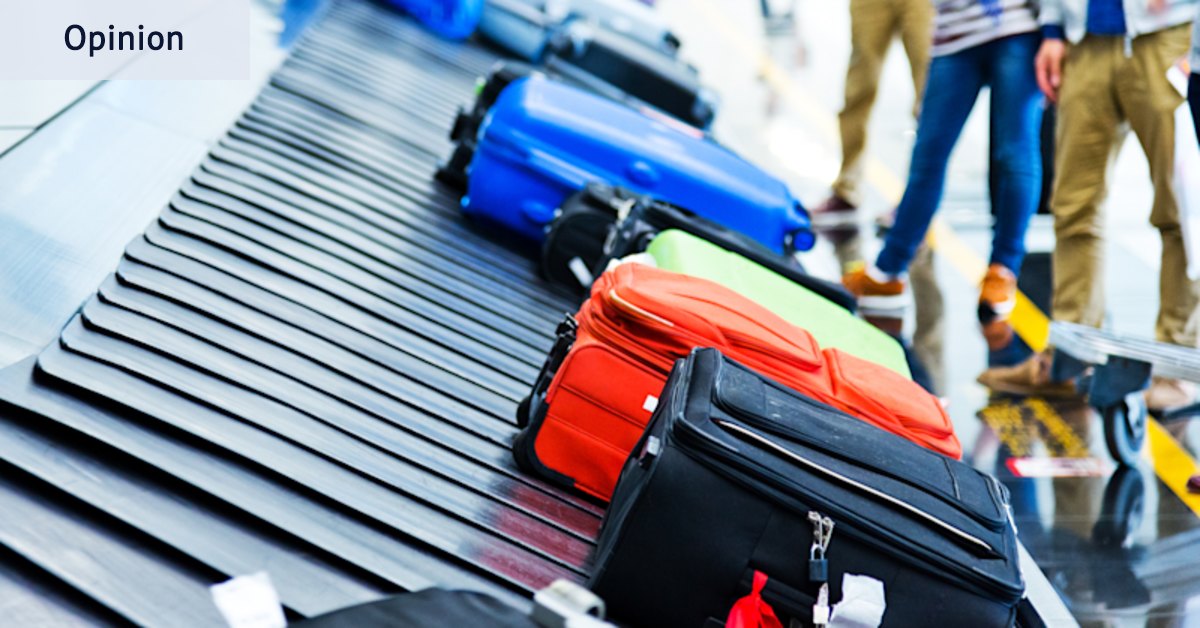
This month I flew to Paris, and found myself intensely annoyed by other passengers at Charles de Gaulle Airport. I got off my long-haul flight, bleary-eyed and jet-lagged and followed the crowd to the baggage claim. I stood a distance back from the belt to allow others to also see their luggage – only to have someone come and stand directly in front of me. I moved, but the same thing happened. People crowded the belt, standing right up against it, meaning no one else could see the bags coming. I was perplexed, and let’s be honest, irritated.
It’s one of a list of things I notice on my frequent trips to Paris for study – people aren’t fussed about lining up in order or pushing in, giving way to other pedestrians, saying thank you for small services in shops or on public transport. I don’t think it’s rudeness, because no one else is bothered by it. They have a different set of cultural behaviours, and undoubtedly I’m accidentally causing many a faux pas by not knowing what they are.
I took to social media to ask if my perception of some common behaviours are actually Australian norms, as opposed to my own preferences – Aussies flocked to the comments to confirm. Australians are very polite; we like to line up, we have a strong sense of fairness, we try and minimise our impact on others in public, and we are quick to help people even if they’re strangers.
Combine these traits with the weird anachronisms of our cultures (fairy bread? The Nutbush dance? Saying “hip hip hooray” after the Happy Birthday song?), and it’s clear to me that regardless of our uncertainty about our collective culture, I’ve been absorbing an Australian identity my whole life.
Looking deeper, I’ve found a whole list of little unspoken Aussie rules that most of us follow without a second thought, but which may seem odd to others. Sam Ford, a Brit living here, used his outsider status to compile a bunch of these modern Australian characteristics, including several I don’t consciously think about, but which I do automatically, like greeting shop staff, or not standing too close to other people (not just at baggage claim!). I also think we make a point of not being loud on public transport, or when on the phone in public, and we greet dogs/call them cute when out and about (I tried this in Paris, it caused a lot of confusion).
Like many in my generation, feeling a strong sense of patriotism doesn’t come naturally. I love being Australian, and am very aware of how different my life would have been had my parents not migrated here from Fiji in the ’90s. But for most of my childhood, I felt like I couldn’t lay claim to the Australian identity, because of the anti-immigration rhetoric that has persisted for decades. I have vivid memories of being alarmed as a child by images of Pauline Hanson on the news, telling immigrants like my family to “go back to where we came from”. Given I was a toddler when we arrived, I had no memory of actually living anywhere else – and as a condition of gaining our Australian citizenship, we renounced our citizenship to Fiji, so we really had nowhere to return to.
Add to this the appropriation of the Australian flag by far-right groups to back up their racist and anti-immigrant ideologies, and the contention around changing the date of Australia Day despite the ongoing pleas from First Nations Australians, it’s easy to see why being patriotic can sometimes feel more complicated than just loving our country.
That is, until I go anywhere overseas. There’s nothing like being in a foreign country to realise how many of your habits, expectations, and ideas about how to behave in public spaces have been shaped by your own country.
In the lead up to Australia Day, as we reckon with the important question of how we celebrate Australian identity while recognising and addressing the foundation of this country off the genocide of First Nations people, I think there’s value in remembering that Australian identity is about more than symbolic days of celebration, and comes down to the values that we share. These values are embedded in our behaviours and norms, how we treat each other and expect to be treated.
Returning to Australia via Brisbane Airport, I immediately felt a rush of affection when I heard other Aussie accents. I arrived at the baggage claim, and had to smile to myself – everyone was standing back from the carousel as if an imaginary boundary had been drawn. People moved out of each other’s way, and helped grab bags for other passengers. I know there will always be outliers, and rude Australians do exist – but it felt like a validation of my sense of Australianness (or lack of it back in France).
Sometimes it’s the little things that make you feel most grateful to be home.
Zoya Patel is an author and freelance writer from Canberra.
The Opinion newsletter is a weekly wrap of views that will challenge, champion and inform your own. Sign up here.
 Zoya Patel is an author and freelance writer from Canberra.
From our partners
Read the full article here