



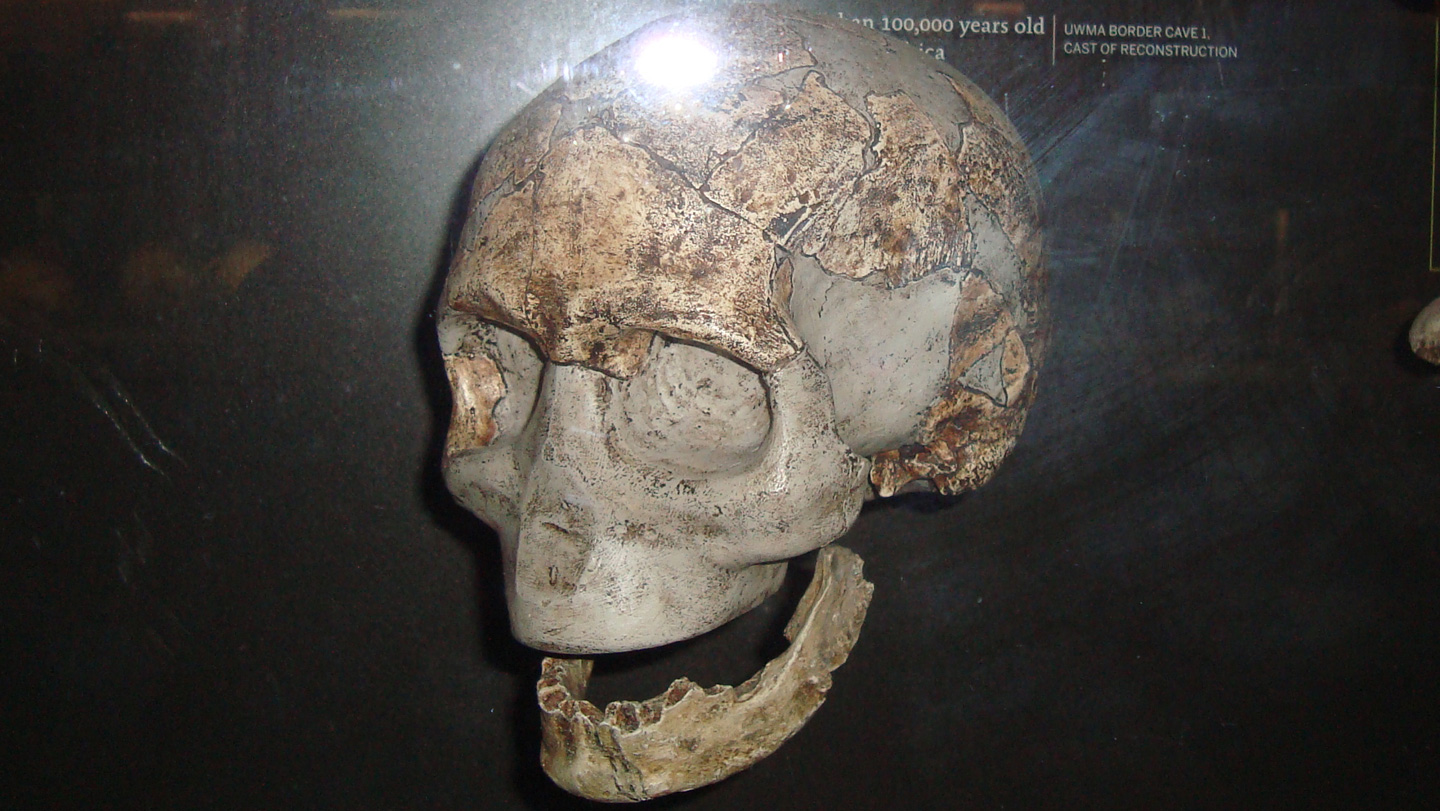
Important, previously unrecognized genetic changes common to all ancient and modern Homo sapiens spread in Africa more than 300,000 years ago, a new study finds.
After that, the same investigation concludes, human evolution experienced a regional twist. Ancient southern Africans evolved an impressive array of genetic tweaks largely independently of humans in other parts of the continent. That process occurred from around 300,000 years ago until the last few millennia, researchers report December 3 in Nature.
“We find evidence of very long-term isolation of southern Africa’s prehistoric population, which points to that region’s importance for the evolution of Homo sapiens,” says evolutionary geneticist Mattias Jakobsson of Uppsala University in Sweden.
Earlier evolutionary reconstructions, based on probes of present-day human DNA, missed the vast amount of genetic variation that existed in ancient southern Africans, say Jakobsson and colleagues. Lacking that knowledge, researchers could not see how human genetic unity set the stage for southern Africans to evolve their own range of DNA modifications, the scientists say. That range is extensive. Southern Africans who lived more than 1,400 years ago possess DNA variation greater than that of people today, the study finds.
Jakobsson’s team analyzed DNA from the previously excavated or preserved bones and teeth of 28 individuals who lived in what’s now South Africa and neighboring nations between 10,200 and 150 years ago. The researchers compared those findings with DNA from three other ancient Africans who lived elsewhere on the continent as early as 7,900 years ago. DNA comparisons also included four ancient Europeans, dating to between 7,000 and 44,400 years ago, three Neandertals, one Denisovan, 12 present-day San hunter-gatherers — Indigenous peoples in southern Africa — and 208 present-day people from other parts of the world.
Many ancient southern African gene variants do not appear in the DNA of ancient H. sapiens elsewhere in Africa or in people today, including southern Africa’s San people, the researchers say.
Three gene variants peculiar to ancient southern Africans are associated with ultraviolet light protection, skin diseases and skin pigmentation. Life in arid grasslands with little protection against sunlight may have prompted those DNA alterations, Jakobsson suggests.
Gene variants that evolved among all H. sapiens, but not Neandertals or Denisovans, before around 300,000 years ago surprisingly included many that affect kidney function. Kidney-related genes have not typically been viewed as central to human evolution. Those genes help the body to retain water in dry environments, the researchers suspect. Other human-specific gene variants influenced brain development and immune responses.
Human genetic evolution that included geographically separated populations contrasts with a recent proposal that H. sapiens evolved as a result of mating among mobile populations that were based in different African regions and habitats.
Archaeologist Eleanor Scerri of the Max Planck Institute of Geoanthropology in Jena, Germany, has championed the latter view. Jakobsson’s study provides valuable insights into genetic evolution restricted to ancient southern Africans, Scerri says. But the deeper story of how human evolution played out in Africa remains unclear, she contends. “There is still a lot we don’t know about human evolutionary histories in regions covering vast tracts of Africa.”
Read the full article here