


The iPhone Air is one of the rare phones that I keep coming back to, no matter how many devices I use as part of my job. I want it to be my primary phone but it can’t because I’m torn about it.
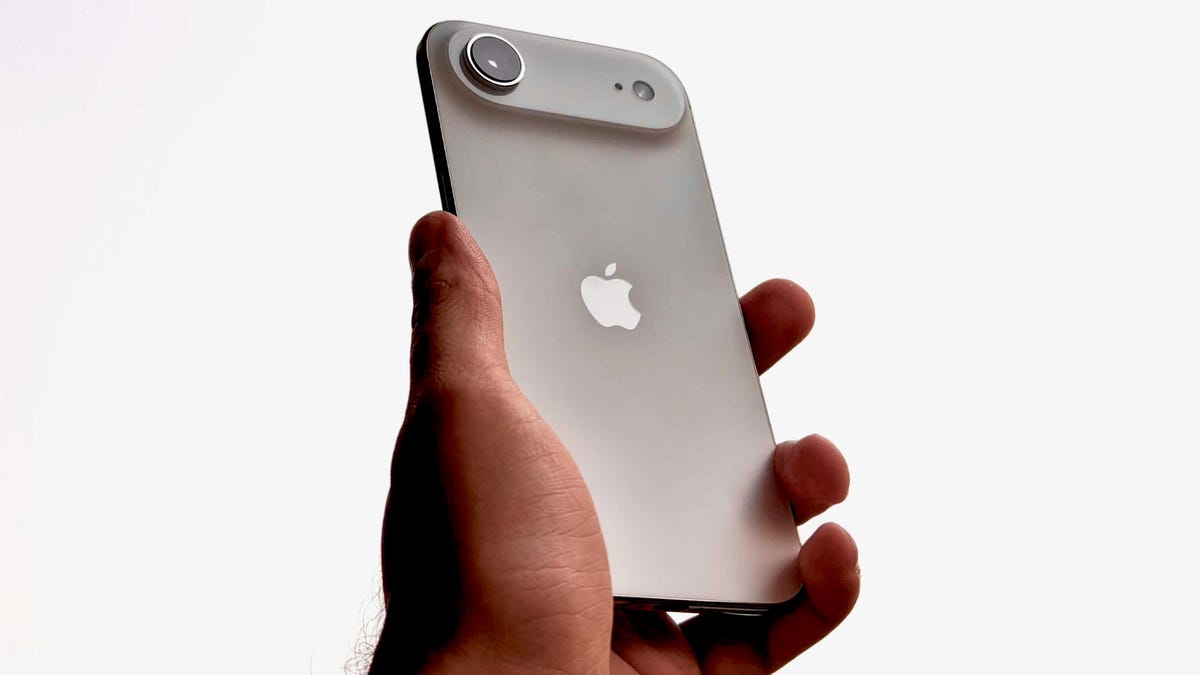
When I switched to the iPhone Air full-time last month, I braced myself for the compromises it makes, like the single rear camera and average battery life. However, in my two weeks of testing, it fared better than expected. I missed having a telephoto camera but the 48-megapixel main shooter is good enough for regular photos and even the occasional zoom.
Using the Air made me realize that I didn’t need a versatile triple-camera setup and that I far preferred having a big-screen phone without the big phone bulk. This was a shocking revelation for me. Thin phones like the Air will suit people who need something other than a standard, more affordable phone (think the iPhone 17) or a “have your cake and eat it” do-everything pro phone (think the iPhone 17 Pro Max).
Don’t get me wrong, I love shooting photos using the 48-megapixel, 4x telephoto camera on my iPhone 17 Pro Max. But I’m tired of using phones that give me wrist fatigue due to their weight. The iPhone Air weighs 165 grams compared to the iPhone 17 Pro Max which clocks in a wrist-aching 233g. Thin phones like the iPhone Air and Galaxy S25 Edge are a refreshing experience to use because they’re light and thin, but also having a large screen and a capable processor. I get the most useful parts of a heavier phone without the added bulk and weight.
But Apple’s all-new iPhone is not all roses. It’s a great day-to-day phone but comes with one key compromise that caught me off guard. And while CNET’s Abrar Al-Heeti made mention of it in her iPhone Air review, it’s one that generally takes a backseat to more obvious issues like the Air’s single rear camera or the $99 external battery pack accessory. The iPhone Air sounds terrible.
I sorely miss having stereo speakers on my iPhone Air
CNET’s Abrar Al-Heeti watching videos on her iPhone Air.
Apple’s iPhone Air has a single speaker, which doubles as its earpiece. It’s fine as an earpiece but doesn’t work that well as a speaker, at least not for me. It sounds tinny whether I’m listening to music, or talking on a speaker call with friends and family. I didn’t expect the Air to have such poor audio quality. But after a couple of weeks with it, I miss having a bottom-firing speaker so much.
I don’t watch movies and TV shows on my phone, and when I view Instagram Reels or YouTube Shorts, I tend to use earbuds. The problem arises when I am on video calls, which I prefer taking over a phone’s speakers — or in the case of the Air, speaker.
I live with my parents and at least once a day, I’m on a WhatsApp video call with my sister or young kids and toddlers in our extended family. My parents and I want to talk to them together, so using my earbuds isn’t an option. Instead, we just use one phone together.
But everything sounds muffled on the iPhone Air: From the excitement of my niece telling us about her day to the guilty laugh from my sister after I make a dad joke. I don’t like that moments like these are being restrained by a less-than-average phone speaker. I know this might just be me, but I use my phone’s speakers more than its cameras. So, the lack of stereo speakers on the iPhone Air has affected me more than its lack of tertiary cameras.
Compromising on the speakers is especially jarring when you consider how often Apple pushes its iPhone line as a way of using Apple Music and Apple TV Plus services — both of which are affected by the single speaker. And it’s not lost on me how ubiquitous FaceTime video calls are in the US.
I don’t want to give up on the iPhone Air
Apple’s iPhone Air complements the rest of its 2025 iPhone lineup well.
I love the iPhone Air for its lightweight design. I love having a 6.5-inch screen in an iPhone that weighs as much as the 2020 iPhone 12. The Air’s display size sits in the sweet spot — right between the baseline 6.3-inch iPhone 17 and the 6.9-inch iPhone 17 Pro Max.
The iPhone Air’s design also makes a big-screen phone accessible to people who want a 6.5-inch display in a lightweight design. It’s one of the rare phones that doesn’t compromise on processing prowess or display quality and is still able to weigh only 165 grams. For context, that’s 12 grams lighter than the standard iPhone 17 and 41 grams less than the iPhone 17 Pro. It’s even lighter than the more affordable yet less-powerful iPhone 16E (167 grams).
It would still be my daily phone, if only it had dedicated stereo speakers. Its battery life held up better than I expected, depending on my usage (moderate to intense). In fact, in CNET’s 45-minute battery endurance test, which includes streaming, scrolling through social media, joining a video call and playing games, the iPhone Air’s battery went from full to 95%, which is on par with other phones such as Oppo’s book-style foldable, the Find N5, the Google Pixel 9A and Motorola’s 2025 Razr Ultra. Overall, its battery life hasn’t bothered me as much as the lack of a second speaker.
Samsung proves that it is possible to have stereo speakers in a thin, lightweight body. The Galaxy S25 Edge has a stereo speaker setup (and there’s even an ultrawide camera as well). I hope Apple makes the next iPhone Air as versatile as the S25 Edge and that it doesn’t force iPhone owners to sacrifice basic features that they’re used to having on a $999 flagship phone. For now, I want to keep using the iPhone Air but I can’t.
Read the full article here