




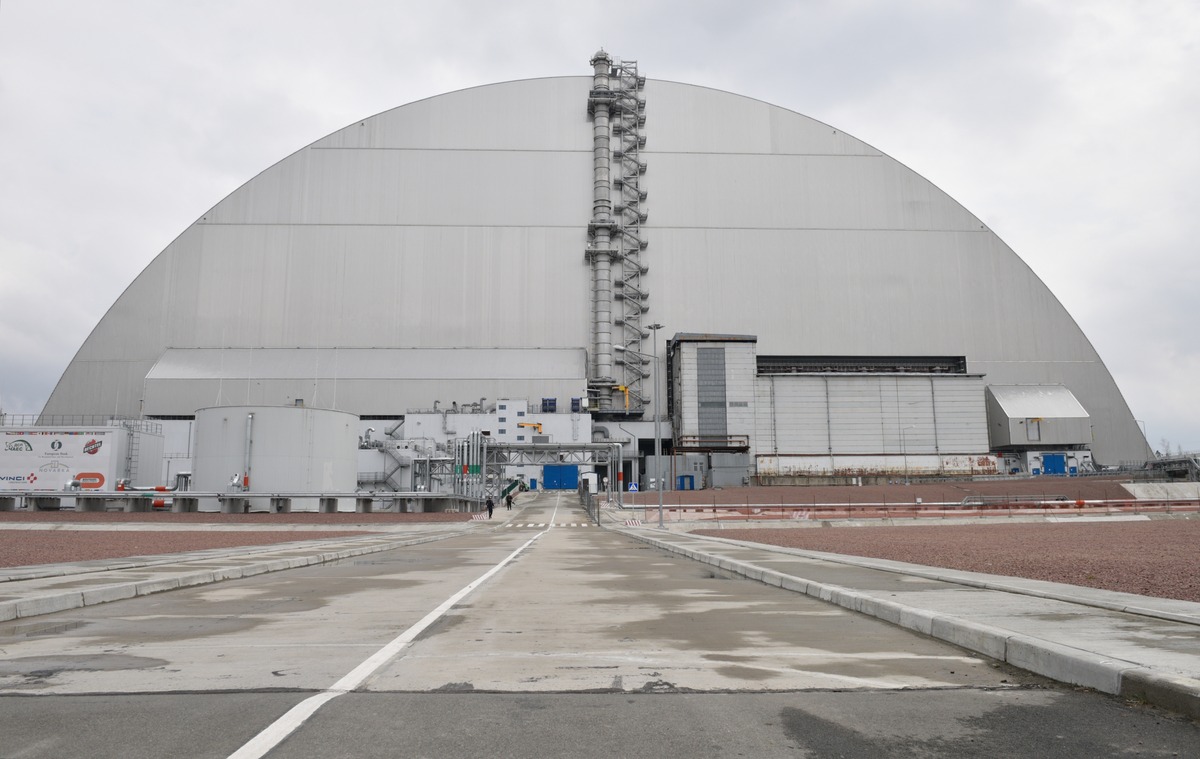
A shield covering the destroyed nuclear reactor at Chernobyl is no longer blocking radiation from the disaster site in Ukraine, the United Nations’ nuclear watchdog has said.
Why It Matters
Ukraine said in February a Russian drone had struck the protective shelter housing the nuclear reactor at Chernobyl, the site of the world’s worst nuclear disaster in 1986. A fire at the site was quickly extinguished, Ukrainian President Volodymyr Zelensky said at the time. Russia denied targeting the site.
An explosion in Reactor 4 at the nuclear power plant in the then-Soviet Union in April 1986 triggered what is widely considered the world’s worst nuclear disaster in history. At least 30 people died in the aftermath of the disaster, with millions more exposed to radiation.
What To Know
The February drone strike “severely damaged” the shield—called the New Safe Confinement (NSC)—which has “lost its primary safety functions, including the confinement capability,” the International Atomic Energy Agency (IAEA) said on Friday. Other parts of the structure, like monitoring systems, were unaffected, the watchdog said.
The NSC replaced the rapidly constructed Soviet-era sarcophagus that had covered the nuclear disaster site for decades. The NSC is taller than the Statue of Liberty and designed to last for a century.
“Limited temporary repairs have been carried out on the roof, but timely and comprehensive restoration remains essential to prevent further degradation and ensure long-term nuclear safety,” IAEA chief Rafael Grossi said in a statement.
The watchdog said the drone attack had caused a “major fire” in the outer cladding.
The watchdog also said its experts were traveling across Ukraine from early to mid-December to check on more than 10 electrical substations vital for nuclear power plants.
The substations make sure the nuclear power plants can keep functioning safely and generate power for the country, the agency said.
Russia has persistently targeted Ukraine’s energy infrastructure and ramped up attacks as bitter winter conditions set in. Ukraine’s Energy Ministry said on Sunday Russia had struck energy sites in the central Poltava region and in Chernihiv, north of Kyiv, overnight.
Ukraine’s state emergency service described the strikes in Poltava as a “massive combined attack” on industrial and energy sites. One person was killed in Chernihiv, officials said.
The country’s energy ministry said on Saturday that Russian attacks on energy facilities had forced the nuclear power plants to reduce how much power they generate. The IAEA said on Saturday the Zaporizhzhia nuclear power plant in southeastern Ukraine had “temporarily lost all off-site power overnight” for the 11th time since February 2022.
The site has been under Russian control since the early weeks of the full-scale war.
What People Are Saying
IAEA chief Rafael Grossi said on Friday that the watchdog has a team stationed permanently at the site and “will continue to do everything it can to support efforts to fully restore nuclear safety and security” at Chernobyl.
What Happens Next
Repairs will take place next year and the site will be fully restored when the war in the Eastern European country ends, the IAEA said.
Read the full article here