




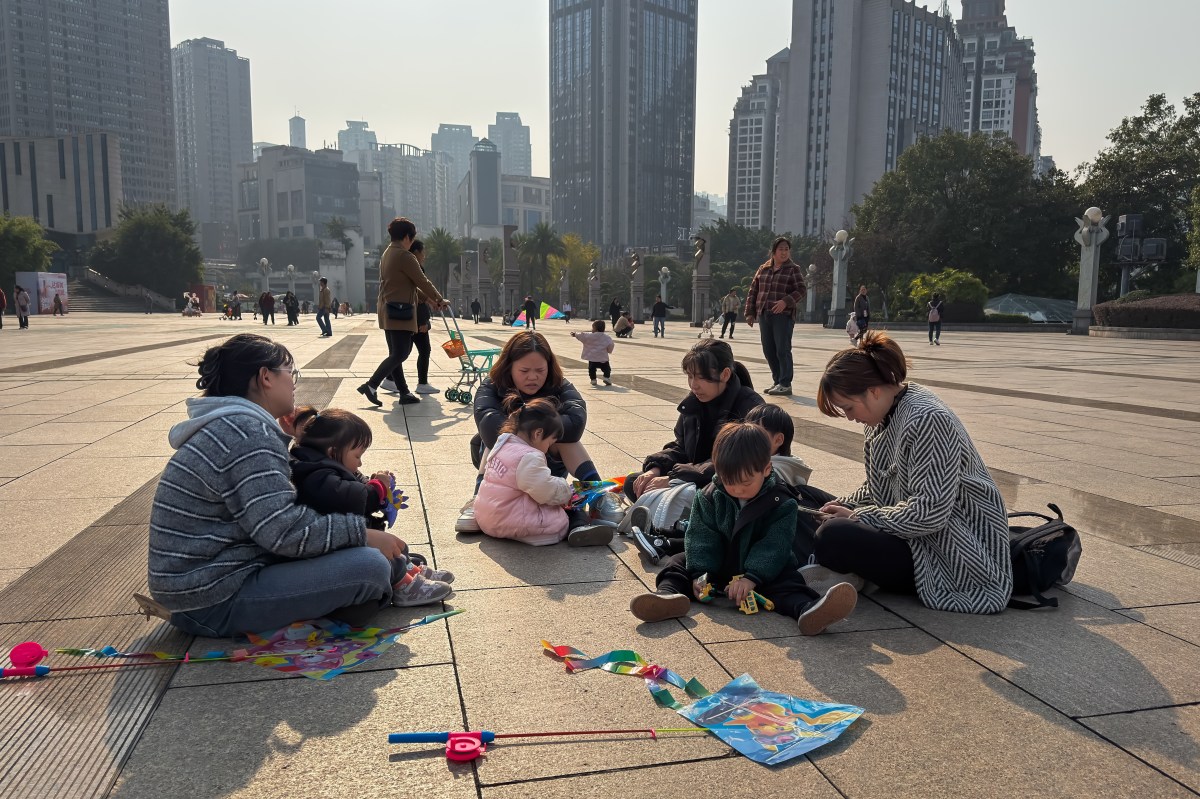
Chinese President Xi Jinping, who has linked child rearing with national progress, faces the challenge of slowing, if not halting, a looming demographic crunch.
Newsweek reached out to the Chinese Foreign Ministry via email with requests for comment.
A Fertility Slump With Economic Consequences
Over two-thirds of the world’s population now live in countries with fertility rates below the replacement level, or the rate of 2.1 births per woman necessary to sustain a population. And despite the significant amount of resources some governments have thrown at the problem, there have been few success stories so far.
China’s total fertility rate, or births per woman during her lifetime, is among the lowest in the world, driven by an arduous and competitive work culture, the rising cost of living, workplace discrimination and fears of losing out on career, and changing attitudes among younger generations. And while the fertility rate ticked upward last year, this was driven by the COVID-19 pandemic’s delaying effect on births and because 2024 was an auspicious Year of the Dragon.
Despite this baby bump, which interrupted a seven-year decline in births and two straight years of population loss, births went from nearly 18 million in 2016—the year China ended its decades-long One Child Policy—to just half that in 2023.
This has policymakers worried. Children drive consumption, an economic metric China has struggled to raise since the end of its pandemic-era lockdowns amid anxieties over slowing growth and an ongoing real estate crunch.
Over the horizon, a graying workforce could sap vitality from the world’s second-largest economy, and record numbers of elderly will increasingly drag on the country’s modest social safety nets. A growing number of workers will spend time and energy caring for their parents and in-laws, eking away at their savings.
China’s No. 2, Premier Li Qiang, in his government work report submitted during the National People’s Congress annual meeting in March, stressed that increasing the birth rate was a national priority.
Nationwide Cash Allowances
Central and a number of local authorities have stepped up efforts this year to try to spur births.
In one nationwide policy, the central government announced it was offering cash allowances of 3,600 yuan (about $500) per year for each child born on or after January 1, 2025. These payments will continue until the children reach three years of age.
Xiujian Peng, senior research fellow at Victoria University’s Centre of Policy Studies in Melbourne, considers this the most significant policy, as it applies nationwide.
“It reflects the central government’s attention to the declining birth rate and signals that support for families has become a national priority,” she told Newsweek.
Preschool Tuition Waivers
In the fall 2025 semester, China began waving tuition fees for the final year of kindergarten in all public preschools nationwide. The policy applies to children in their last year before elementary school and extends to eligible private institutions, aiming to ease education costs during a key stage of early development.
Officials estimate the change will benefit about 12 million children in its first semester. The move is part of a broader effort to build a more “birth-friendly” social environment by reducing the financial burden on young families, especially in urban centers where preschool fees can be a greater expense.
Expanded Parental Leave and Direct Payments
In 2025, provinces across China have extended standard maternity leave to at least 158 days, with most regions also introducing 15 days of paternity leave and between five to 20 days of shared parental leave. The upgrades are designed to make time off after childbirth more consistent and accessible across the country.
A key administrative shift ensures that maternity benefits, previously paid through employers, are now transferred directly to mothers’ bank accounts. As of early 2025, 20 provincial-level regions have implemented this direct-payment system to streamline access and prevent delays.
Read the full article here