



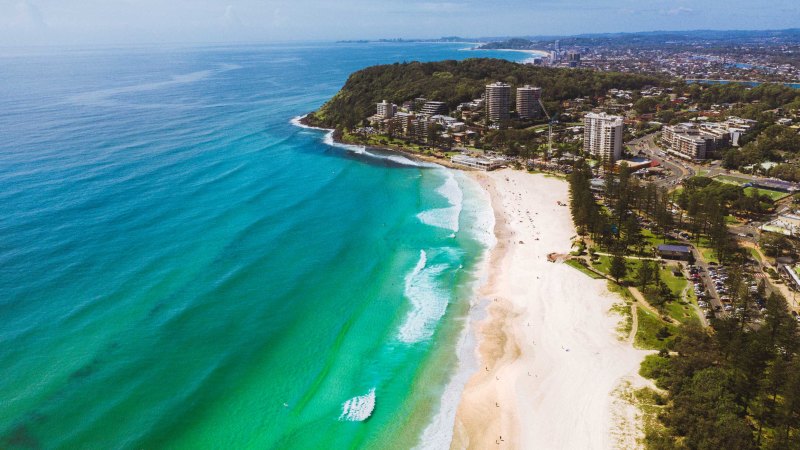
Burleigh Heads is famous for its barrelling waves, the big hill and a burgeoning foodie scene. But swimmers and surfers would be wise to avoid the water after heavy rain.
Water quality data reveals Burleigh is one of the dirtiest beaches on the Gold Coast after a big downpour.
Main Beach takes the crown for the most pristine beach on the Gold Coast, while Currumbin Rock Pools and Southport’s swimming enclosure are among the most regularly contaminated swimming spots in south-east Queensland.
This masthead collated the results of water quality testing in south-east Queensland between November 2024 and December 2025 to reveal the cleanest and dirtiest places to take a dip.
In Brisbane, Wynnum on the city’s bayside fared well, but residents would be wise to keep their toes out of Oxley Creek.
Wellington Point and Raby Bay Foreshore were among the cleanest spots in the Redlands.
Not all south-east Queensland councils test their waterways, and they are not required to do so by law.
Those that do measure the colony-forming units of Enterococci bacteria – an indicator of faecal matter, whether human or animal, which often occurs alongside another serious pathogen, E. coli.
The bacteria can survive for a long time in the water, potentially causing severe gastrointestinal illness, as well as ear and eye infections.
Swimming is considered safe when the number of colony-forming units of Enterococci is less than 41 per 100 millilitres of water, and unacceptable for swimming and surfing if the number is above 500 units per 100 millilitres of water.
One of the worst results at Burleigh Heads was 3500 units per 100 millilitre (85 times the safe threshold) on December 19, 2024 – the same week the Gold Coast received heavy rain.
On the same day, Tallebudgera Creek, Palm Beach Parklands and Currumbin Alley also recorded unacceptable results.
“If [councils] are following the guidelines, it’s actually beach closure at those levels,” said Griffith University microbiologist Associate Professor Helen Stratton.
Stormwater runoff is the chief culprit, Stratton said. Rain flushes chemicals and pollutants from gutters, streets and backyards into creeks, rivers and oceans via stormwater drains.
Heavy rainfall can also flood sewerage pipes and make them overflow into the stormwater.
A large stormwater outlet is located at Burleigh Heads. Over a year, the beach Burleigh Heads recorded good water-quality readings 61 per cent of the time, while Currumbin Rock Pools recorded good water quality results only 3 per cent of the time.
Western Sydney University water scientist Professor Ian Wright said the Gold Coast’s open beaches, such as Main, Surfers and Mermaid beaches, are near the East Australian Current, which brings tidal movement to flush contamination away.
Other swimming spots are not flushed out easily due to their geography, Wright said.
Stratton and Wright agreed that, outside the Gold Coast, which publishes its water quality readings, current testing of recreational waterways in south-east Queensland is inadequate.
Sunshine Coast Council, which takes in beaches from Caloundra, to Maroochydoore and Coolum, does not test its beaches for Enterococci. Nor does the Fraser Coast Council, which looks after K’gari, formerly Fraser Island.
After heavy rain, authorities advise people to avoid swimming for at least one day at open beaches, and avoid swimming in rivers, lakes and estuaries for at least three days.
Even several days after a big downpour, Enterococci levels can remain high.
“It’s like the floods. The rain stops, but the flood comes two days later, because the water is still moving,” Stratton said.
Stratton said it was up to health authorities to assess the real health risk to swimmers, but as a microbiologist, she would not swim while Enterococci levels were high.
Brisbane’s cleanest and dirtiest waterways
Brisbane City Council carried out nine monthly readings of recreational waters between December 2024 and September 2025. It also regularly tests the Wynnum Wading Pool.
Enterococci levels in the Wynnum Wading Pool fall within acceptable limits, with a median result of 8.5 units per 100ml in 2025.
“The wading pool is tested monthly, except from around June to September when it is drained and cleaned over winter,” a council spokeswoman said. “An algal bloom increase each October typically leads to higher than normal results.”
Wynnum and Colleges Crossing had the most consistent good results over this period, while Cabbage Tree Creek and Oxley Creek had the fewest.
The worst and best on the Gold Coast
Main Beach performed best in the Gold Coast council’s water quality tests, carried out between December 2024 and November 2025. Its water quality was rated “good” 97 per cent of the time.
Currumbin, Surfers Paradise and Mermaid Beach were tied for the number two spot, with all recording good water quality 95 per cent of the time.
Currumbin Rock Pools, Palm Beach Parkland, Murlong swimming enclosure and Southport swimming enclosure had the worst readings.
“Permanent warning signs are in place at Currumbin Rock Pools and Swimming Enclosures to alert swimmers of potential dangers. Stormwater outlet safety signage has also been installed in some locations,” a Gold Coast Council spokeswoman said.
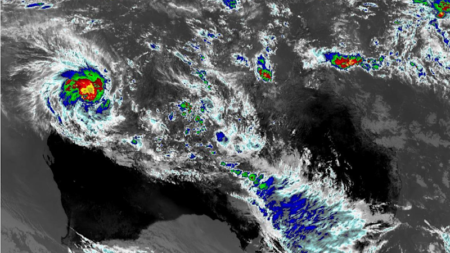
“After the cyclone, all beaches were temporarily closed and reopened only once testing confirmed water quality was safe.”
Gold Coast City Council introduced its first Recreational Water Quality Management Plan in October last year to improve the quality of recreational waterways.
Sizing up Noosa
Little Cove at Noosa Heads was among the cleanest on the Sunshine Coast, while Habitat Noosa and Boreen Point campgrounds on Lake Cootharaba had some of the poorest results.
From our partners
Read the full article here