




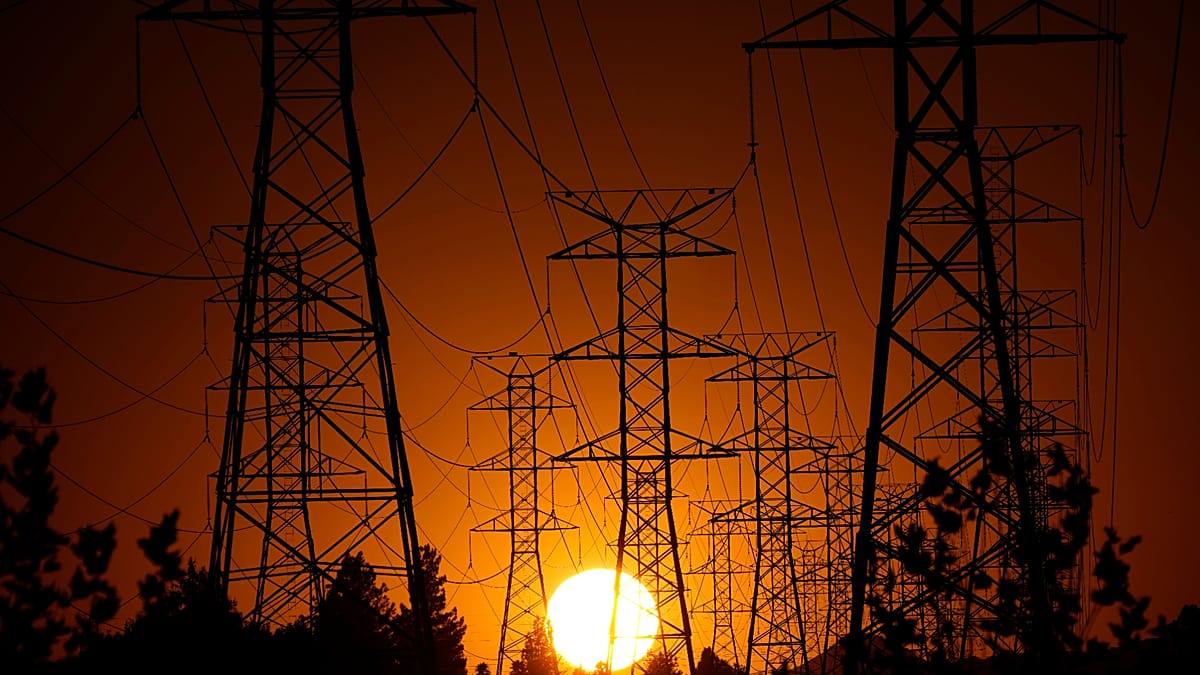
The European Commission is to launch a near-€1.2 trillion project aimed at helping EU member states fast-track permits for grid infrastructure, renewable energy projects and storage, in a bid to modernise the bloc’s electric grid, according to a leaked document seen by Euronews.
The bloc’s existing grid planning and permitting system has been criticised as fragmented and inadequate to the pace of needed expansion, a significant obstacle to renewable energy integration.
Member states and industry players have been vocal in calling on the EU executive to speed up permitting, as renewable energy projects can take up to nine years to be awarded, leading to delays and extra costs, according to the document.
Under the upcoming plan to revamp the 27-member bloc’s electricity grid, the EU executive has identified eight projects to “strengthen existing structures” and “ensure resources”, aiming to see “concrete progress” over the next six to nine months. These include electricity interconnections, storage and hydrogen.
The plan focuses on grid connections across the Pyrenees to better integrate the Iberian peninsula, connecting Cyprus to continental Europe, and connecting the Baltic states by linking Lithuania and Poland.
The Commission will also support the development of an offshore interconnector hub in Denmark, as it sees potential to expand and connect to additional points in the Baltic Sea.
Finally, the Commission is also looking to boost energy storage capabilities in the southeastern region and to promote coordination to develop the southern hydrogen corridor connecting Tunisia, Italy, Austria and Germany.
A hydrogen corridor project between Portugal and Germany will also receive “strong coordination” and “political support” from the Commission.
The bloc is legally obligated to reach climate neutrality by 2050 and has invested heavily in renewable energy production. However, obsolete electric-power transmission infrastructure is creating a massive backlog of renewable-energy projects awaiting grid connection and undermining the climate transition.
At this time, the EU27 is not on track to reach its grid interconnection targets of 15% by 2030 as 14 member states are still below the target.
Obsolete grid misaligned with energy transition
The Commission’s plan will target the bloc’s outdated infrastructure, especially for transmission capacity across member states, and improve digitalisation to ensure that infrastructure is fit for future electricity demand and energy transition needs.
Incidents like the April blackout in the Iberian Peninsula, which disrupted more than 60 million people, could be averted if the grids are upgraded, according to officials from the bloc’s energy regulatory body ACER.
If the Commission’s package delivers, it could facilitate integration of renewables and potentially lower energy costs over time, as the bloc’s electricity prices remain two to three times higher than those in the US, according to the Draghi and Letta reports.
It can also help regions benefit from cross-border connections and better integration of local generation from solar or wind power and increase efficiency in imports and exports.
The implications of having a modernised grid could be far-reaching as the bloc could improve capacity for electric vehicles, heat pumps, and decarbonise heavy industry.
Tom Lewis, energy policy expert at the environmental NGO Climate Action Network Europe (CAN Europe) welcomed the Commission’s upcoming plan noting it will facilitate the bloc’s transition to a fully renewable and resilient grid.
“Through new European-level planning, we can expand and modernise grids more effectively, while maximising the use of our existing networks,” said Lewis, in reaction to the leak.
“New rules of public participation and benefit sharing will allow citizens to reap the benefits of renewable power, strengthen public support, and prevent delays to the transition,” Lewis added.
However, CAN Europe urges caution to avoid any environmental backsliding and public backlash against grid development.
To anticipate potential setbacks, the green NGO recommends that policymakers prioritise implementing the bloc’s renewable energy law, digitalising permitting processes, and adequately staffing and funding national and local permitting authorities.
Kristian Ruby, secretary general of Eurelectric, a trade association representing the electricity industry, urged EU policymakers to consider pumped-storage hydropower “indispensable,” as it accounts for over 90% of global electricity storage capacity.
“As we scale up wind and solar at unprecedented speed, we must invest in long-duration storage solutions that keep the system reliable, affordable, and resilient,” said Ruby during a September event in Paris.
Massive investment
The EU executive has estimated a mammoth €1.2 trillion to revamp the bloc’s grid infrastructure by 2040.
The Commission estimates that it will need roughly €730 billion for distribution grid investments and €477 billion for transmission grids.
The way financing will be structured remains unclear. However, the EU would have to tap into a range of options, including EU funds, national budgets, private investment and cost-sharing, especially given the large scale of the needed investment.
Eurelectric has called on the Commission to create a decentralised grid facility in the bloc’s multiannual budget covering the period between 2028 and 2034, among others.
The industry suggests that the EU earmark a proportion of all funds for electrification for distribution network modernisation, upgrades, or expansion.
Read the full article here