


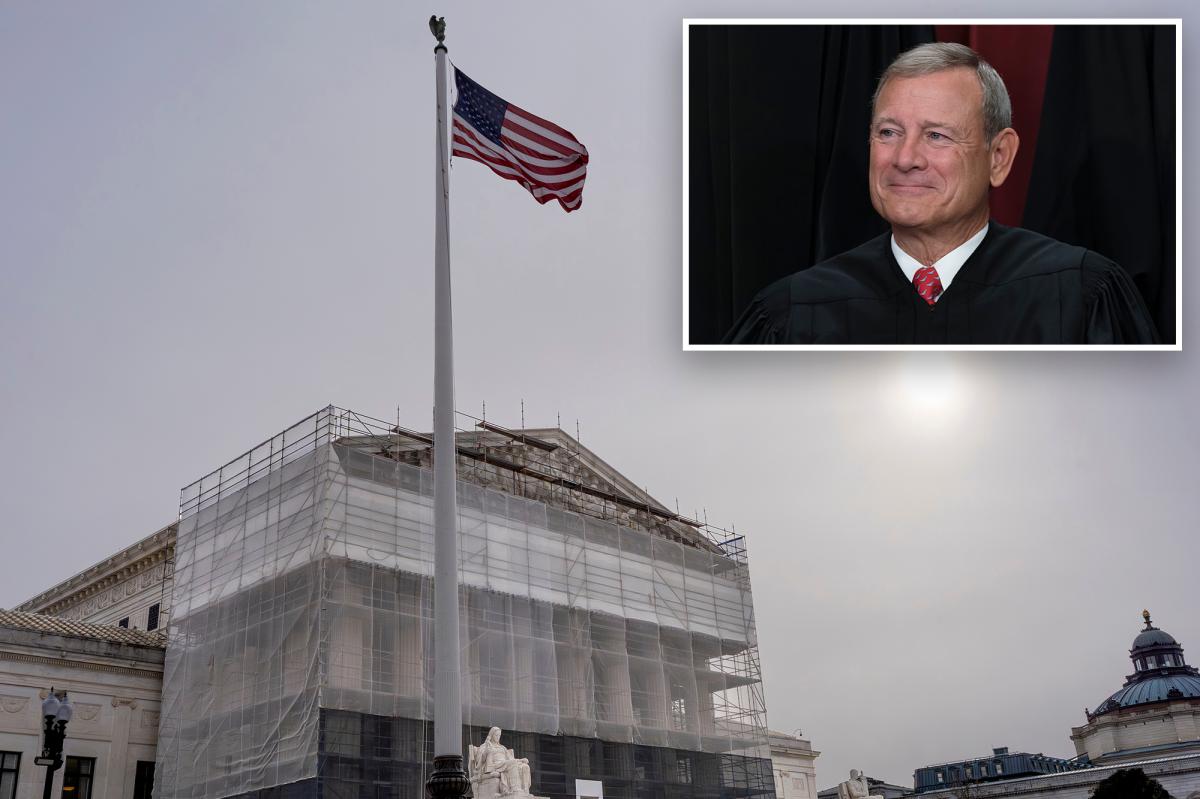
Chief Justice John Roberts asserted Wednesday that the US Constitution is as strong as ever as the nation awaits major Supreme Court decisions in 2026.
In his annual end-of-year message, Roberts avoided references to current events and the many legal challenges President Trump has faced implementing his second-term agenda, instead focusing on the enduring strength of the country’s founding documents.
In the new year, Americans should turn to the Declaration of Independence and the Constitution for “solace and consolation,” knowing that those “two great charters of freedom and justice remain firm and unshaken,” Roberts wrote, quoting former President Calvin Coolidge.
“True then; true now,” Roberts said of the 100-year-old quote.
The chief justice’s message comes as Democrats have routinely pointed to Trump administration moves over the last 12 months – from the Department of Government Efficiency’s (DOGE) cost-cutting to the attempt to prosecute former FBI Director James Comey – to argue the nation is in the midst of a constitutional crisis.
Some Democrats have also called for dramatic changes to the Supreme Court in the wake of rulings favorable to the Trump administration.
Meanwhile, Trump and his allies have also laid into lower-court judges throughout the past year over rulings that have slowed the rollout of the administration’s policies.
Roberts didn’t directly address concerns about the independence of the judiciary but praised the Constitution for “granting life tenure and salary protection to safeguard the independence of federal judges and ensure their ability to serve as a counter-majoritarian check on the political branches.”
“This arrangement, now in place for 236 years, has served the country well,” he wrote.
Roberts, who has served on the bench for 20 years, also called on judges to “continue to decide the cases before us according to our oath, doing equal right to the poor and to the rich, and performing all of our duties faithfully and impartially under the Constitution and laws of the United States.”
The justices on the high court will enter the new year with a slate of pivotal cases that have yet to be decided.
Among them are challenges to Trump’s executive order ending birthright citizenship and his use of emergency powers to impose sweeping tariffs.
The Supreme Court will also rule on a challenge to congressional maps in Louisiana, deciding whether the creation of majority-black districts complies with the Voting Rights Act and the 14th Amendment.
The justices also have to decide two separate cases related to public officials Trump has sought to remove from office in his second term – one involving multiple Federal Trade Commission members and another involving Federal Reserve Governor Lisa Cook, whom Trump has alleged may have committed mortgage fraud.
Read the full article here