


The Los Angeles Dodgers will be paying a significant price for signing two of the biggest free agents in the market – Kyle Tucker and Edwin Diaz — both financially and in terms of draft capital.
On Thursday, news broke of the Dodgers signing Tucker to a four-year, $240 million deal: the second-biggest average annual value deal in MLB history.
More news: Dodgers Land Coveted OF Kyle Tucker in Major Free Agency Splash
Tucker was the prize of free agency, netting interest of every significant market in baseball — the reigning champions secured his signature.
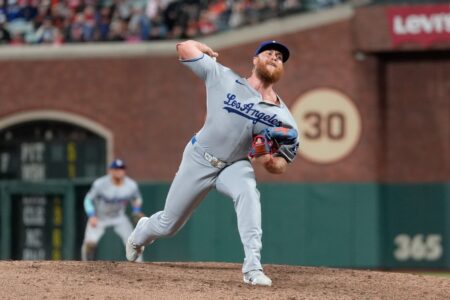
Back in December, the Dodgers landed Diaz, signing him to the highest per-year salary for a closer ever with a three-year, $69 million deal.
Because the Dodgers reached a specific luxury tax threshold, the deals will actually cost Los Angeles 110 percent more, resulting in the team paying more than $100 million per year for Tucker and more than $40 million for Edwin Diaz.
More news: Cubs Claim Former Dodgers World Series Champion Justin Dean
These monetary penalties are nothing to scoff at, but the Dodgers generate enough revenue from sponsorship deals, merchandise sales, and ticket prices to cover the costs.
Something that Los Angeles can not pay their way out of is the loss of draft picks for signing a player with a qualifying offer.
When a team signs a qualitfying free agent, the move leads to a compensation draft pick being handed over, however, as a luxury tax team with two qualifying offer free agents signed, they will “forfeit their second-, third-, fifth- and sixth-highest picks in next year’s MLB draft,” according to the California Post’s Jack Harris, a renowned Dodgers insider.
The Dodgers are lucky to boast a top-of-the-line farm system that will keep the organization healthy despite losing all this draft capital.
Down the line, the loss of draft picks will undoubtedly affect the team, but it can mitigate it by holding on to its prospects. President of baseball operations Andrew Friedman has typically been reluctant to strike at the trade deadline and give up young talent.
At the 2025 deadline, he could have traded away farm pieces for a reliever, but he did not overpay, and his patient approach could save the Dodgers from talent drain in the pipeline.
For more MLB news, visit Newsweek Sports.
Read the full article here