



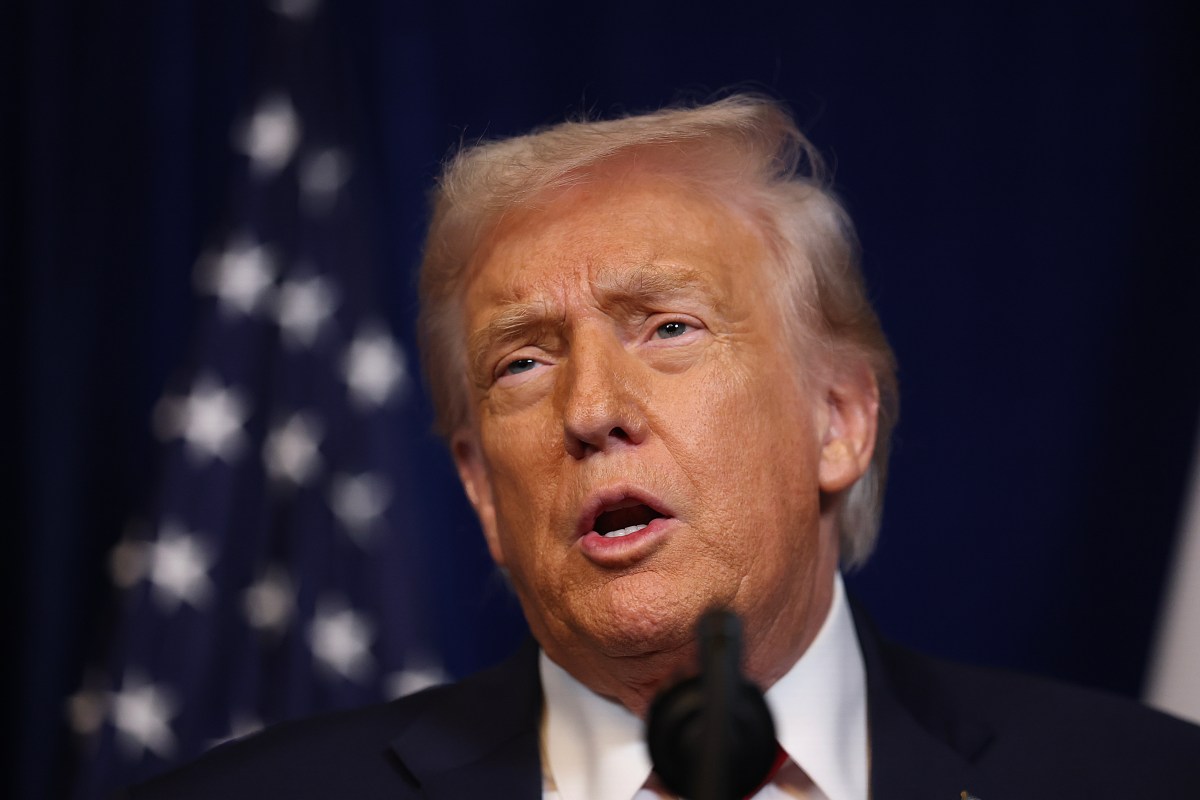
President Donald Trump’s approval rating has tumbled among middle-class Americans, according to recent polling data.
Why It Matters
Trump’s falling approval ratings among middle-class Americans signal a critical challenge for his administration as affordability and economic concerns continue to dominate public opinion.
Newsweek contacted the White House on a federal holiday via email for comment. A spokesman previously told Newsweek: “Turning the [Joe] Biden economic disaster around has informed nearly every action the Trump administration has taken since Day One.”
What To Know
Recent polling from Economist/YouGov surveys illustrates a decline in Trump’s approval among middle-class voters–defined as those with incomes between $50,000-$100,000.
The shift in sentiment among this pivotal group could influence upcoming congressional elections and reshape the president’s political standing heading into 2026.
According to the data, the president’s net approval rating among the middle class fell from -10 in October (43 percent approve/53 percent disapprove), to -12 in November (43 percent /55 percent), and further to -17 in December (40 percent/57 percent).
YouGov’s October polling, comprising a sample size of 1,656 U.S. adult citizens and with a ± 3.4 percent margin of error, was carried out between October 31 and November 3, 2025.
Its November survey of 1,628 U.S. adult citizens took place from November 28 to December 1, 2025, and had a ± 3.2 percent margin of error.
Meanwhile, YouGov’s December polling interviewed 1,550 U.S. adult citizens between December 26-29, 2025, and had a ± 3.6% margin of error.
This trend of a slide in support for Trump is reinforced more widely by data in YouGov’s December 2025 poll, which found Trump’s net approval with working-class Americans earning less than $50,000 per year had dropped to -34 points, with only 31 percent approving and 65 percent disapproving.
The data reflect a broader decline in confidence regarding the U.S. economy, a trend that underscores growing voter anxiety over everyday costs and financial security.
Other national surveys echo these findings. A PBS News/NPR/Marist poll taken in December found that 57 percent of respondents disapprove of Trump’s handling of the economy, versus just 36 percent who approve—the lowest rating he has received on economic leadership in either of his terms.
PBS News, NPR, and Marist Poll spoke with Americans between December 8 and 11, 2025, surveying 1,440 adults and 1,261 registered voters by phone, text, and online. The results came with a margin of error of about 3 percentage points.
Economic malaise was further evidenced by 70 percent of Americans saying their area was not affordable for average families, up from 45 percent in June.
Further data conducted between December 4-8, 2025, from the AP-NORC Center for Public Affairs Research also noted a decline in approval across key issues, with Trump’s handling of the economy dropping about 10 points since March and only 40 percent of Americans showing approval for his economic management by December.
The nationwide poll, comprising online and telephone interviews using landlines and cell phones, was conducted with 1,146 adults.
What People Are Saying
President Donald Trump said in a Truth Social post: “The polls are rigged even more than the writers. The real number is 64 percent, and why not, our Country is ‘hotter’ than ever before. Isn’t it nice to have a STRONG BORDER, No Inflation, a powerful Military, and great Economy??? Happy New Year!”
White House spokesman Kush Desai previously told Newsweek: “President Trump and every member of his administration are clear-eyed about the fact that Americans continue to reel from the lingering effects of Joe Biden’s generational economic crisis.
“Turning the Biden economic disaster around has informed nearly every action the Trump administration has taken since Day One, from unleashing American energy to cut gas prices to signing historic drug pricing deals to cut costs for American patients.
“Much work remains, and every member of the Trump administration continues to focus on recreating the historic job, wage, and economic growth that Americans enjoyed during President Trump’s first term.”
Desai also previously told Newsweek: “President Trump inherited the worst inflation crisis in a generation from Joe Biden’s incompetence, and his administration has rapidly cooled inflation to a 2.5 percent annualized rate. Americans can count on inflation continuing to fall and real wages continuing to rise.”
Dana M. Peterson, chief economist at The Conference Board, said: “Consumers’ write-in responses on factors affecting the economy continued to be led by references to prices and inflation, tariffs and trade, and politics. However, December saw increases in mentions of immigration, war, and topics related to personal finances—including interest rates, taxes and income, banks, and insurance.”
Republican pollster Whit Ayres told the Los Angeles Times: “The most important reasons he won in 2024 were his promises to bring inflation down and juice the economy. That’s the reason he won so many voters who traditionally had supported Democrats, including Hispanics…But he hasn’t been able to deliver. Inflation has moderated, but it hasn’t gone backward.”
What Happens Next
The decline in Trump’s approval among middle-class Americans and key working-class demographics is likely to play a decisive role in 2026 midterm outcomes.
Economic issues—especially affordability, price levels, and health care costs—are likely to stay at the forefront of U.S. political discourse.
Read the full article here