



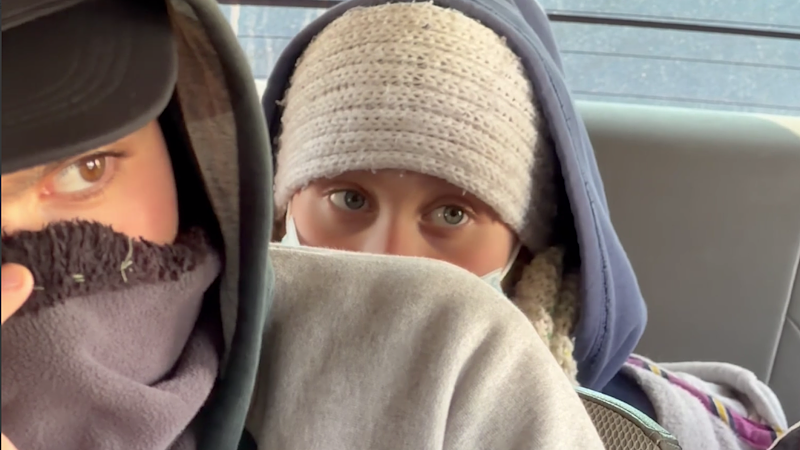
The prime minister said during the 2025 election campaign that kindness was not a weakness (“Doctor who helped re-elect Burke leads efforts to bring ISIS brides back home”, February 18). Now he seems to have resiled from that in declaring there will be no government assistance for the 34 Australian women and their children still stuck in a Syrian refugee camp. One suspects Anthony Albanese’s change of heart is more due to One Nation’s increasingly shrill dog whistling and the newly minted opposition leader’s ridiculous “bad Muslim”/“good Muslim” binary. Kindness is a strength, prime minister, and extends to making allowances for past mistakes, however egregious, the prospect of rehabilitation and reunion with their families in Australia for the women, and a chance at life for their children. Kate Lumley, Hurlstone Park
If Anthony Albanese is falling back on bromides from his mother to guide political decisions such as treatment of the ISIS brides, he might consider another that his mother would no doubt have endorsed: “Do to others as you would have them do to you.” Jan Macindoe, Forest Lodge
What to do about the Australian families of ISIS fighters is a complex question and one I have no answer for. However, Albanese’s statement “if you make your bed, you lie in it”, though it might be politically appealing, doesn’t cut it as an adequate response. Surely, there is a legal framework that can be used to determine what happens to these families? And if there are aspects of the matter that are not covered by the law, then the law must be refined to make it fit for purpose in a world where situations like this are likely to become more common, not less. Regardless of how much we dislike their actions, how stupid or misguided they’ve been, or how thorny a problem they present, we can’t just cut loose Australian citizens as if we have no obligations to them. Prue Nelson, Cremorne Point
Before our politicians deny any assistance to the Islamic State-linked families trying to return to Australia, they should remember their Australian values, such as the rule of law and the presumption of innocence. Neither the rule of law nor the presumption of innocence means anything if our citizens are denied the assistance they need and are entitled to. Mark Porter, New Lambton
How heart-warming that the prime minister invokes the homespun wisdom of his late mother in dealing with the plight of the ISIS brides. It’s just a pity that, as the product of a Catholic school, he forgets the lesson of the Good Samaritan. Gerard O’Neill, Bexley
The Albanese government’s dogged refusal to co-operate in the repatriation of Australian women and children trapped in Syria is unconscionable and akin to emotional and psychological torture. These people are neither terrorists nor criminals, but victims of war and ideological abuse. Endless consignment to the dangers and privations of a refugee camp is no life for anyone, and leaving innocent people in limbo and inflicting the suffering of indefinite uncertainty only legitimises and prolongs the abuse. These women and their children are no danger to us and are crying out for our compassion. For pity’s sake, bring them home. Meredith Williams, Baulkham Hills
Syrian refugee camps should not have to look after Australians who travelled to Syria to destroy it. We are responsible for our own citizens, no matter how idiotic their decisions may seem. The former teenage brides should be returned to Australia and, if appropriate, prosecuted for their crimes. Samantha Chung, Kensington
The ISIS brides are no threat to the welfare or safety of anyone. Upon their return home, they will be subjected to the full processes of Australian law. If guilty and convicted, they will be imprisoned. How or what possible danger would they pose to us from inside a jail? What about their children? To leave innocent children to suffer the inhumane conditions in Syrian camps is nothing short of child abuse. As an Australian citizen, I am ashamed to be part of these crimes. Shame on you, Albanese. Shame on you, Taylor. A pox on both your houses. Jim Croke, Stanmore
Crime and punishment
The Liberal Party’s policy to stop allowing criminal migrants from terrorism hotspots (Letters, February 18) should be applied to criminals regardless of their country of origin. Can we deport all descendants of people convicted of crimes by the British legal system and dumped in this country from 1788 onwards? After all, once a criminal, always a criminal. Neil Reckord, Gordon (ACT)
A study in racism
It continues to amaze me that people are shocked at yet another report that indicates racism is all-pervasive in Australia (‴Significant hostility’: Scale of racism on university campuses revealed”, February 18). Racism has existed in this country since 1788, and report after report highlights this. Whether it be in health, education, the legal system, media or business practices, the list is seemingly infinite. Racism is structurally embedded, and citizens are enculturated into the same. As such, we get people making racist comments and gestures; more impactful are the policies and practices that discriminate. In the recent findings regarding universities, it would be more shocking if a report were produced that indicated an organisation was not racist. Graham Fazio, Cootamundra
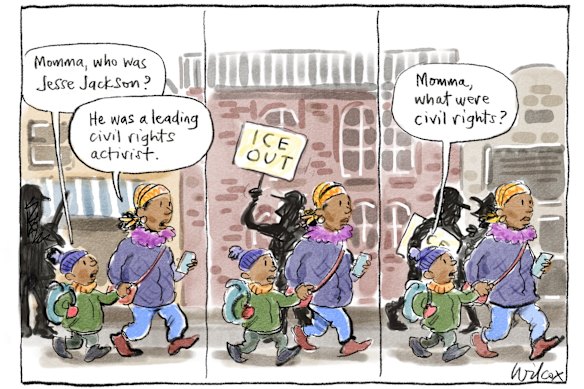
The Racism@Uni Study is a sobering insight into the failure of our institutions. What good is all the education in the world if we cannot treat our fellow human beings with kindness and respect? Our universities must do better. Michelle Lowbeer, East Lindfield
No wonder everyone studies online. You need a doctorate in thick skin to be on campus now. Ted Bush, North Epping
Care has to catch up
Older people’s needs can deteriorate rapidly due to frailty, falls or cognitive decline, yet the assessment and allocation of home care packages can take close to a year (“Why Labor’s shiny aged care scheme is a $10b rip-off”, February 18). By the time support is approved, needs often exceed the original assessment, rendering the package inadequate. A system that cannot respond swiftly to changing clinical realities seems to be both inefficient and unfair.Margie Christowski, Roseville
Reality of tobacco
So the massive drop in tobacco excise tax revenue (“Cut cigarette tax or more people will get hurt, says Liberal MP”, February 18) will cause a sizeable hole in the budget – tragedy? Lower excise will stop sellers of illegal tobacco from getting hurt – so compassionate. What about the scientifically proven damage both legal and illegal tobacco smoking continues to wreak on the health and mortality of the population? Mea culpa: I smoked for more than 50 years, I now have emphysema and it’s not getting any better. Duncan McRobert, Hawks Nest
High speed, but not at this cost
A $90 billion price tag should surely ring the death knell for high-speed rail (“High-speed rail link to cost taxpayers up to $90 billion”, February 18), particularly when major government infrastructure projects have a long history of blowing out well beyond initial estimates. With a bill of that magnitude, equivalent to hundreds of thousands of dollars for every Newcastle resident, taxpayers are entitled to ask whether a smarter, less ambitious solution is being overlooked. One obvious alternative is a modern tilt train. Australia already knows the technology works: a tilt train has operated successfully between Rockhampton and Brisbane for years, delivering dependable and comfortable travel without the staggering cost of building a new corridor. The existing Sydney–Newcastle line is full of curves, especially north of Hornsby, exactly the terrain where tilt trains excel. By leaning into bends, they can safely maintain higher speeds while using much of the current alignment and avoiding expensive tunnels, bridges and land acquisitions. If a purpose-built high-speed line trims the journey to about an hour, but a tilt train could complete it in roughly 1 hour 45 minutes, are taxpayers really prepared to spend tens of billions to save less than an hour? Upgrading existing infrastructure could deliver faster services within years, not decades, while demonstrating that fiscal discipline still matters. John Kempler, Rose Bay
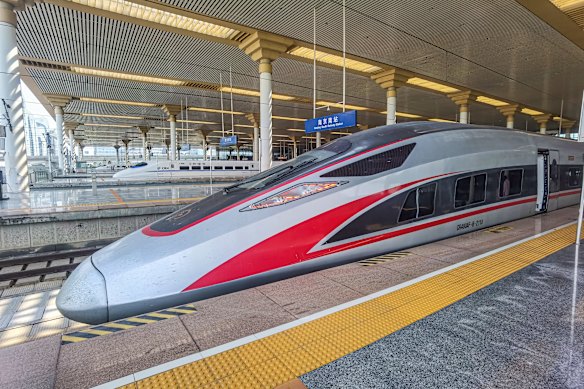
The federal government plans to spend an enormous amount on a Sydney-Newcastle high-speed rail link and then much more to extend it to Melbourne. Meanwhile, we in the regions have to rely on overcrowded roads when we need to get to our capital cities. In NSW, for example, rail extends no further west than Lithgow. The few daily rail services from the Southern Highlands are frequently replaced by slow buses that stop at a dozen or more stations before reaching Sydney. The same appalling situation persists in all states. Undoubtedly, there is a need for high-speed rail between Newcastle and Melbourne, but improvement in rail services for the regions is decades overdue. Brian O’Donnell, Burradoo
Beginning Australia’s high-speed rail infrastructure with a project needing 115 kilometres of tunnels and 38 kilometres of bridges and viaducts – about 80 per cent of the total – seems like a recipe for failure, a mind-mumbling expensive white elephant. Greg Baker, Fitzroy Falls
While I am thrilled to hear that our PM is happy to spend $90 billion on making the trip to Newcastle a bit faster, could I – for the umpteenth time – ask the powers-that-be to take a weeny billion and give us a train line along the South Coast from Nowra to Bermagui? We would be very grateful, Prime Minister, and as Labor voters would continue to support you. Nothing special; just a simple single track would do. Nola Tucker, Kiama
Before it starts spending, the government should get at least three quotes – including one from China, a world leader in high-speed rail. And why stop there? An ambitious plan would link Brisbane to Melbourne, not just a short local line. Let’s invest wisely and think big. Roz Townsend, Queanbeyan East
The currently proposed Sydney-Newcastle coastal high-speed rail alignment with tunnels and bridges is impractical and unlikely to ever happen. Multiple international examples show that Australia’s high-speed rail network should be national, and further inland on buildable terrain. Michael Fox, Pacific Palms
Far better to spend the very fast rail money on long-distance routes. VFT to Melbourne via Canberra could greatly reduce flights on our busiest routes and make a major reduction in Australia’s carbon emissions. Allan Rees, Moruya
“The VFT service from Platform One to Newcastle via Gosford is running late and out of timetable order – passengers should expect significant delays.” Allan Gibson, Cherrybrook
Lifeguards save lives
There is no doubting Robert Brander’s impeccable credentials in all natural beach and surf conditions (“The blind spot that is making our beaches less safe”, February 18). But rather than mere funding and increased supervision, the blind spot lies in the human condition and the failure to follow simple rules in the close ocean waters. Swim in the safest area, together, and between the flags. Beachgoers must walk the extra few metres from the car or local transport to ensure lifeguard protection and general well-being and safety. There is, above all, a personal responsibility for all swimmers to ensure the risks in ocean swimming are reduced. Lifeguards and lifesavers do indeed save lives but individuals must act in a positive and responsible manner first and foremost to ensure their safety (and the lifeguard’s safety). Janice Creenaune, Austinmer
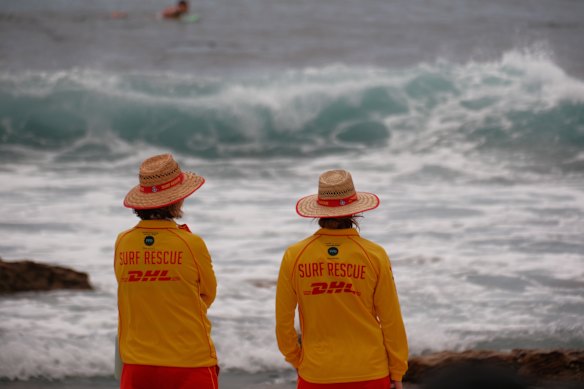
I went to a primary school swimming carnival on the north shore this week. I was staggered to see poor swimming from the majority of children. Is this part of the reason our drowning rates have increased dramatically? We not only need to up our employment of lifeguards, but we must give our children the chance to become good swimmers once again. A large part of the morning was taken up with 25-metre races because so many children are no longer capable of swimming 50 metres. We need to return to school swimming lessons for everyone to make our children water-safe and -capable. Molly King, Freshwater
Cutting corners with AI
Anyone who has ever written a thesis will remember the task it was to convert data into a relevant and meaningful topic (Letters, February 18). Not any more, that’s easy for AI. So what, you might ask, what’s wrong with taking a shortcut? Maybe very little in the “soft” areas of intellectual inquiry but I am not sure I’d want to be treated by an oncologist who had AI compare chemical chemotherapy with autoimmune therapy. There are no hard yards with AI as your intellectual gofer. Maybe institutes of higher education might profit by asking AI how to handle this new form of technological cheating. Trevor Somerville, Illawong
- To submit a letter to the Sydney Morning Herald, email letters@smh.com.au. Click here for tips on how to submit letters.
- The Opinion newsletter is a weekly wrap of views that will challenge, champion and inform. Sign up here.
Read the full article here