



Published on
The countries of the European Union, except Hungary, pledged on Tuesday to ensure “full accountability” for the war crimes Russia is accused of committing during its full-scale invasion of Ukraine.
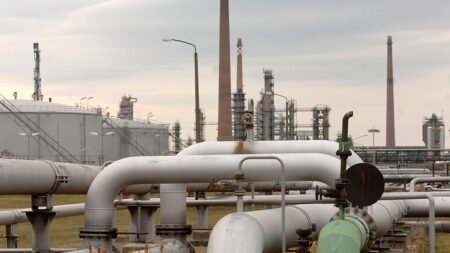
The exclusion of Hungary comes amid a bitter dispute between Budapest and Ukraine over the Druzhba oil pipeline that has paralysed a critical €90 billion loan to Kyiv. Before the row, Budapest had signalled strong disagreements about the bloc’s overall policy.
“Accountability is an indispensable element of a comprehensive, just and lasting peace, as well as upholding international law,” the 26 member states said in a joint statement co-signed by Ukraine and High Representative Kaja Kallas.
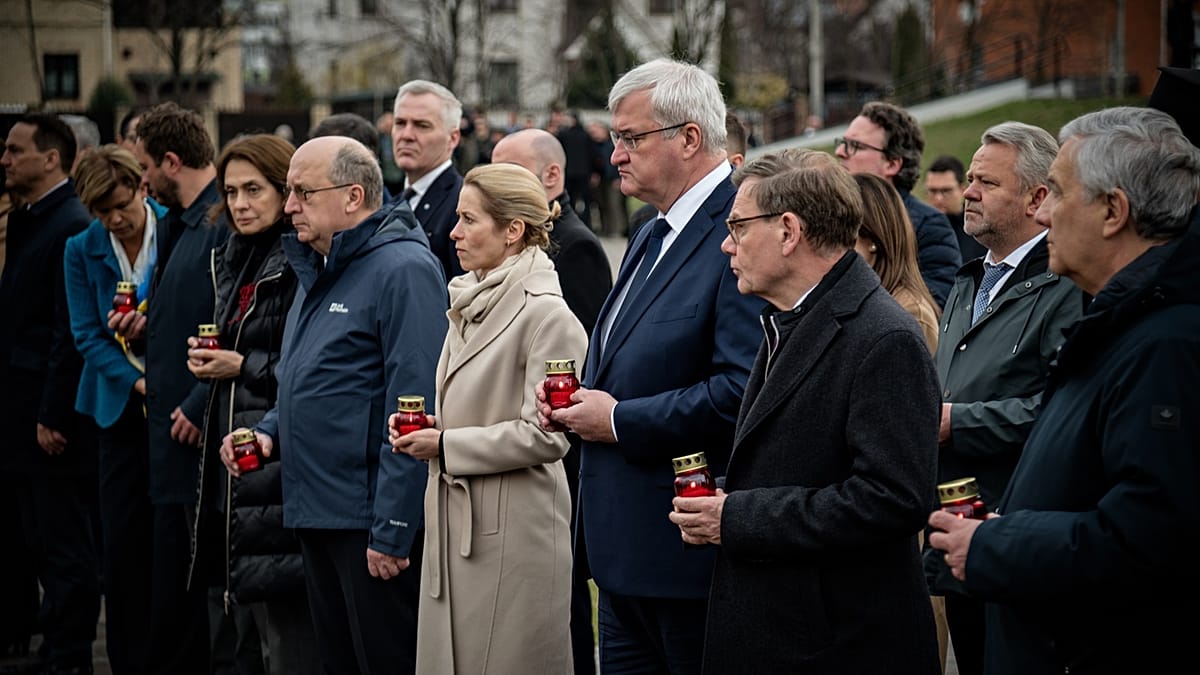
Kallas gathered some of the bloc’s foreign ministers in Kyiv to commemorate four years of the Bucha massacre, during which 400 Ukrainians were murdered by Russian troops on the outskirts of Kyiv. Images of dead bodies lined up on the streets, wrists tied, shocked the world and exposed the scope of the atrocities against civilians.
“What happened here cannot be denied,” Kallas said while visiting the memorial site. “Russia must be held accountable for what it has done to Ukraine.”
Since the Bucha massacre, Ukraine and its allies have been promoting several initiatives to document and prosecute war crimes linked to Russia.
In May last year, a broad coalition of democratic nations endorsedthecreation of a special tribunal to prosecute the crime of aggression, which targets the political representatives ultimately responsible for launching the full-scale invasion. This could pave the way for trying Vladimir Putin in absentia, but only after he leaves office.
The tribunal has been designed under the auspices of the Council of Europe, a human rights organisation based in Strasbourg.
About ten countries have expressed their intention to join the agreement that underpins the initiative, with Ukraine, Estonia, Lithuania and Luxembourg having completed the parliamentary procedures. (Not every country is required to go through parliament.)
“What is now required is clear: political will and collective commitment,” Council of Europe Secretary General Alain Berset said in a statement.
Ukraine’s Foreign Minister, Andrii Sybiha, said the launch of the special tribunal later this year would help revive “the spirit of Nuremberg”, in reference to the precedent-setting prosecution of war crimes against Nazi Germany at the end of World War II.
“The scale of Russian atrocities in the course of its aggression is unseen on European soil since WWII. The crime of aggression is the root cause of them all,” he said.
“There must be accountability, and there will be no amnesty for Russian criminals, including the highest political and military leadership of the Russian Federation.”
In November, Europeans were shocked to read a 28-point plan drafted by US and Russian officials that envisioned a blanket amnesty for war criminals. The draft, which featured a raft of controversial elements, has since then been turned into a more palatable 20-point plan. Negotiations, however, remain stuck over territorial questions.
Europeans have repeatedly censured the Kremlin for adopting a maximalist position in the talks, which US officials have at times appeared to echo. Last week, Kallas urged Washington to avoid falling into “the trap” of “the Russian playbook”.
Read the full article here