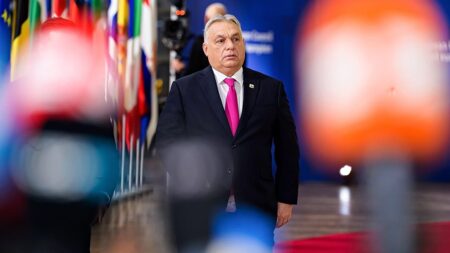




The European Commission must play a key role in ensuring fair competition among EU countries as they upgrade their power grid infrastructure to keep prices stable, Portuguese Energy and Environment Minister Maria da Graça Carvalho told Euronews.
The Portuguese minister, who notably led political talks on the electricity market law, said that ensuring a level playing field will be “essential” to lowering electricity prices evenly across the EU.
If electricity becomes much cheaper through artificial means in one country, it will inevitably impact the others and put their industries at risk of unfair competition, according to Carvalho.
The Commission’s duty is to ensure the single market according to common rules, she said. Carvalho added that government support for energy companies across EU countries requires “clear and transparent rules to avoid distortions in competition law” and that the Commission needs to oversee such a task.
“This is something that worries us, because countries that can invest much more — a way to reduce competition by injecting public finance into the electric system — artificially lower the price of electricity and thus help their industries more than others,” Carvalho told Euronews.
Portugal was listed in three of the eight key projects highlighted in the Commission’s recent plan to increase resilience in the bloc’s electricity infrastructure by 2040 and lower energy prices — two electricity interconnections across the Pyrenees and one hydrogen project connecting Portugal and Germany.
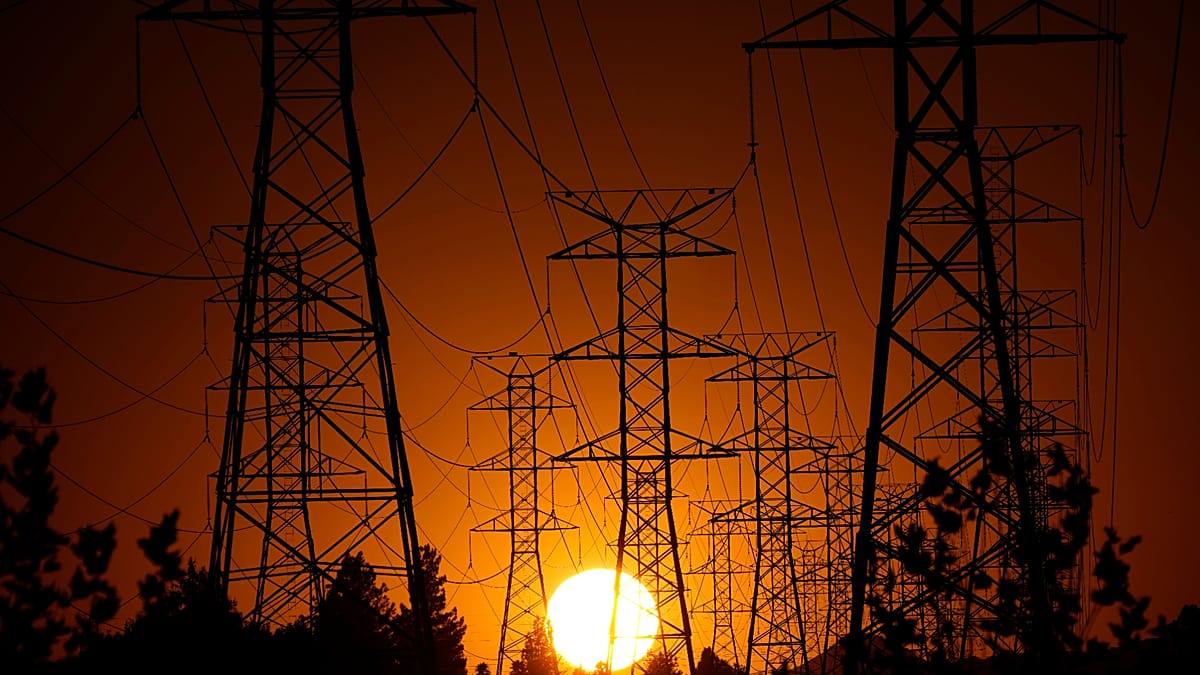
The plan aims to ensure a more robust electricity flow across EU countries and to increase the uptake of renewable energy to power the electricity grid. EU countries will need to invest substantially in this venture, but some may be better positioned due to their stronger ability to tap public funds.
Seizing the political momentum, Portugal and Spain are joining forces with other countries to promote fair competition and prevent market distortions in the energy sector.
Recently, a group of countries — Austria, Belgium, the Czech Republic, Estonia, Finland, France, Greece, Ireland, Luxembourg, and the Netherlands — joined Portugal and Spain to continue working on competition issues to prevent laws that contradict free competition, targeting projects under the Commission’s grid package.
Grid upgrading will require ‘significant EU investment’
The Commission forecasts that a mammoth €1.2 trillion will be needed to revamp the bloc’s grid infrastructure by 2040. The structure of financing remains unclear.
In theory, the EU could tap into a range of options, including EU funds, national budgets, private investment, and cost-sharing, especially given the scale of the required investment. But that will require political consensus and the European energy market, as well as its components, remains highly fragmented.
“There is a small part coming from EU funding, which is what worries me,” Carvalho said.
In Portugal, part of the infrastructure investment comes from the government-set tariff. The system feeds into the national electric system, which is then distributed to all consumers.
Access to the networks and investments in the networks are included in the tariff, the Portuguese minister explained. When the electricity bill includes a production component and a network access component, it covers the network’s investment over the years.
“That’s why when we authorise an investment in the networks, we always have to worry about its impact on the tariff because it does not come out of the state budget but out of the pockets of everyone who pays electricity bills,” said Carvalho. “The more we go after the European funding, the less we get into the tariff.”
The European Connecting Facility, which will partly finance the Commission’s grid plan, will cover a part of the three projects, while the remaining could be funded through the European annual budget. To prop up funding, the Portuguese government is also considering making a loan to the bank to invest in networks.
The former MEP, who hails from the centrist European People’s Party (EPP), said that financial tools such as Power Purchase Agreements (PPAs) and Contracts for Difference (CfDs) are good examples of mechanisms to address competitiveness among EU countries that need to upgrade their grid infrastructure.
PPAs and CfDs are usually between a public party and a private party. The CfDs are contracts with a cap and a floor that may be unrelated to government support, but they may be backed by a state guarantee.
“Some countries want to promote electricity investment by using CfDs where there is a guarantee from the state to protect investments,” Carvalho said.
“But once again, and as written in the report on the electric market, the competition must supervise the quantity of CfDs that have state protection or state guarantees, to avoid major disruptions to the competition,” she cautioned.
Portugal big bet on clean energy but connectivity issues remain
Portugal is on track to become a clean power nation, with hydropower, solar, and wind accounting for roughly 71% of its energy mix in 2024, according to the Portuguese agency for external trade and investment.
But an obsolete power grid, which recently left around 60 million people in the dark after an incident that originated in neighbouring Spain in April, is blocking Portugal’s full integration with the rest of Europe and undermining climate goals.
Looking ahead, Portugal’s priority is to reinforce the internal network, the minister said. Gas storage and offshore energy projects are also in sight for the future.
Lisbon has a 10-year plan for the transmission networks of an investment of four billion euros. However, while the interconnection to Spain is close to 25%, above the 15% target set by the Commission for 2030, the Iberian interconnection (Portugal and Spain jointly) with France is only 2-3%. A source of frustration for the two Iberian nations.
“To better integrate the Iberian Peninsula with Europe, we need to be part of these two projects — the electricity interconnection crossings across the Pyrenees,” Carvalho said. “That’s the difficulty, we have to work a lot to get there.”
After the April blackout in Portugal and Spain, the two countries and the Commission held talks with France to insist on the urgency of increasing electricity interconnection among the three countries, the minister said, since Paris has long been reluctant to invest in interconnection points with the Iberian Peninsula.
Critics argue the main reason for the lack of progress is the French push for nuclear energy rather than solar and wind power; something that Paris denies, pointing out that the two countries at times, import, rather than export, energy from France.
Still, French authorities signed an agreement with the European Investment Bank for the two Pyrenees interconnections in June, raising hopes that the southern countries would increase their energy resilience with the rest of the bloc.
“France agreed with the two interconnection points in the Pyrenees from the grids package proposed by the Commission,” Carvalho said, noting that the EU executive would not put forward these three projects with such strong French participation without their consent. This could be a point of friction in the new year.
Lisbon targets exports of green hydrogen
In addition to vast volumes of clean power, Portugal wants to compete too in producing green hydrogen, with the EU looking to producing 10 million tonnes domestically by 2030.
The hydrogen project, H2Med, a partnership between Portugal, Spain, France and Germany signed in 2022, is meant to transport renewable hydrogen from 2032.
The Portuguese minister said the project, also part of the Commission’s grids plan, “might take a little longer” due to its new and complex technology.
“Our priority is to produce hydrogen to attract industries to Portugal, especially for large chemical industries and petrochemicals that need a lot of hydrogen in their industrial processes,” Carvalho said.
Since transporting hydrogen over long distances remains difficult today, she said, it is more plausible that over the next five or six years, the industries that need hydrogen will be relocated closer to where hydrogen is produced.
“Our goal is to show Europe, outside of Europe, or the world, that Portugal has plenty of green renewable energy and the potential to produce green hydrogen in large quantities at a reasonable price, and hence all the interest in attracting and fixing industries in Portugal,” Carvalho said.
Read the full article here