





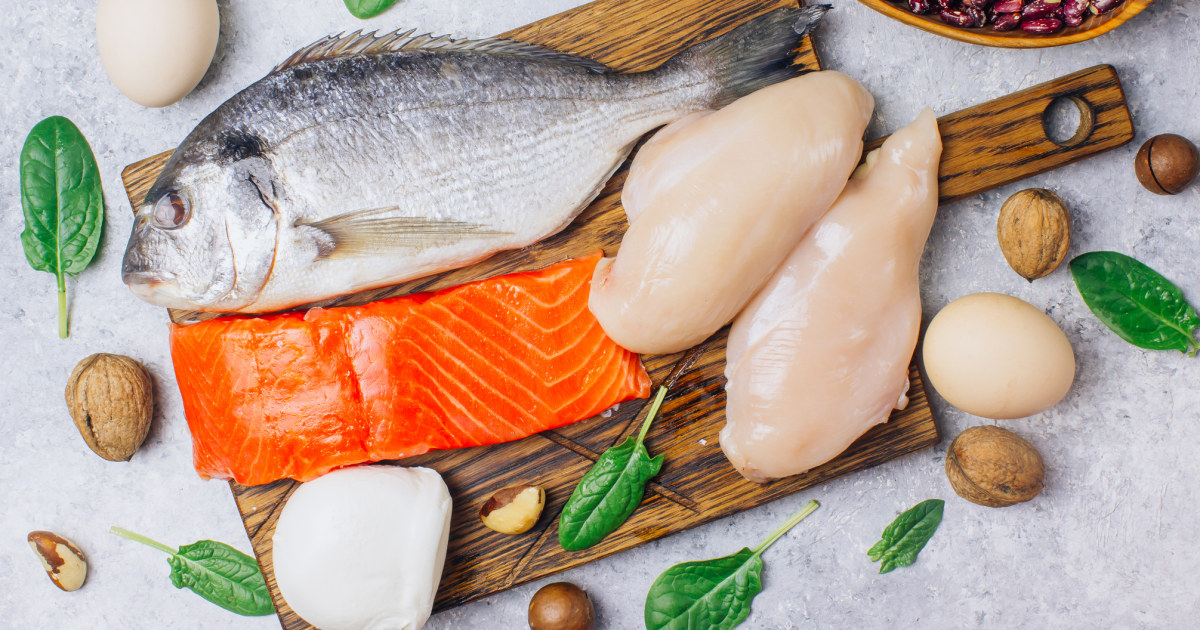
What you eat matters, but how much you eat is just as important. That’s the case with protein, the superstar macronutrient getting tons of hype for its many benefits.
In addition to helping you feel full for longer, protein aids with immune function, cell tasks and tissue repair. It’s also responsible for providing energy and transporting nutrients to their destinations around the body.
The recent popularity of high-protein diets may have you wondering if you’re eating enough or have protein deficiency.
While protein needs can vary based on age, lifestyle, health and preexisting medical conditions, the general recommended dietary allowance for protein is 0.8 grams of protein per kilogram of body weight or 0.36 grams of protein per pound of body weight — “which is pretty low,” says Natalie Rizzo, registered dietitian and nutrition editor at TODAY.com.
“That’s the minimum amount a person needs each day, and most people have no problem meeting or exceeding that amount,” she explains. “But protein needs can vary, based on size, activity level, health goals. Some people who exercise often or don’t eat animal products may not get enough protein. But in general, most people get plenty.”
Over-consuming protein comes with some telltale signs you likely won’t miss, such as kidney stones. But the signs you aren’t eating enough protein are quite different. Here’s what to know about the signs of protein deficiency and expert-approved ways to treat it.
What is protein deficiency?
“Protein is an essential macronutrient that the body needs and utilizes in large quantities,” Kristen Smith, registered dietitian and spokesperson for the Academy of Nutrition and Dietetics, tells TODAY.com. Not consuming enough will impact immunity, growth and development, cell function, and tissue and muscle health.
Being protein deficient is more complex than missing out on your protein goals for a day or two. To see the effects of protein deficiency, says Smith, you’d have to “not (consume) an adequate amount of protein to meet your body’s needs for a significant period of time.”
That period of time depends on your individualized protein needs, which vary based on your physical activity level, age and medical conditions, Smith says. Athletes and pregnant people, for example, require more protein. And people with kidney disease or certain genetic metabolic conditions should limit their protein intake. So, the amount of protein that might render one person deficient might be more than adequate for another.
What causes protein deficiency?
Typically, protein deficiency comes down to the simple fact that you’re not eating enough protein, but certain conditions might impact your protein retention and intake, too.
“Most people are able to consume adequate protein amounts to meet their body’s needs without difficulty,” says Smith. “But some groups of individuals who struggle to meet their protein needs include the elderly, individuals with cancer or individuals who’ve undergone procedures to the reduce the size of their stomachs.”
Adds Rizzo: “Some vegans may not get enough protein, though this isn’t standard across the board. Some conditions may make you susceptible to protein deficiency, such as Celiac disease, cirrhosis of the liver and chronic kidney disease” because they can cause protein malabsorption.
What are the symptoms of protein deficiency?
If you’re not meeting your protein needs, your body may not send you any warning signs that you’re headed toward deficiency. “Sometimes you won’t see the signs or symptoms of protein deficiency until you’re already deficient,” explains Smith.
Because protein deficiency is usually reversible, it’s worth familiarizing yourself with the symptoms so that you can remedy the situation as soon as possible.
The signs of protein deficiency include:
- Brittle hair and nails
- Muscle loss
- Feeling weak and lethargic
- A compromised immune system
- Stress fractures
- Swelling
How do you treat protein deficiency?
The most straightforward way to reverse your protein deficiency is by eating enough protein. If you suspect you’re not eating or retaining enough protein due to illness, Smith recommends working with a doctor or registered dietitian to determine your protein needs and construct a game plan to ensure you’re eating enough.
If you’re struggling to get enough protein, Smith recommends working high-protein foods into your diet — ideally into every meal and snack — including chicken, turkey, salmon, tuna, eggs, dairy and nuts. “If you aren’t a fan of many protein-rich foods or struggle with lack of appetite, consider supplementing a meal with a pre-prepared shake or with protein powder.”
Looking for vegetarian protein options? Opt for tempeh, tofu, cottage cheese, black beans, chickpeas, peanut butter and chia seeds. Incorporating a wide variety of vegan or vegetarian protein sources into your diet can help you make sure you’re consuming enough amino acids — the building blocks of protein.
Read the full article here


