



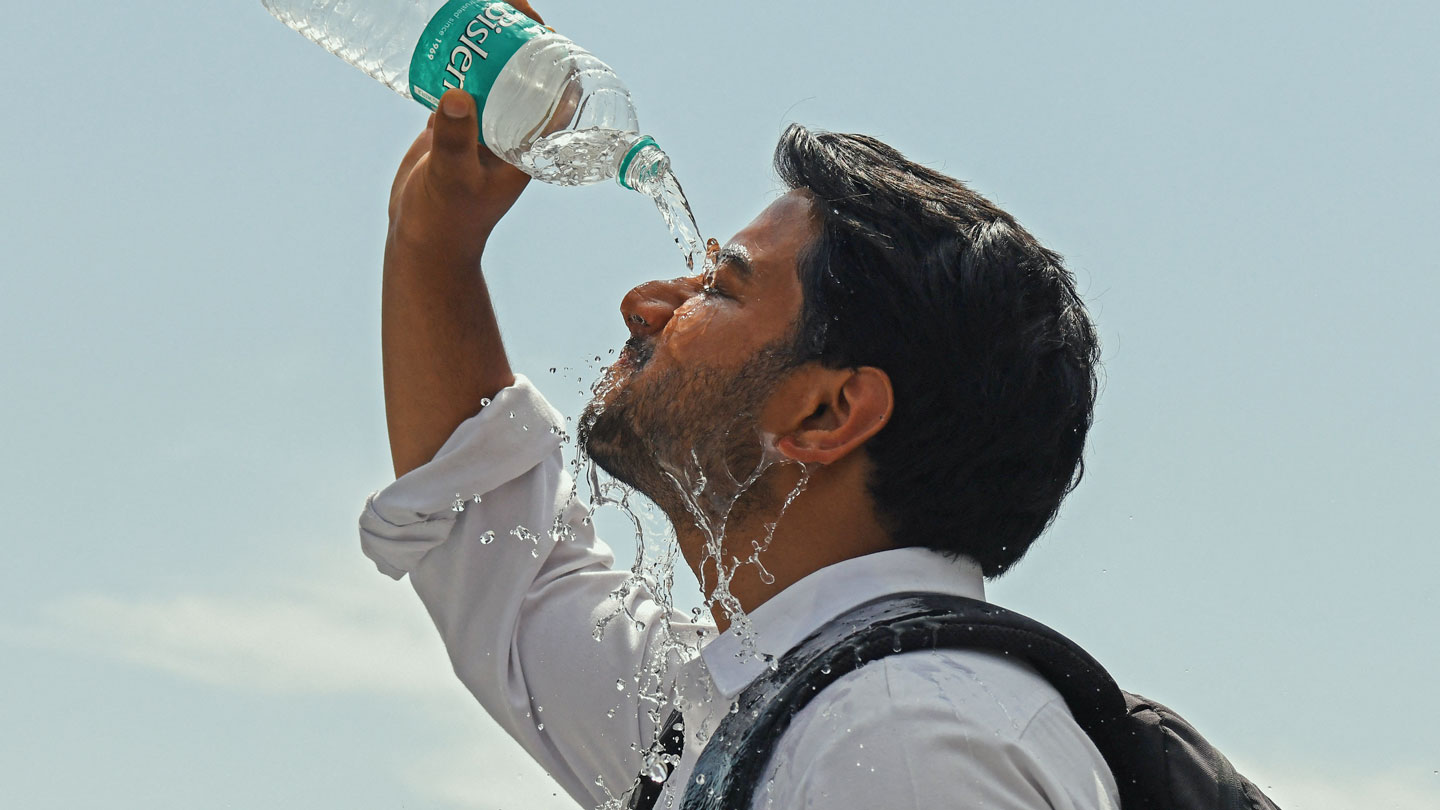
During hot weather, daily activities such as walking and gardening can become dangerous. Such obstructive heat has become much more common around the world, researchers report March 10 in Environmental Research: Health.
Using global heat, humidity and demographic data, scientists found that sweltry conditions now limit light physical activity for adults ages 18 to 40 for about 50 hours a year, on average. That’s double what young adults faced from 1950 to 1979. Meanwhile, adults over 65 now experience an average of about 900 hours of activity-limiting conditions each year. That’s more than 10 percent of the year and 300 more hours than half a century ago.
“We see substantial declines in the number of hours that older adults can safely do general tasks,” says human biometeorologist Jennifer Vanos of Arizona State University in Tempe.
She and her team combined heat and humidity data from 1950 to 2024 with simulations of healthy, acclimatized adults’ ability to regulate body temperature in the shade, plus population and development information for nearly 200 countries. The researchers then identified when and where heat and humidity made it unsafe for adults of different ages to do moderate physical activities, or those more strenuous than walking to the market or sweeping a doorstep. “That’s not any way to live,” Vanos says.
Nearly 80 percent of the global population lives in places where heat and humidity severely limit activity for older adults during part of the year, the researchers found. Countries in South and Southeast Asia and the Middle East face the greatest annual exposure. Older adults in Thailand, for example, now face an average of nearly 2,200 hours of obstructive heat, up from about 1,600 hours during 1950 to 1979. In Qatar, older adults today experience more than 2,820 such hours per year, up from about 2,270 a half-century ago.
Meanwhile, in the United States, older adults now face an average of about 270 hours each year of unsafe conditions, an increase of about 70 hours. However, those numbers can vary widely between communities, due to the country’s diverse environments.
Even in developed countries such as the United States and Qatar, vulnerable groups — such as outdoor workers and people with comorbidities — may lack the resources to cope with the heat, Vanos says. “Their livability, their ability to work and play, and just be even productive members of the population during very hot days is extremely compromised.”
Read the full article here