



Canada recently signed up to the EU’s Security Action for Europe agreement (SAFE) — a loan scheme aims to speed up procurement for defence equipment across the bloc — becoming the first non-European member state to do so.
On X, allegations that the European Union asked Canada for a €10 million participation fee to participate in SAFE fully, while demanding €6 billion from the UK have gained traction.
One post viewed more than 139,000 times, claimed that the EU is treating the UK unfairly and offering it a rough deal compared to Canada, sparking a debate over the difference in costs and the reasoning behind them.
Although these figures are rooted in reports of real negotiations, the overall picture is more complex.
What is SAFE?
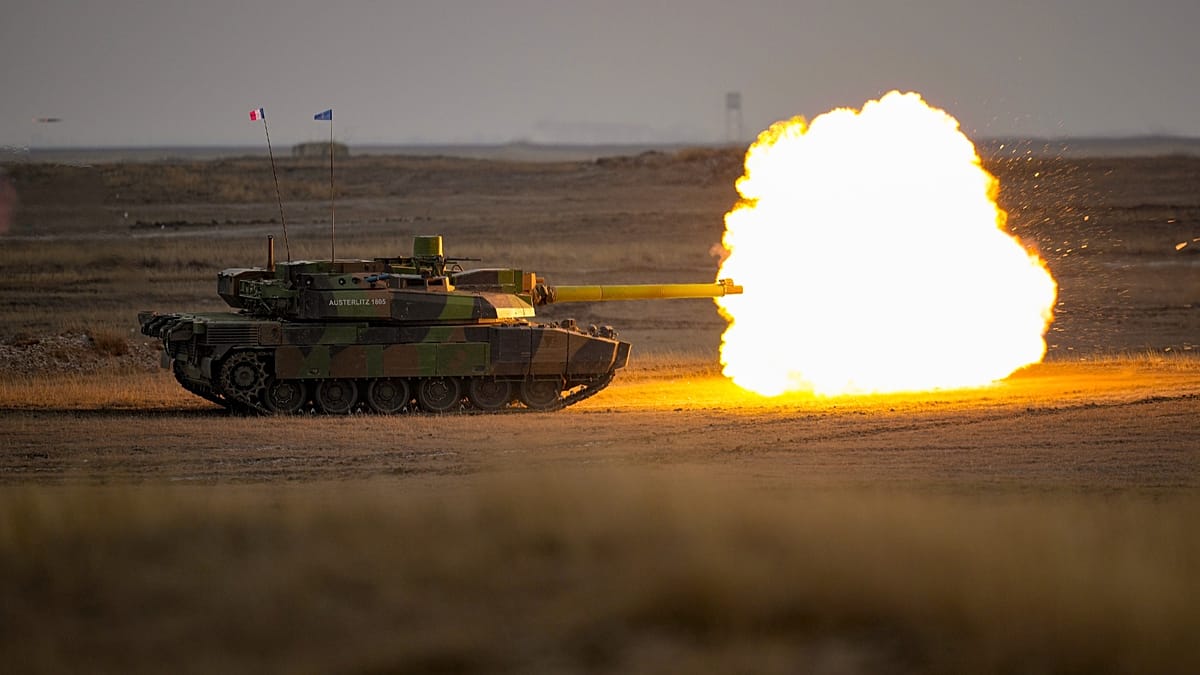
Security Action for Europe (SAFE) is a €150 billion loan instrument designed to speed up joint procurement of priority defence equipment in Europe by offering member states low-interest, long-maturity loans.
Procurement contracts must ensure no more than 35% of component costs of the weapons system originate from outside of the EU, the European Economic Area/ European Free Trade Association country, or Ukraine.
Only EU member states can receive SAFE loans, but certain third countries may participate in joint procurement projects if they conclude an agreement with Brussels.
Even without a full access agreement, countries which are not part of the bloc such as the UK, can still participate in up to 35% of SAFE-related procurement.
On 14 February, Canada officially concluded negotiations to participate in SAFE, less than a year after its Prime Minister Mark Carney signed the partnership with the European Union.
The European Commission confirmed to The Cube, Euronews’ fact-checking team, that Ottawa paid roughly €10 million as part of its participation, allowing Canadian companies to bid on joint projects under it.
The UK
The UK, on the other hand, has not reached an agreement. According to reporting by Bloomberg, the Commission proposed the UK pay between €4 billion and €6.75 billion to secure full participation.
In November, talks between the pair collapsed, reportedly over the price of the financial contribution discussed. A UK government spokesperson told The Cube it would not comment on internal EU processes.
The Commission has stated that financial contributions are linked to the forecasted economic benefits and the amount of contracts associated with participating. Even without a formal agreement, British firms can still take part in 35% of SAFE-funded programmes.
Despite the breakdown in talks, the UK has signalled openness to future negotiations on the scheme. British Prime Minister Keir Starmer has stated that his government would consider applying to join a potential second multi-billion-euro edition of the scheme, citing a commitment to working more closely with the EU on bolstering defence amidst Russia’s ongoing invasion of Ukraine.
Why is there a difference?
The UK has one of Europe’s largest defence sectors, holding both major manufacturers and is deeply integrated into European supply chains.
Data from the Stockholm International Peace Research Institute shows the UK is consistently ranked as a top global military spender and home to several major arms-producing companies, such as BAE systems.
Canada ranks lower than the UK, spending less of its GDP on defence, despite commitments to increase it.
Canada spent at least 1.4% if its GDP on defence between 2024 and 2025, compared to the UK’s approximately 2.3 to 2.33%.
In this context, the UK would likely bid on and win more SAFE funded contracts than Canada, and therefore reap a larger expected benefit, explaining the difference in price to participate in the instrument.
Read the full article here