



Israeli strikes on Lebanon have displaced around 800,000 people as those dealing with the fallout of a growing humanitarian crisis express their fears for the coming days.
“Every minute the situation is getting worse,” said Aline Kamakian, who is leading World Central Kitchen’s (WCK) response in Lebanon. From eight kitchens across the country, the group has served over 200,000 meals in shelters and communities while hosting uprooted families.
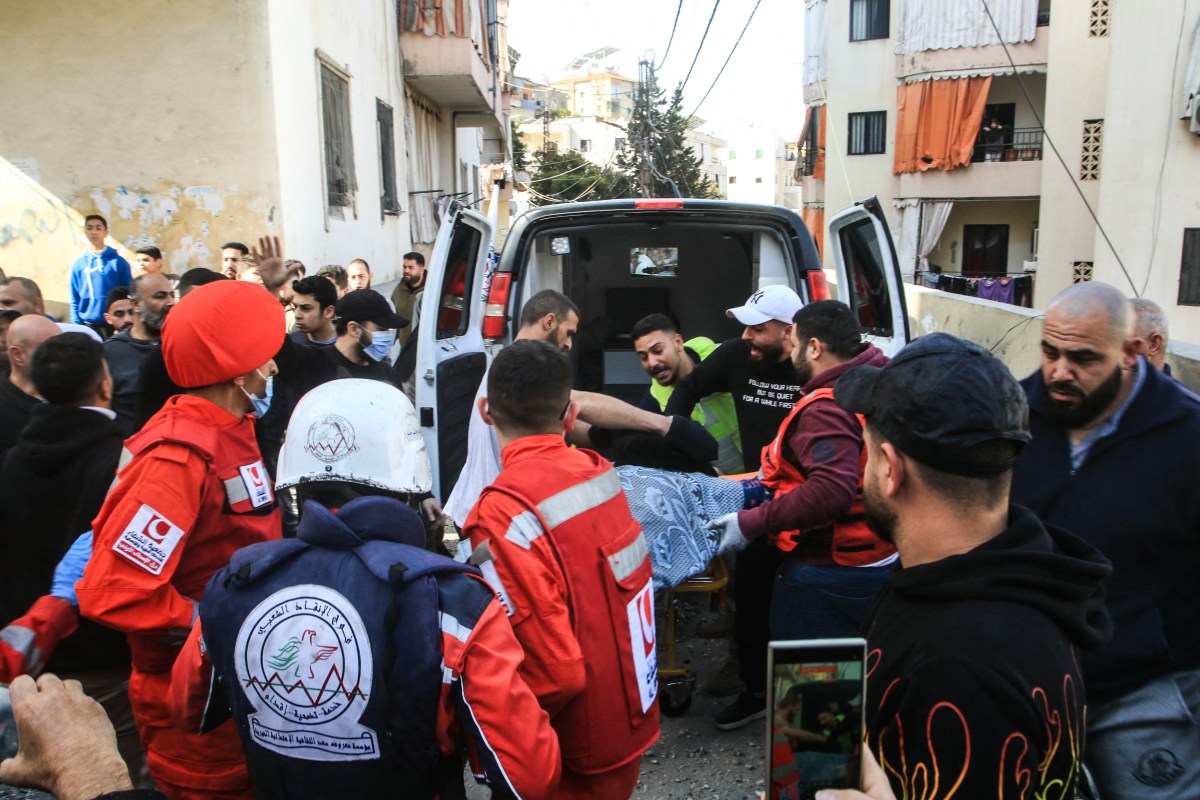
The death toll in Lebanon is mounting, with the country’s health ministry saying Friday that eight people had been killed in a strike in the southern coastal city of Sidon, with the number expected to rise. This takes the number of dead in the country to 773, including over 100 children, according to Lebanese authorities, cited by the Associated Press.
The speed of the displacement in Lebanon has been head-spinning, with Kamakian saying that the WCK is trying to find shelter and meals for ever swelling numbers. “They’re sleeping on the street without anything,” she said. “50 percent of them have lost everything because every day the bombardment is getting harsher.”
“I don’t know where these people will go back to, if they will go back to anything,” she added.
Iranian-backed Hezbollah fired its first missile toward Israel’s Haifa on March 2, three days after U.S.-Israeli troops started strikes on Iran. Within hours, hundreds of thousands of people had to flee from Lebanon’s south amid Israeli evacuation orders.
It marked the categorical end of an uneasy ceasefire in November that followed Operation Northern Arrows launched on September 23, in which there were hundreds of airstrikes on the south, Beirut and the Bekaa Valley.
“It’s different than last time, because this time many people did not evacuate their zones or their homes, because in the south, in the Bekaa, there are still people that don’t want to evacuate because there is no place to go,” said Malak Khiami, program manager with Project Hope, which is providing health care support in Lebanon.
“The government had a plan to have some specific shelters to non-Lebanese, including migrants, Syrian refugees, maybe Palestinians, but it’s still not done yet,” said Khiami, who has left her home and moved to the north of Beirut for safety.
“Some people are sleeping at night on the Corniche and they are going back to their homes during the day just because at night they feel safer,” she told Newsweek, expecting that with new evacuation orders, up to 1.5 million people are expected to be displaced, or around one quarter of the population. “The situation is very chaotic.”
The crisis has raised divisions in Lebanese society and criticism of its government over not doing enough. “The government had a plan to have some specific shelters to non-Lebanese, including migrants, Syrian refugees, maybe Palestinians,” Khiami said, “but it’s still not done yet.”
Israel’s military said Friday it had struck the Zrarieh Bridge spanning the Litani River, which appears to be the first time it has acknowledged attacking civilian infrastructure since the conflict began.
On Thursday, Israeli strikes targeted at least four sites across Beirut, including Lebanese University, which local officials said was the first time such an institution has been directly targeted during the current escalation.
It comes amid growing international concern at the price Lebanon is paying for Operation Epic Fury by the U.S. and Israel against Iran.
U.N. Secretary-General António Guterres on Friday arrived in Beirut, where he called on Israel and Iranian-backed Hezbollah to negotiate a ceasefire, saying that Lebanon had been “dragged into” this war against its will.
“People are tired because a lot of people have just rebuilt their houses,” said Vanessa Zammar, co-founder of the menstrual justice collective Jeyetna, which is helping give women and girls in Lebanon access to essential menstrual products—a pursuit that has become challenging during wartime. She said that there has been four waves of displacement and the shelters have become more organized but Jeyetna is dealing with big orders.
She told Newsweek that while there is an estimate of more than 800,000 people displaced and registered in shelters, that does not include those who are not in official shelters, those who are on the street and migrant workers who are unaccounted for.
“There is a very heavy sense of resignation,” Zammar said. “There is a very heavy sadness—it’s not agitation. It is just a heaviness that people feel, they are exhausted. We started this war exhausted.”
“We know how far it went last time.”
Read the full article here