




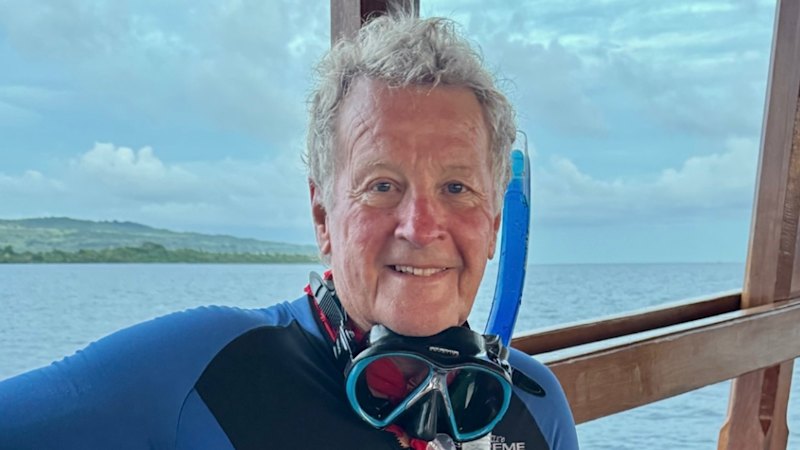
The 2011 Brisbane floods were the catalyst for Greg Stegman’s spiral into alcoholism.
“We had a lovely home on the river in Kenmore,” Stegman, 75, said. “Our house flooded, and we realised afterwards that we didn’t have flood insurance.”
It cost nearly $300,000 to repair the property, during which time Stegman stayed in the house working, while his wife went to live with family. That’s when he started drinking heavily.
“Instead of drinking half a bottle of wine at night, I was drinking two bottles,” he said. “This continued when I retired in 2014.
“It just became part of my lifestyle that I drink two bottles of wine because one was never enough.”
Prompted by declining mental health, Stegman considered Alcoholics Anonymous and tried therapy for his drinking, but neither fit. Then a home detox caught his attention.
“I was just trying everything I could to stop drinking,” he said.
“This went on for a couple of years until I saw an ad for Clean Slate.”
Clean Slate is a GP-led program providing in-home medical detox services for people withdrawing from alcohol.
It was co-founded in 2020 by addiction medicine specialist Dr Chris Davis who saw a need for more accessible drug and alcohol treatments.
“It takes an average 18 years for someone with alcohol use disorder to ask for help, and only one in five people ever ask for help when they’re drinking,” Davis says.
Medically supported services such as rehabilitation and in-patient hospital programs can be highly effective for chronic alcohol users, and are necessary for people at risk of withdrawal seizures.
But Davis says for some drinkers, such intensive treatments can be stigmatising. “People are worried [if they ask for help] they’re going to be called an alcoholic,” he said.
“And so they just stay silent until they hit crisis.”
Crisis point, Davis said, strains hospital services, with people admitted following an emergency presentation at a higher chance of relapse.
“It’s this revolving door that we see all the time, and it’s heartbreaking because it’s not the fault of the person, it’s the fault of the system,” he said.
Alcohol-related hospitalisations across Brisbane’s Metro North and Metro South hospitals have remained steady over the last five years, with more than 4900 hospitalisations in 2025.
Figures include conditions such as toxic effect of alcohol, gastritis, alcoholic liver disease, mental and behavioural disorders due to alcohol use and chronic pancreatitis.
Patients admitted to hospital for inpatient withdrawal treatment have likewise remained steady, with 473 admissions last year, with an average daily cost of $1650.
Queensland Network of Alcohol and Other Drug Agencies (QNADA) chief executive Rebecca Lang said different treatments work for different people, but notes there is a shortage of publicly funded programs.
“In the absence of a plan to grow our publicly funded system to be able to meet the need, it remains the case that enterprising folks will set up models that work within the current system,” she said.
Lang said Clean Slate can be effective for people at a geographical disadvantage, and those who don’t need hospital supervision to withdraw from alcohol.
“A lot of people are dependent, and need support to change that, but don’t need [hospitalisation],” she said.
Chris Gimpel’s drinking habits were kick-started by a move to London and a high-pressure banking career in his early twenties.
“I went straight into a workplace culture of being at the pub every day for lunch to meet the team,” Gimpel, now 42, said.
“Back then [the corporate world] was just all type A’s. If you weren’t running hard and playing hard, you were left behind.
“Alcohol was what I leaned on to fit in.”
At the height of his drinking, Gimpel was consuming around 20 standard drinks a day. He decided to seek help during COVID, after his family became aware of his daily routine.
“The tipping point was someone actually seeing what it had been like behind closed doors for me for some time,” he says.
Gimpel’s detox through Clean Slate began with the goal of taking a three-month break from alcohol.
“I was too scared to say I would never drink again,” he said. “If someone had told me you’ve got to give up for the rest of your life, I would have just kept delaying [treatment].”
Stegman said he started his detox with the hope of moderating his drinking: “But I knew I had this taste for alcohol and that it was pointless thinking that I could actually be in charge of my own destiny whilst still having a couple of drinks a day,” he said.
Gimpel made 101 days without alcohol before relapsing. But April will be three years since his last drink.
Stegman marked two years in February.
An evaluation of Clean Slate’s in-home service by the University of Sydney found the program offered a “feasible model” and was “highly adoptable”, with an 82 per cent completion rate.
Davis said their next goal is to secure federal funding to broaden subsidised access, with a pre-budget submission proposing a ‘National Hospital Avoidance Program’.
Start the day with a summary of the day’s most important and interesting stories, analysis and insights. Sign up for our Morning Edition newsletter.
From our partners
Read the full article here