




Forget after-school programs and the lady next door; today’s parents are surrounding themselves with non-traditional villages, according to new research.
A survey of 2,000 parents, including 1,000 who have kids ages 0 to 9 and 1,000 who have kids ages 10 to 17, revealed that family friends or those with longstanding ties to other family members (29%) and regular friends (28%) are in the top five biggest modern-day supporters.
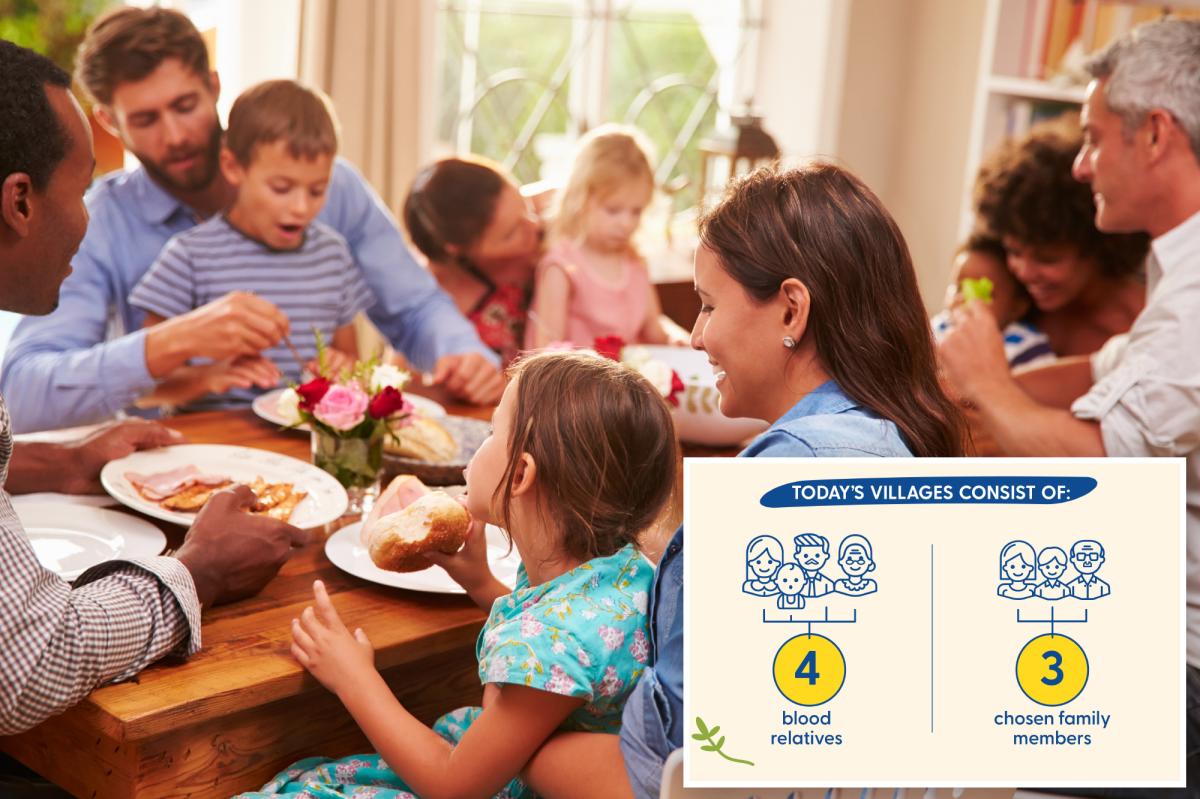
Blended villages may be the new norm. On average, today’s villages consist of four blood relatives and another three “chosen family” members.
And while they say change may be one of the only constants, 35% of those polled say their village is forever and “never” changes.
Though two in five say their village is smaller than their parents’ when they were growing up, quantity doesn’t necessarily define quality. Almost half (49%) of those polled feel more supported by their village today than their parents did.
In fact, help from their village allows respondents to be better parents and people. Half say that support allows them to have some personal “me” time, while others say it allows them to feel more present with their family (42%), get chores done (39%), and spend more time with their kids (35%).
This may be because the average parent polled spends nearly half their week (three full days) feeling overwhelmed or stretched thin. On top of that, they also feel stressed about finding time to put a meal on the table an average of four times every week.
Conducted by Talker Research on behalf of Mrs. T’s Pierogies to support the Pass the Pierogy initiative, the survey explored how the smallest gestures from their village make the biggest difference.
Results found that support is most needed in everyday moments. More parents lean on their village when they need a mental or physical break (41%), when they’re sick and still parenting (33%), or when family schedules don’t align (31%) than during big life moments such as having a baby or moving (25%).
When asked the most meaningful, simple way their village has shown up for them, food was front and center. One parent said, “cooking meals when [we] had no food,” while another shared “a friend dropping off dinner when I was too busy to cook” or even “providing food during the holidays.”
Nearly all respondents (86%) believe that eating meals together as a family is important to their child.
“Parents polled find that needing to cook a full meal takes them away from spending quality time with their loved ones on average four times every week, which can feel overwhelming,” said Olivia Zawatski, Marketing Communications Manager, Mrs. T’s Pierogies. “There are quick and easy mealtime solutions that help reduce that stress – whether you’re feeding your own family or cooking for someone in your village who needs support. When dinner is simple and delicious, families have more time to connect with one another.”
The survey also had parents share their kids’ perspectives, asking a few questions geared towards the children who are over the age of 5.
According to the results, 61% of kids between the ages of 10 and 17 regularly hear their parents refer to their friends as part of the family, reiterating the rise of non-family-focused villages.
Family or not, kids also outlined some of the most important things they’ve learned from members of their village. These nuggets range from life lessons to daily advice, with one child saying, “don’t touch a hot stove,” and another learning “how to make gnocchi” or “how to ride a bike.”
Others took things a step further, saying “that you don’t have to be blood to be family,” or that their “mental health is important,” or even to “always be kind.”
When asked their favorite thing to do with members of their village, playing (55%), cooking (42%), and traveling (32%) ranked as the top three.
“Results found that kids polled wish they could spend more time playing games (48%), going to the park (47%), and even cooking (30%) with their parents, underscoring just how much children crave those precious everyday moments with the people they love most,” said Zawatski. “That’s exactly why we’re encouraging parents to find simple, meaningful ways to show up for their village so families can reclaim time together that often gets lost in the daily shuffle. One small act in sharing a meal with another parent can have a ripple effect and go a long way for families.”
Research methodology:
Talker Research surveyed 2,000 parents with 1,000 who have children ages 0 to 9 and 1,000 who have children ages 10 to 17 who have access to the internet; the survey was commissioned by Mrs. T’s Pierogies and administered and conducted online by Talker Research between Jan. 21 and Jan. 29, 2026. A link to the questionnaire can be found here.
Read the full article here