
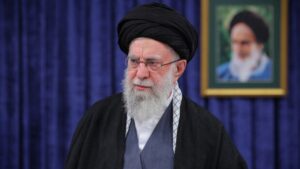


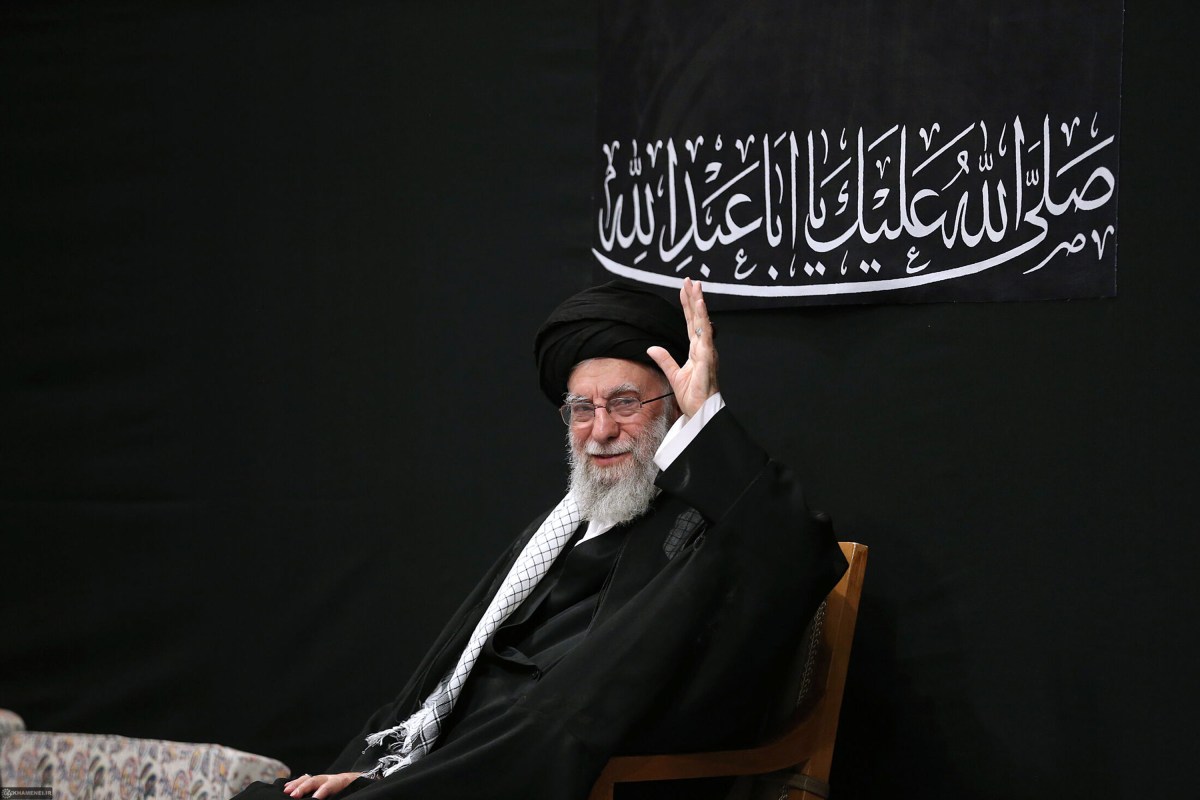
Ayatollah Ali Khamenei, Iran’s Supreme Leader, shaped the modern Middle East more than any other leader over the past four decades, ruling the country with an iron fist and crushing dissent with brutality.
Having played a key role in the 1979 Islamic Revolution, he became president of Iran in 1981 and succeeded Ayatollah Khomeini as Iran’s Supreme Leader in 1989.
Khamenei tightened control over the country’s political system and turned the role into the ultimate center of power. Under his rule, elections were closely managed, dissent snuffed out and the security state has expanded exponentially.
His death in a joint U.S. and Israeli operation Saturday morning turns the page on a long and bloody chapter in the history of the Middle East: whether it closes the book remains to be seen.
How Khamenei stayed in power
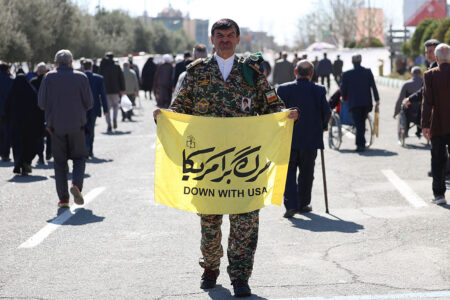
Khamenei survived so long by exercising immense control for decades. He oversaw repeated crackdowns on protests, including major unrest in 1999, 2009, 2017—18, 2023 and again this January, when demonstrations over economic hardship, corruption and political repression spread across several cities.
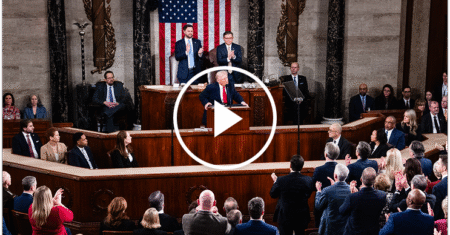
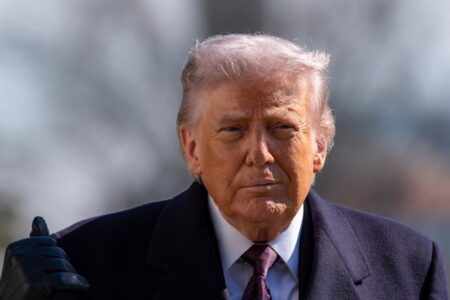
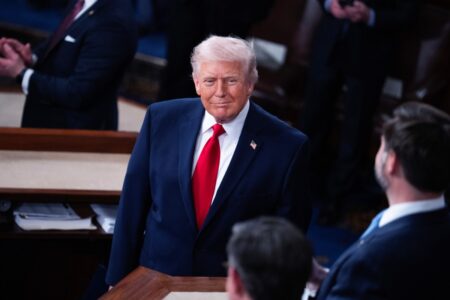
During his State of the Union address earlier this week, Trump claimed that 32,000 Iranians had been killed in the recent protests. Other groups estimate the death toll to be lower, but the scale of the protests and the brutality of the regime’s response to them are not in doubt.
During his rule, the Islamic Revolutionary Guard Corps (IRGC) has grown significantly more powerful, serving not only as the regime’s chief enforcer but also as a dominant force in Iran’s economy and political system.
Khamenei has also survived past military action and assassination attempts. During last June’s conflict and other periods of heightened tension, he retreated into secure locations, with communications tightly restricted to a small circle of trusted aides. That pattern of disappearing from public view during crises underscores how carefully the leadership prioritizes regime survival, even under direct external pressure.
It therefore seems odd that he was killed by a airstrike on his compound in Tehran during a joint U.S.-Israeli operation.
Khamenei and his family are linked to vast assets that underpinned the Supreme Leader’s influence in Iran. A 2013 Reuters investigation found that entities controlled by Khamenei—especially the “Setad Ejraiye Farmane Hazrate Emam” conglomerate (Headquarters for Executing the Order of the Imam)—held an economic empire worth an estimated $95 billion, built largely through real estate acquisitions and corporate stakes across finance, oil, telecommunications and more.
Reports suggest Khamenei opposed officially naming his son, Mojtaba Khamenei, as heir because it could trigger backlash and accusations of turning the system into a dynasty. The succession is likely to be decided by clerical consensus.
Built network of militias
Beyond Iran’s borders, Khamenei built a powerful network of allied militias and political movements often referred to as the “Axis of Resistance.” This alliance includes Hezbollah in Lebanon, Shiite militias in Iraq, pro-Iranian forces in Syria and the Houthis in Yemen.
Through funding, weapons, training and intelligence support—largely coordinated by the IRGC’s Quds Force—Iran has projected power far beyond its borders without always entering direct war. The strategy has enabled Tehran to pressure Israel, target U.S. interests and compete with Saudi Arabia for influence.
Developed Iran’s nuclear ambitions
Khamenei’s pursuit of nuclear capability for Iran has unfolded over decades. In 2002, revelations about the hidden Natanz enrichment facility exposed the scale of Iran’s ambitions, triggering international alarm. Under pressure, Tehran briefly suspended enrichment in 2003 during talks with European powers, but the program resumed in 2006 after hard-liner Mahmoud Ahmadinejad’s election, with Khamenei’s backing.
Secret U.S.-Iran contacts began under President Barack Obama, culminating in the 2015 nuclear deal that limited enrichment in exchange for sanctions relief. But after President Donald Trump withdrew from the agreement in 2018, Iran gradually reduced compliance, increasing enrichment levels—including to 60 percent purity in 2021, a short technical step from weapons-grade.
Despite sabotage, assassinations and airstrikes—including Israeli attacks and direct U.S. intervention in 2025—Iran expanded and fortified its facilities. Khamenei said the program was a sovereign right and a necessity.
Ultimately it has led to his demise.
Iran v The West
Under Khamenei, Iran’s relationship with the West has been marked by deep mistrust and repeated confrontation.
He has consistently portrayed the U.S. and its allies as hostile powers seeking to weaken Iran’s independence and Islamic system. Disputes over Iran’s nuclear program, missile development and regional influence have led to cycles of sanctions, negotiations and military tensions.
The 2015 nuclear deal briefly eased pressure, but the U.S. withdrawal in 2018 reignited the standoff. In response to Western sanctions and isolation, Tehran has strengthened ties with Russia and China, while maintaining a defiant, anti-Western posture at the core of its foreign policy.
Last month, Iranian state TV broadcast a threat against Trump, showing footage of the 2024 assassination attempt Trump survived, captioned in Farsi with the words: “This time, the bullet won’t miss.” Trump responded by saying that if that happened, the entire country would be blown up.
The Iran Khamenei leaves behind
The death of Khamenei does not mean the Islamic Republic dies with him.
Khamenei’s legacy is a system engineered for survival, not collapse. Iran’s political, military and clerical institutions are deeply entrenched and designed to withstand intense internal and external pressure.
As tensions with the U.S. and Israel have risen, Khamenei focused relentlessly on regime continuity, empowering a tight circle of loyalists and expanding contingency planning. According to U.S. and Iranian officials cited in recent reporting from the New York Times, he has layered succession plans for key military and government roles, with deputies and backups ready if leaders are killed or communications severed.
Ali Larijani, the powerful head of Iran’s Supreme National Security Council, has been given additional powers, reflecting this survival strategy. Iran has also revived a “mosaic defense” doctrine to decentralize command so local units can act independently in wartime, ensuring that even severe strikes or leadership losses would not unravel the Islamic Republic’s core institutions.
What happens next?
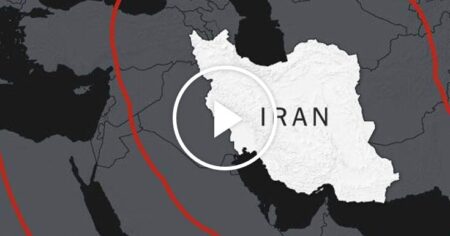
Tehran has already retaliated with missiles fired at Israel and other U.S. allies in the region, and further conflict could escalate into a broader war. Its armed forces are prepared for sustained fighting. Hezbollah, militias and other proxies could open more fronts, intensifying regional instability.
U.S. calls for regime change might reinvigorate domestic protests, but Iran’s powerful security apparatus has a history of crushing dissent. Exiled opposition figures could emerge, but it is also possible that the Islamic Republic survives.
Last summer, Khamenei is thought to have named three senior clerics as possible successors. The Islamic Republic has protected its grip on power since 1979, surviving war, sanctions and wave after wave of protests. It will strive to do so again.
Hey gang, Carlo Versano here. I hope you enjoyed this article. As Newsweek‘s Director of Politics and Culture and editor of the 1600 newsletter, I’m keen to hear what you think. Now, Newsweek is offering a new service to allow you to communicate directly with me in the form of a text message chat. You can sign up and get a direct line to me, as well as the reporters who work for me. You can shape our coverage.
As a Newsweek member, we’re offering this service to you for free. You can sign up below, or read more about how it works here. Let’s talk!
Read the full article here