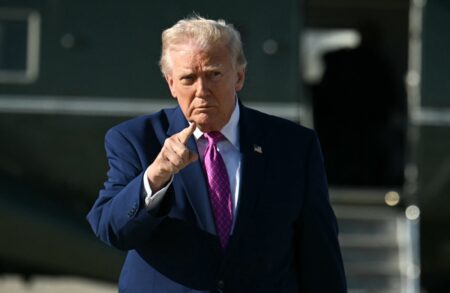




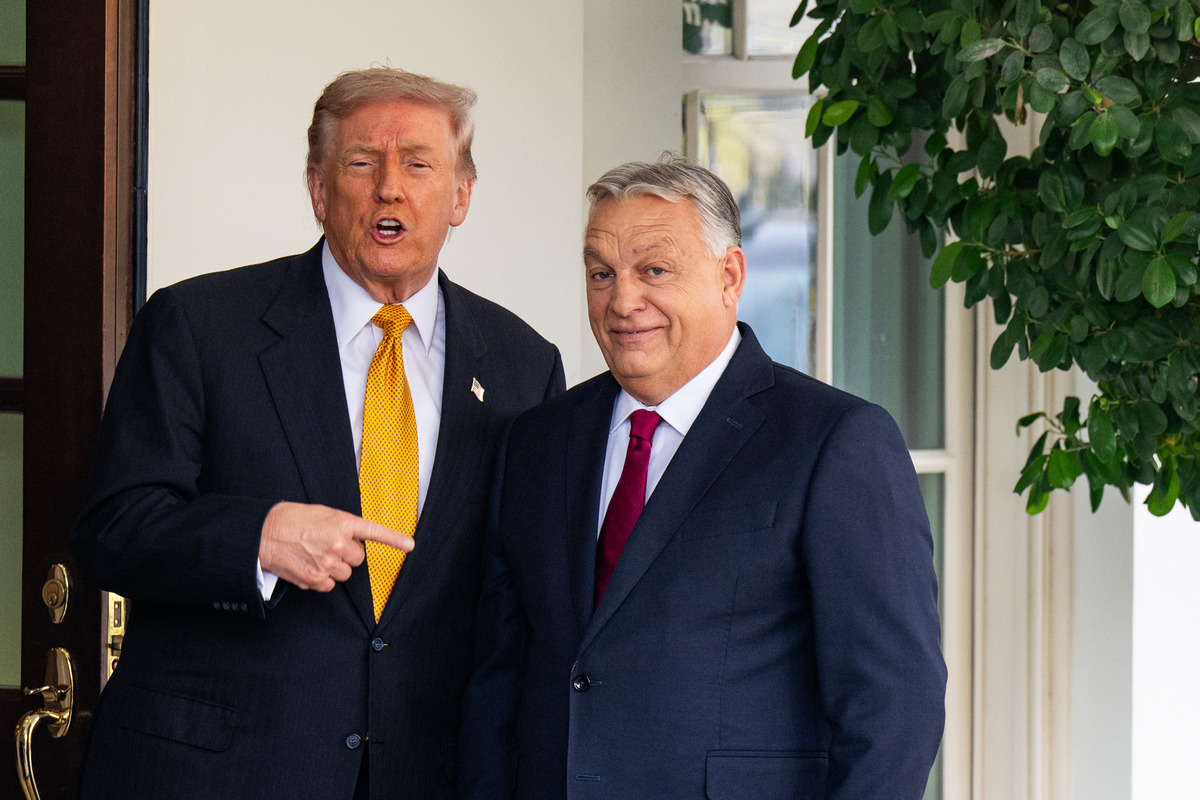
Hungary’s longtime leader Viktor Orbán lost the country’s closely-watched parliamentary elections on Sunday, dealing a stinging blow to a staunch ally of President Donald Trump despite overt support from top U.S. officials leading up to the vote.
Orbán conceded to Péter Magyar, a former member of Orbán’s far-right, populist Fidesz party.
Magyar, Orbán’s main political adversary and leader of Tisza, a conservative but pro-European alternative to Fidesz, had pulled ahead in polls despite strong backing for Orbán from Trump and far-right leaders across the globe. Betting platforms had deemed an Orbán victory unlikely.
Vice President JD Vance vowed to “help” Orbán win during a visit to Budapest this week, while Secretary of State Marco Rubio, in his own visit to the Hungarian capital in February, proclaimed to Orbán: “Trump is deeply committed to your success.”
On Friday, the president himself pledged economic support to Hungary if Orbán returned to power.
Magyar had campaigned on an anti-corruption ticket, homing in on domestic issues like the economy in a bid to stop Orbán’s fifth election victory.
Orbán’s self-declared “illiberal democracy,” a term that has become shorthand for a democratic state with fragile liberal principles like weakened independent media and courts, has long been a model for Trump’s own Make America Great Again (MAGA) program.
Steve Bannon, an early MAGA architect, previously described the Hungarian leader as “Trump before Trump.”
Orbán has painted himself as a Christian bastion against progressive values and “wokeness,” opposed to LGBTQ+ rights, the European Union and Ukraine, while keeping an open line to the Kremlin. Like Europe’s other prominent far-right figures, he has adopted a firmly anti-immigrant stance, which has resonated with the White House.
Budapest has appeared largely exempt from the Trump administration’s biting criticism of Europe, which has driven a wedge between the U.S. and many of its allies there.
The White House has repeatedly berated European members of NATO for spending too little on their militaries over decades, instead leaning too heavily on the U.S. to defend them, including against a possible Russian attack.
While many European officials agree most countries on the continent need to spend more on defense to lighten the load for U.S. forces, accusations from the U.S. that Europe is censoring free speech and on the cusp of losing “national identities” have been poorly received.
The administration’s 2025 National Security Strategy, a key document outlining the government’s position on foreign policy, claimed Europe was at risk of “civilizational erasure” and explicitly supported right-wing candidates and parties vying for power.
Several European leaders hit back at the document when it was published in late November, including Germany’s Chancellor Friedrich Merz, who described parts of the policy paper as “unacceptable.”
The U.S.’ desire to take control of Greenland, a part of fellow NATO member Denmark, further frayed relations with some of America’s closest friends.
NATO’s reluctance to join the U.S. and Israel’s war with Iran, now in its seventh week, only heightened tensions even more.
The stream of support from the White House to Orbán continued as voters headed toward the polls in Hungary. “We hope you will vote for my father’s friend and ally,” Donald Trump Jr., the president’s eldest son, said in a social media post overnight into Sunday.
In an apparent reference to souring relationships between the U.S. and major European powers, he added: “One leader in Europe has a direct line to the White House.”
The loss is a hit for the right-wing politics the Trump administration has hoped to boost in Europe.
Before voting got underway, Ivan Krastev, chair of the Center for Liberal Strategies in Sofia, Bulgaria, told CNN a loss for Orbán would have “an incredible psychological impact” and knock the perceived strength of the far right.
More than two thirds of registered voters had cast their ballots by 3 p.m. local time, a dramatic increase on the previous turnout for elections in 2022.
Ahead of the announcement of the results, Magyar said the turnout figures “clearly show what we have known all along,” adding Sunday’s vote “will go down in Hungary’s history books.”
Read the full article here