



An independent team of experts led by the state’s chief psychiatrist will oversee NSW’s oldest psychiatric hospital in its final stages of operation, after three people died in two separate incidents allegedly involving patients who had absconded from its care.
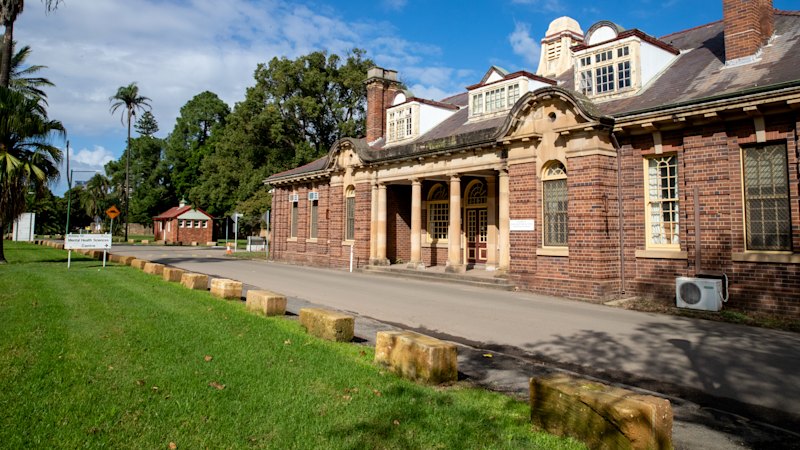
Sydney’s Cumberland Hospital is due to close at the end of next year once construction is completed on a new $540 million integrated mental health complex at Westmead.
NSW Health Minister Rose Jackson said on Wednesday the 175-year-old facility was no longer fit for purpose, and the intervention by some of the state’s most senior mental health experts would restore public confidence in the hospital until its closure.
“It’s a comprehensive response that is called for in the circumstances,” Jackson said. “If it needs to last until the opening of the new complex, then that is absolutely something we’re open to.”
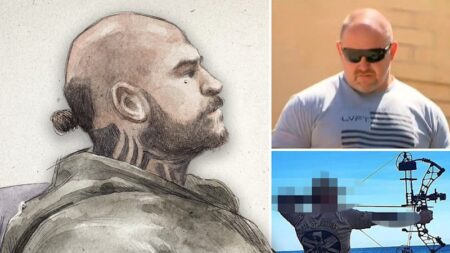
Mooniai Leaaetoa, 25, who is accused of stabbing one person to death and severely injuring two others at a Merrylands shop, and Luke Peter Francis, 31, who allegedly killed two women in a car crash during a police pursuit, had both allegedly absconded from Cumberland Hospital before the separate incidents last week.
Another patient, Madan Pandey, absconded from the hospital just three days after the two tragedies, compelling Jackson to announce a review into the facility’s security. Pandey has since been returned to the hospital by police, Jackson said.
Both Leaaetoa and Francis had been detained at Cumberland under Section 19b of the Mental Health and Cognitive Impairment Forensic Provisions Act, which allow magistrates to divert people who may be mentally ill or disordered to mental health facilities for assessment.
The intervention team announced by Jackson on Wednesday includes Professor Matthew Large, a prominent psychiatrist and researcher at the University of NSW who last week told this masthead that the increased use of Section 19b orders had led to mental health facilities being expected to function as prisons for people diverted from the criminal justice system.
The result, Large said, was two cohorts of patients ending up in the same wards: those diverted from the justice system and effectively in custody, and very unwell, law-abiding and rarely dangerous patients, who comprise the overwhelming majority of those admitted to inpatient mental health care in NSW.
“This combination leads to wards that can be unpredictable, frightening and at times even dangerous,” Large said. “Hospital staff, mostly nurses, are well-trained and caring, but they are not guards.”
Cumberland Hospital’s new ‘independent oversight team’
- Dr Murray Wright, NSW Health chief psychiatrist, and his registrar Dr Alex Chye.
- Dr Brendan Flynn, psychiatrist and executive director, NSW Health mental health branch.
- Professor Matthew Large, psychiatrist, University of NSW conjoint professor.
- Sheila Nicholson, mental health director, Royal North Shore and Ryde Health Service.
- Anna Bajuk, site manager, Macquarie Hospital.
- Jenny Glass, mental health operations manager, South Western Sydney Local Health District.
- Dr Grant Sara, director, system information and analytics.
NSW chief psychiatrist Dr Murray Wright, who will lead the intervention, said the use of 19b orders would be interrogated in the review but argued they were often the best.
“These are people who have a mental illness,” Wright said. “We need to be balanced about the fact that the person on the 19b is an individual with a mental illness who is likely to do better … if they’re in a therapeutic environment, as opposed to a custodial environment.”
The number of security guards on site at any one time has been increased from four to six, Jackson said.
The Morning Edition newsletter is our guide to the day’s most important and interesting stories, analysis and insights. Sign up here.
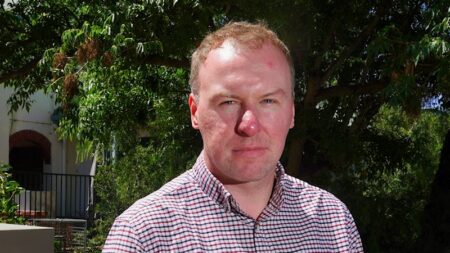
 Angus Thomson is a reporter covering health at The Sydney Morning Herald.Connect via X or email.
From our partners
Read the full article here