



Two men killed in a controversial “double-tap” U.S. military strike on a suspected drug-trafficking vessel in September did not appear to have a radio or any other means of communication, the senior commander overseeing the operation told lawmakers.
Adm. Frank “Mitch” Bradley, who ran Joint Special Operations Command at the time, delivered the update in closed-door briefings viewed by lawmakers from both parties.
His account, reported by CNN and published Thursday, undercuts earlier private briefings where defense officials suggested the survivors were attempting to “radio for help.”
Lawmakers who viewed the video called it “enormously disturbing.”
Why It Matters
Bradley’s acknowledgement that the survivors could not call for reinforcements removes the central claim previously used to argue they were still legitimate targets. CNN quoted one source familiar with Thursday’s briefing who described the rationale for the second strike as “f**king insane.”
The shift adds to weeks of evolving explanations from the current administration.
Newsweek has reported that Pentagon officials were aware survivors remained alive before the follow-up strike was ordered, citing sources who said surveillance footage showed the men clearly visible on the wreckage.
The Pentagon’s law-of-war manual states that killing shipwrecked people who are “in need of assistance and care” and refraining from hostile acts is prohibited, fueling scrutiny over whether the second strike violated those standards.
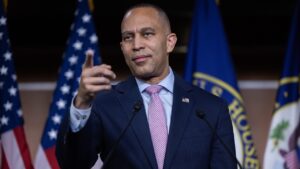
Speaking to CNN‘s Jake Tapper, Democratic Rep. Jim Himes said the video was “enormously disturbing” and in his view amounted to a war crime. “According to the manual… you do not kill them [shipwrecked sailors] because they are out of combat, incapable of further hostilities. And doing so is a war crime. I want to be careful of my language, we didn’t get the audio, but that’s sure what it looked like to me.”
What To Know
The first strike used two missiles and blew the suspected cocaine-carrying vessel in half, killing nine people and capsizing the remains, according to CNN. Surveillance footage shown to lawmakers included a zoomed-in view of two survivors clinging to an overturned portion of the boat.
For roughly 41 minutes, Bradley and other commanders debated how to proceed as the men struggled to stay afloat.
Bradley told lawmakers he ordered two additional missiles to destroy what remained of the vessel because part of it appeared to still contain cocaine. According to CNN’s sources, the logic presented to lawmakers was that the survivors could drift to safety, potentially be rescued, and then resume trafficking the drugs.
Reactions to the video sharply diverged. Senate Intelligence Committee Chair Tom Cotton told CNN he saw “two survivors trying to flip a boat…loaded with drugs…so they could stay in the fight.”
Rep. Himes called it “one of the most troubling things” he has witnessed as a lawmaker, saying the men had no weapons and were “clinging to a wrecked boat.”
Himes later told CNN’s Tapper that the footage was “enormously, enormously disturbing,” showing “that the initial strike caused an immense amount of damage, a fire… and ultimately the end result was two individuals without any weaponry… clinging to a wrecked boat… the decision was taken to kill them.”
Bradley also told lawmakers, according to CNN, that Defense Secretary Pete Hegseth did not issue an order to “kill them all,” contradicting an earlier claim reported by the Washington Post.
Hegseth said this week that he watched the initial strike but then left for meetings and learned of the second strike hours later. Hegseth initially dismissed early reporting about the follow-up attack as “fabricated,” before the White House confirmed its existence.
Since September 2, the U.S. military has carried out more than 20 additional strikes on boats it has labeled “narco-terrorist” vessels, killing at least 87 people, drawing warnings from legal experts who argue the broader campaign may be unlawful.
What People Are Saying
Former Special Counsel Department of Defense Ryan Goodman on X: “This collapses the one ‘argument’ Hegseth had against it being war crime: “Two men killed as they floated holding onto their capsized boat .. DID NOT APPEAR TO HAVE RADIO OR OTHER COMMUNICATIONS DEVICES, the top military official overseeing the strike told lawmakers.”
House Intelligence Committee Chairman Rick Crawford of Arkansas on CNN: “I feel confident and have no further questions of Hegseth.”
What Happens Next
The Senate Armed Services Committee has pledged oversight into the September 2 strike and the wider maritime campaign, while Thursday’s briefings appeared to push lawmakers further apart rather than toward a unified account.
Key questions remain unresolved, including the legal basis for treating drug-trafficking vessels as military targets, the precise scope of Hegseth’s pre-mission directives, and whether any intelligence ever supported the original claim that the survivors were attempting to radio for backup.
As scrutiny deepens, the administration continues to defend the broader operation even as its explanations for the most controversial strike continue to shift.
Read the full article here