

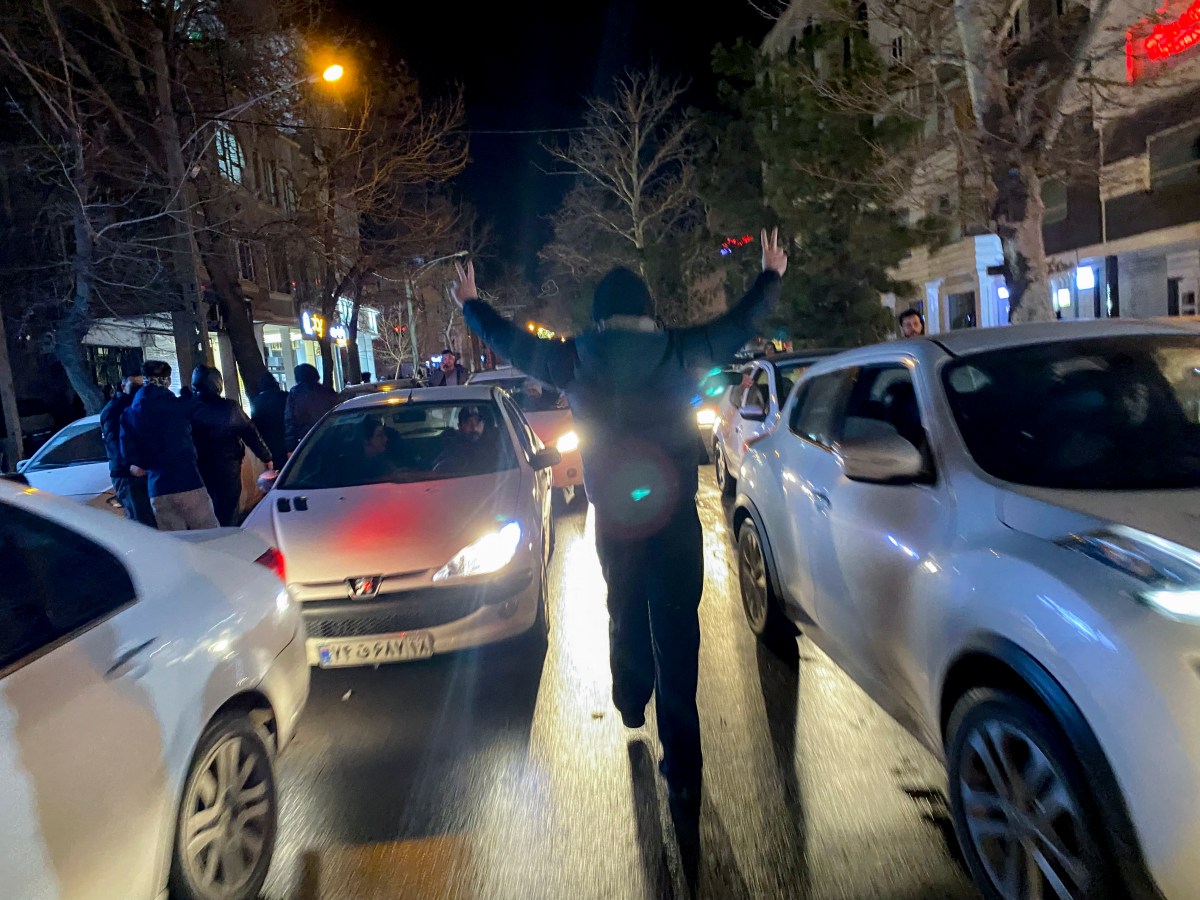
Protests across Iran have entered a second week, spreading to cities nationwide as public anger over economic hardship and political grievances continues to mount.
The unrest has drawn international attention after President Donald Trump warned Iran on Sunday that it would get “hit very hard” by the United States if more protesters die during demonstrations, raising the stakes as Iranian security forces confront crowds in multiple regions.
The demonstrations, which began as localized economic protests, have expanded geographically and politically, with rights groups reporting deaths, mass arrests and escalating clashes between protesters and state forces.
Newsweek has contacted the State Department and Iran’s Foreign Ministry for comment.
Why It Matters
The demonstrations are unfolding at a moment of extreme vulnerability for Tehran, compounding political, economic and security pressures that have intensified over recent months. Iran is still grappling with the aftermath of a 12-day war launched by Israel in June, during which the U.S. bombed nuclear sites inside the country, further destabilizing an already fragile state.
At the same time, economic strain has sharply worsened since September, when the United Nations reimposed sanctions on Iran over its nuclear program. Those measures have accelerated the collapse of the national currency, pushing the rial into a steep free fall and fueling inflation that has eroded living standards across the country. The convergence of military fallout, sanctions and domestic unrest raises the risk of deeper instability with potential regional and international repercussions.
What To Know
Demonstrations have been reported across large parts of Iran, with protest activity documented in dozens of cities and provinces since the unrest began. The accompanying map, compiled by the Institute for the Study of War and AEI’s Critical Threats Project (ISW-CTP) illustrates how the demonstrations have expanded beyond Tehran into regional and provincial centers.
ISW-CTP has recorded around 300 different protests in Iran since December 28. Each point on the map is assigned a confidence level—high, moderate or low—reflecting the likelihood that a protest occurred on a specific day and in a specific location. The confidence ratings are intended to convey analytical certainty and are not tied to protest characteristics such as crowd size or the regime’s response.
Death Toll Rising
The unrest has been accompanied by a growing death toll. According to data verified by the Human Rights Activists News Agency (HRANA), at least 19 civilians and one member of the security forces have been killed over the past eight days.
HRANA also reported at least 51 people injured, with most injuries caused by pellets and rubber bullets as security forces moved to disperse demonstrators.
Iran Accuses U.S. and Israel
On Monday, Iran’s Foreign Ministry accused the U.S. and Israel of interfering in the country’s internal affairs, saying public statements by officials from both countries were encouraging violence amid ongoing protests.
Foreign Ministry spokesperson Esmaeil Baqaei said comments by American and Israeli officials amounted to interference and incitement under international norms, rejecting what he described as attempts by foreign governments to portray themselves as supportive of the Iranian public.
“Actions or statements by figures such as the Israeli prime minister or certain radical and hard-line US officials regarding Iran’s internal affairs amount, under international norms, to nothing more than incitement to violence, terrorism, and killing,” Baqaei said.
The remarks come after President Trump said that Washington was closely monitoring the situation, warning, “If they start killing people like they have in the past, I think they are going to get hit very hard by the United States.”
What Happens Next
While economic pressures initially sparked the unrest, the demonstrations have increasingly taken on a broader political character, with students, laborers and other social groups joining protests across multiple provinces. As grievances expand beyond cost-of-living concerns and economic conditions show little sign of improving, Iran faces an uncertain period ahead.
How authorities respond in the coming days is likely to determine whether the demonstrations subside or evolve into a more sustained challenge to the government amid already heightened regional tensions.
Read the full article here