




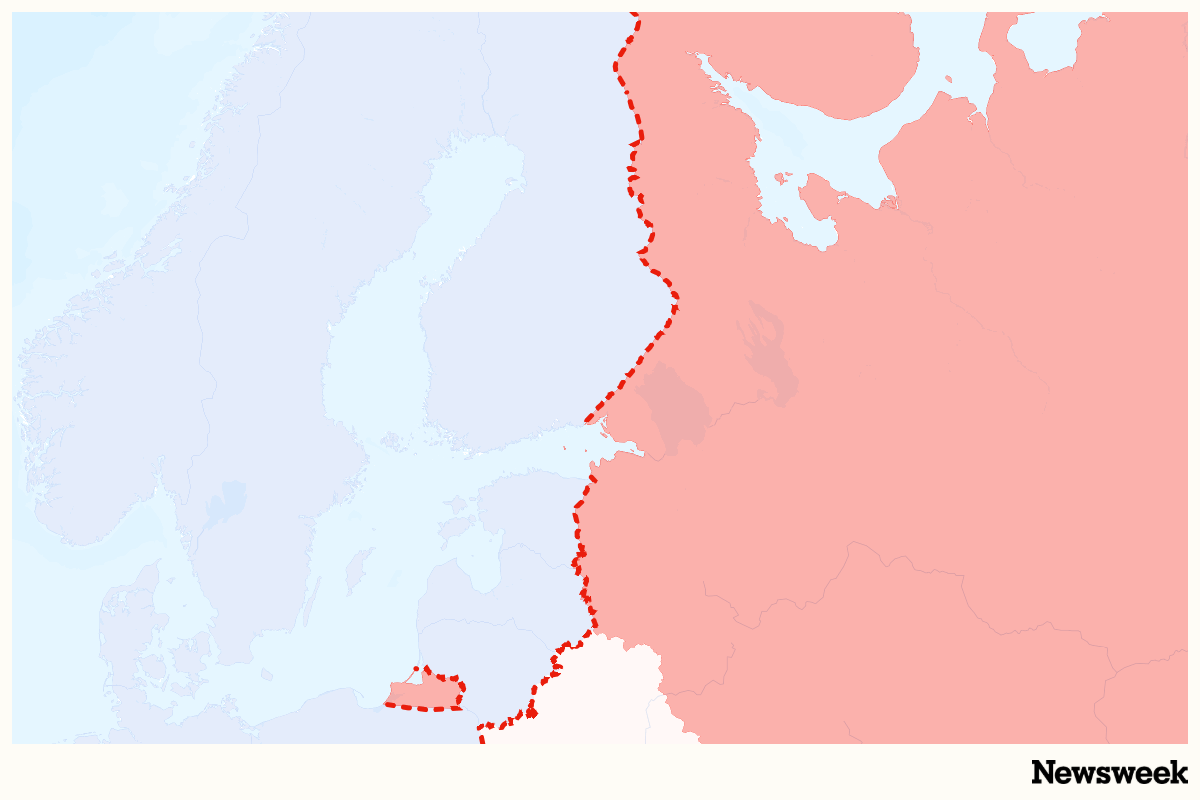
NATO member Lithuania has started preparing bridges along its border with Belarus to be fitted with explosives, under extensive plans to lay defenses on the alliance’s eastern flank with Russia and its key ally.
Bridges and roads close to Belarusian territory were “selected based on the location of natural obstacles and their strategic importance,” the Lithuanian military told the country’s LRT broadcaster. Bridges will be kitted out with “engineering structures for attaching explosive material,” the armed forces added.
The work is part of a raft of tactics approved by Vilnius in mid-2024, according to the report. These include setting up road blocks, digging ditches and placing explosives under bridges.
Lithuania shares just under 680 kilometers of border with Belarus and a little over 250 kilometers of land border with Russia’s Kaliningrad exclave, which boasts a significant military presence.
When Russia launched its full-scale invasion of Ukraine in early 2022, Moscow used Belarus as a staging ground for its assault on its neighbor. Russia said on Tuesday its nuclear-capable Oreshnik intermediate-range ballistic missile system was now operational in Belarus.
Intelligence assessments from NATO nations differ, but several have warned Russia could be able to launch an armed attack on an alliance member in the next few years. The Baltic states of Estonia, Latvia and Lithuania, as well as Poland, are NATO members.
Some officials have suggested Moscow may try to take territory from a Baltic state in a small-scale land grab just over the border. The countries forming NATO’s eastern flank have stormed ahead of other nations in the alliance in raising defense spending.
Estonia, Latvia and Lithuania plus Poland announced in March they would formally pull out of the Ottawa Convention, an international agreement banning anti-personnel landmines. The Baltic states’ withdrawal came into effect over the weekend.
Finland will pull out of the treaty in January.
The Baltic Defense Line
The Lithuanian military said the work now underway would be part of the Baltic Defense Line that will eventually snake along NATO’s eastern flank with Russia. Estonia, Latvia and Lithuania signed an agreement in January 2024 to beef up protection along their land borders with Russia and Belarus.
Estonia said at the time there would be a “network of bunkers, support points and distribution lines.” Poland has also launched its own initiatives to shore up defenses on the edge of its territory.
Sections of the Baltic Defense Line are funded individually by each country, and will include different types of defenses like “dragon’s teeth” anti-tank fortifications. Dragon’s teeth are concrete blocks used to halt tank advances and prevent mechanized infantry from gaining territory. This type of anti-tank fortification is common in Ukraine.
Lithuania’s Defense Ministry said this summer Vilnius would build multi-stage defenses up to 50 kilometers—around 30 miles—from the border line, featuring easily demolished bridges, trenches and ditches. Lithuanian authorities opened the first “counter-mobility equipment park,” or site containing obstacles designed to impede tanks and armored vehicles, in August 2024.
Latvia has said it started reinforcing its eastern border in March 2024 and will spend a total of €303 million ($355.7 million) over five years on doing so.
“We have seen different estimates how quickly Russia can rebuild its military, we need to use this time wisely – the time to make all the necessary preparations is now,” Estonian authorities have said. “The installations should deny enemy the possibility to advance rapidly in the territory of Baltic countries and in case of military incursion stop the enemy’s advance already at our borders.”
The leaders of the three Baltic countries are weighing up dismantling railways linking the nations to Russia and Belarus, the regional Delfi outlet reported earlier in December.
What People Are Saying
Estonian authorities have said: “These installations serve the purpose of avoiding the military conflict in our region as they could potentially change the enemy’s calculus.”
Read the full article here