


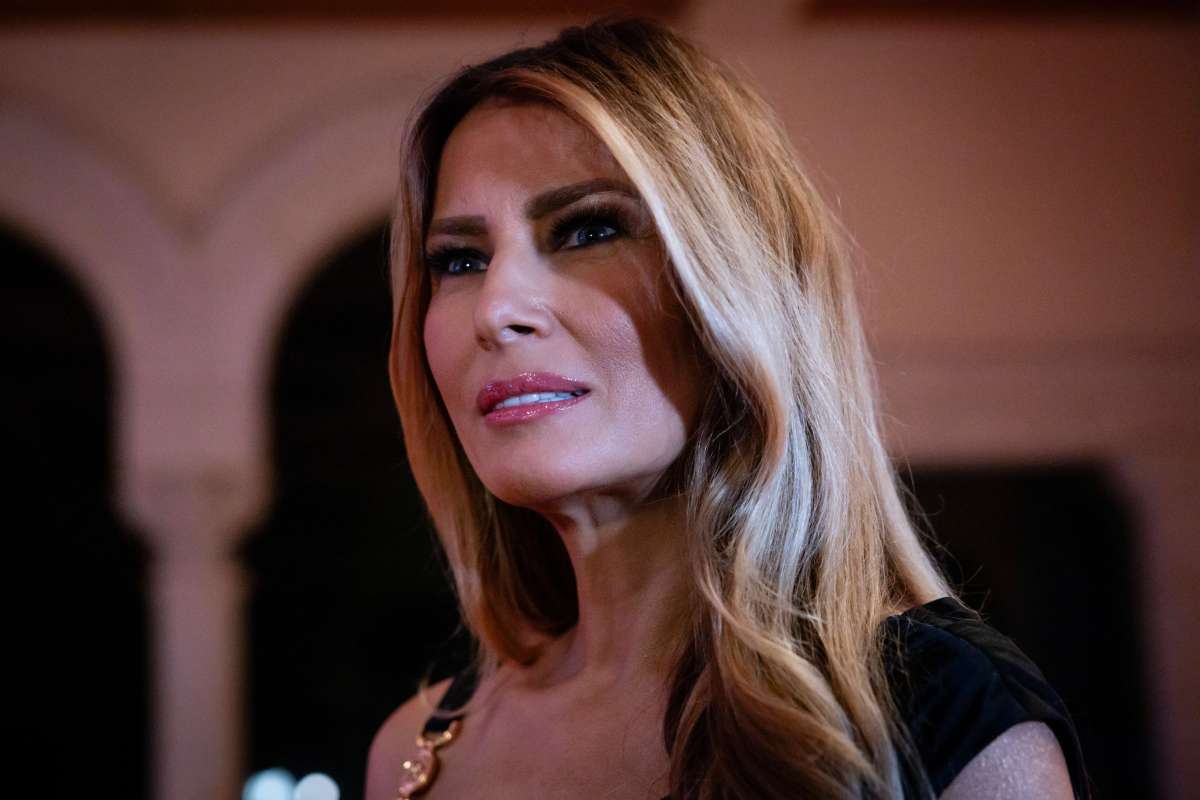
Melania, the new Melania Trump documentary promoted by President Donald Trump as “a must watch,” has opened with stronger‑than‑expected box office returns while drawing overwhelmingly negative reactions from critics and film buffs.
The film earned an estimated $7 million in its U.S. opening weekend, beating predictions of $3 million to $5 million and marking the best documentary debut, outside of concert films, in 14 years. But despite the surprising commercial result, reviewers across major culture outlets have widely labeled the production as a form of propaganda.
Directed by Brett Ratner—returning to filmmaking for the first time since sexual assault allegations in 2017, which he denies—the documentary has also made headlines for its unprecedented cost. Amazon MGM Studios purchased the rights for $40 million and spent a further $35 million on marketing the project, making Melania the most expensive documentary ever made. The film was released in 1,778 theaters on January 30 and chronicles the 20 days in January 2025 that led up to Melania Trump’s husband’s second inauguration.
The Trumps had hosted a premiere at the Kennedy Center ahead of the film’s release that was attended by Cabinet members and members of Congress. The film, running one hour and 44 minutes, presents what the studio describes as unprecedented access to the first lady during a period that includes inauguration planning, White House transition meetings, and her family’s move back to Washington. Throughout, Melania Trump narrates her activities, offering commentary on design decisions, scheduling preparations, and initiatives linked to her “Be Best” platform.
Ahead of its theatrical release, Ratner downplayed the film’s box-office potential. He told audiences at the Kennedy Center premiere that “you can’t expect a documentary to play in theaters.”
While Melania has a 99 percent audience score on Rotten Tomatoes—an unusually high figure that some have suggested reflects support from the president’s base—it holds just a 10 percent Tomatometer rating from critics.
The Hollywood Reporter: ‘An Unabashed, Fly-on-the-Gilded-Wall Fawn Job’
The Hollywood Reporter called the documentary “an unabashed, fly‑on‑the‑gilded‑wall fawn job,” writing that it goes beyond favorable coverage to a level of admiration that feels “lavish” and uncritical.
The review said the documentary resembles a hagiography, with scenes that appear carefully staged and a soundtrack described as filled with “odd needle drops,” such as songs linked to war, false accusations, sex and power.
The outlet noted Ratner’s return to filmmaking after his career stalled in 2017 and said the movie reflects the pattern of controversial figures finding renewed opportunities within Donald Trump’s orbit.
The critic described long sequences featuring Melania Trump choosing outfits and overseeing decorations, calling the voice-over endless and comparing it to self‑help book language. It also pointed to the film’s glossy visuals, staged interactions, and closing graphics listing her achievements as examples of a production that feels like political advertising.
“The expensive propaganda doc is glossily shot and lushly scored, although for some reason Ratner keeps inserting segments shot on what looks like Super 8 film, as if to infuse the Trumps with some of that Kennedy-era aura,” Frank Schek wrote.
Vanity Fair: ‘All the Money In the World Can’t Make Good Propaganda’
Vanity Fair said that Melania “is a purportedly serious film that plays like a mockumentary.”
The review suggested that even a parody of Melania Trump would resemble the documentary, calling its tone and structure difficult to distinguish from satire. The outlet said the film’s approach mirrors “good propaganda,” where a polished, expensive presentation is used to reinforce a flattering image.
It added that no level of spending—from the $75 million total outlay to the high‑quality production design—could overcome what it viewed as a predetermined, politically driven narrative.
“Director Brett Ratner is no Leni Riefenstahl,” Joy Press wrote, comparing the project to works of the late German filmmaker known for producing Nazia propaganda films including Triumph of the Will.
Empire: ‘A Kind of Scripted Reality TV — the Only Way Is White House’
Empire gave the documentary just one star, also framing it within the history of political propaganda films. Like Vanity Fair, it compared Melania to Triumph of the Will, the 1935 film commissioned by Adolf Hitler, and argued that Ratner’s documentary is “political propaganda at its most transparent.”
According to Empire, Melania resembles scripted reality television, with the first lady shown in a series of encounters that appear staged or heavily managed.
The review described Melania Trump’s dialogue as dominated by enthusiastic adjectives and declarations about honor and importance and noted her extensive involvement in production decisions. Empire also pointed to scenes it says showed limited warmth between her and Donald Trump, arguing that these moments expose gaps between public presentation and private reality.
William Thomas labeled the film “cynical, pointless, and very, very boring.”
“You will leave this film arguably knowing less about Melania than when you come in,” he added.
Variety: ‘Should Have Been Called “Day of the Living Tradwife”‘
Variety called the docufilm “a cheeseball infomercial of staggering inertia,” saying it never comes to life.
Owen Gleiberman’s review argued that the film looks like a series of “innocuous outtakes from a reality show,” with little drama or spontaneity. He described Melania Trump’s on‑camera presence as controlled and polished, and the script as one that never wades into controversial waters.
It pointed to scenes of elaborate planning, fashion fittings, and travel between Trump properties as examples of the documentary’s focus on presentation over substance. Gleiberman said the film appears “purged of politics” on the surface, but suggested this absence is itself political, reflecting what it described as a top‑down effort to present a tightly managed narrative.
As the inauguration scenes take over the second half, Variety wrote, the sequence of ritualized events mirrors the film’s overall structure: glossy, repetitive, and closed to outside perspective.
In a polarized era, the center is dismissed as bland. At Newsweek, ours is different: The Courageous Center—it’s not “both sides,” it’s sharp, challenging and alive with ideas. We follow facts, not factions. If that sounds like the kind of journalism you want to see thrive, we need you.
When you become a Newsweek Member, you support a mission to keep the center strong and vibrant. Members enjoy: Ad-free browsing, exclusive content and editor conversations. Help keep the center courageous. Join today.
Read the full article here