


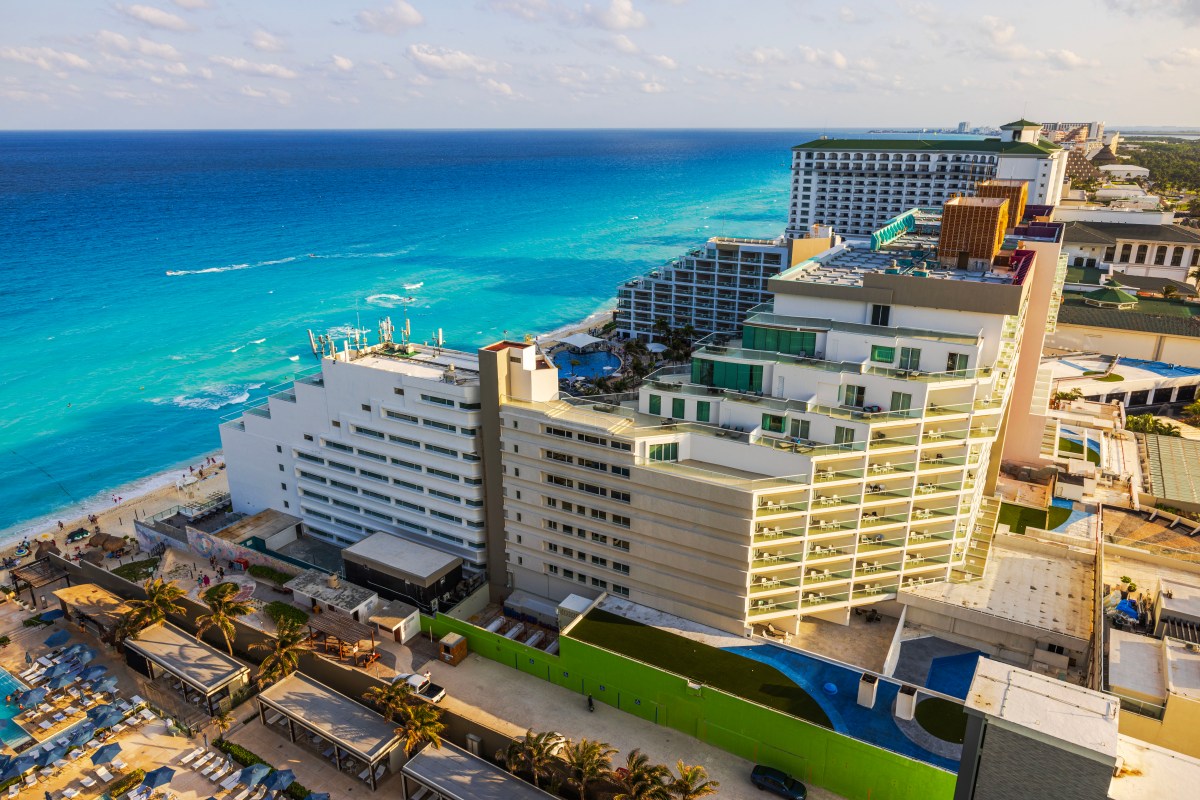
Cancun is one of the biggest spring break destinations each year, but many Americans are rethinking their travel plans after violence erupted in the Mexico following the killing of drug cartel leader Nemesio Rubén Oseguera Cervantes.
Oseguera, a drug lord known as “El Mencho,” was killed during a military operation in Tapalpa, Jalisco state, on Sunday. The killing sparked chaos in the country, with reports of roadblocks, arson and flight disruptions from suspected cartel members across multiple states.
The founder and leader of the Jalisco New Generation Cartel, Oseguera’s killing is regarded as Mexico’s most consequential hit against a drug cartel boss since the capture of Joaquín “El Chapo” Guzmán.
Why It Matters
The violence that resulted from Oseguera’s killing has left Americans with plans to visit the country unsure about how travel has been affected, specifically for spring break destinations like Cancun and Cabo.
This week, the United States urged some U.S. citizens in Mexico to shelter in place because of “ongoing security operations and related road blockages and criminal activity.”
Currently, Mexico is set at a level 2 travel advisory, which means Americans should exercise increased caution. The State Department attributes this level to the threat of terrorism, crime and kidnapping.
What To Know
Cancun remains one of the most recognizable spring break destinations in North America, receiving about 9.7 million international visitors in 2024. In strong years, total international arrivals have topped 10 million.
However, the U.S. Embassy and State Department issued temporary shelter‑in‑place guidance for Americans in multiple parts of Mexico after the killing of Oseguera.
The military operation triggered retaliatory cartel violence, including road blockades, arson attacks and flight disruptions in parts of mainland Mexico, especially Jalisco state, home to Puerto Vallarta and Guadalajara.
Importantly for spring breakers, the advisory also initially named popular tourist states, including Quintana Roo (Cancun, Tulum, Playa del Carmen) and Baja California, prompting widespread confusion about whether beach destinations were directly affected.
U.S. officials lifted the shelter‑in‑place directive for American citizens, saying conditions had stabilized and that flights in affected areas had returned to normal operations.
However, the broader U.S. State Department travel advisory for Mexico remains at Level 2, advising Americans to “exercise increased caution.” The advisory cited crime and kidnapping risks nationwide.
Are Flights Leaving Cancun?
Despite previous road blockages and flight cancellations, Cancún International Airport (CUN) is now open and operational, and flights to the U.S., Canada, Mexico and Europe are departing, according to live airport and flight‑tracking data.
Multiple U.S.-bound flights have departed or are scheduled, including routes to New York (EWR, JFK), Atlanta, Dallas, Houston, Chicago, Los Angeles and Orlando.
Airlines currently operating departures include American, Delta, United, JetBlue, Southwest, Air Canada, WestJet and Aeromexico.
U.S. Travel Advisory To Mexico
The U.S. Department of State currently lists Mexico as a Level 2 travel advisory: “Exercise Increased Caution.”
A Level 2 advisory does not mean “do not travel.” It means the State Department is warning travelers to be more alert than usual because of risks such as crime, kidnapping, violence linked to organized crime and limited emergency services in some areas.
Is Cancun Safe Right Now?
Cancún is considered safe and travel is operating normally, with the Cancún International Airport open and operating and U.S. Embassy having lifted the temporary shelter‑in‑place advisory that briefly included Quintana Roo (Cancún’s state) this week.
Tourists are still encouraged to stick to safer tourist areas and main transportation and avoid unnecessary late‑night travel outside resort zones.
They also should monitor airline alerts for occasional delays, which can still happen as schedules normalize, and follow standard travel precautions.
What People Are Saying
The U.S. Embassy and Consulates in Mexico, in a security alert this week: “Due to ongoing security operations and related road blockages and criminal activity, U.S. citizens in a number of locations in Mexico are urged to shelter in place. U.S. government staff in Guadalajara (Jalisco), Puerto Vallarta (Jalisco/Nayarit), Ciudad Guzman (Jalisco), Cancun (Quintana Roo), Playa del Carmen (Quintana Roo), Cozumel (Quintana Roo), Reynosa (Tamaulipas state), Tijuana (Baja California), and Michoacan will shelter in place and work remotely on Monday, February 23, and U.S. citizens should do the same.”
The U.S. Department of State, in its Mexico travel advisory: “Due to security risks, U.S. citizens should follow the same restrictions as U.S. government employees while traveling. Emergency services are limited or unavailable in remote or rural areas. If you encounter a road checkpoint, you should comply. Fleeing or ignoring instructions can lead to you being hurt or killed.”
Mexican President Claudia Sheinbaum, in a statement: “The Secretariat of National Defense reported on the operation carried out this morning by federal forces, which resulted in various blockades and other reactions. There is absolute coordination with the governments of all states; we must remain informed and calm. The social media accounts of the Security Cabinet provide permanent updates. In the vast majority of the national territory, activities are proceeding with complete normality.”
What Happens Next
Spring break travel will skyrocket beginning in mid-March when schools and universities typically host their mid-semester breaks. Thousands of visitors are anticipated to flock to Cancun, even after the violence that followed Oseguera’s killing.
In a polarized era, the center is dismissed as bland. At Newsweek, ours is different: The Courageous Center—it’s not “both sides,” it’s sharp, challenging and alive with ideas. We follow facts, not factions. If that sounds like the kind of journalism you want to see thrive, we need you.
When you become a Newsweek Member, you support a mission to keep the center strong and vibrant. Members enjoy: Ad-free browsing, exclusive content and editor conversations. Help keep the center courageous. Join today.
Read the full article here