



During some of the federal government’s most recent high-profile immigration crackdowns in Chicago, Los Angeles and Washington, D.C. — which the Trump administration has said are intended to target mainly unauthorized immigrants with criminal histories — most of the people detained had only civil immigration violations, new data shows.
The data, released by Immigration and Customs Enforcement and published by the Deportation Data Project on Monday, shows detentions of people without criminal records spiked in recent months in those cities.
From early September, when the Chicago operation began, to mid-October, average daily book-ins to temporary detention facilities in Chicago or nearby Broadview increased from about three people a day without criminal records to more than 45, a jump of more than 1,400%. Fewer than 25 people with criminal charges or convictions were detained per day on average by mid-October, the data shows.
Meanwhile, in Washington, D.C., average daily detentions of people without criminal records peaked at 37 per day in late August. Throughout that month and into September, a daily average of fewer than 10 people with criminal charges or convictions were booked, about the same number as before the crackdown began.
In Los Angeles, total immigration arrests have declined since the summer, when agents carried out the most raids. In June and July, 63% of those initially detained in L.A.-area facilities did not have criminal records.
The data only captures the start of the federal deployment in Memphis, Tennessee, but reflects a similar pattern: more than half of detentions in Memphis’ hold center in the first two weeks of October were of people with only civil immigration violations.
Unlike other cities, Portland, Oregon, where federal troops were deployed starting in June, has seen an approximately even split in detentions of those with criminal convictions, those with pending charges and those with only civil immigration violations in the summer and early fall.
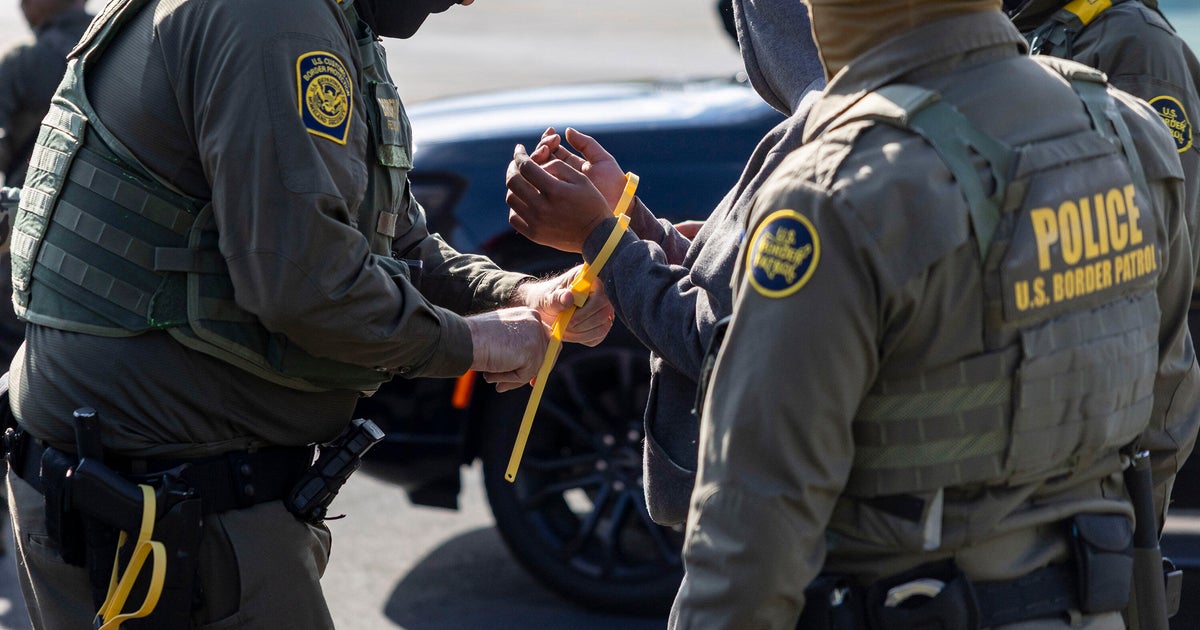
Border Patrol agents have played a role in the operations, especially in Chicago and L.A., alongside ICE. Those they arrest are held in ICE detention centers and included in the data.
In its public statements on its immigration operations across the country, the Department of Homeland Security repeatedly said it will be largely focusing on those with criminal records. In a news release announcing the Chicago operation, dubbed “Operation Midway Blitz,” DHS said it would target the “worst of the worst criminal illegal aliens,” accusing Illinois Gov. JB Pritzker of releasing “gang members, rapists, kidnappers, and drug traffickers on Chicago’s streets.”
In contrast, border czar Tom Homan and acting Immigration and Customs Enforcement director Todd Lyons have said anyone authorities find to be in the U.S. illegally will be arrested. While the federal government has the authority to arrest anyone suspected of violating U.S. immigration law, some individuals may be eligible for certain protections from deportation, such as those with asylum claims.
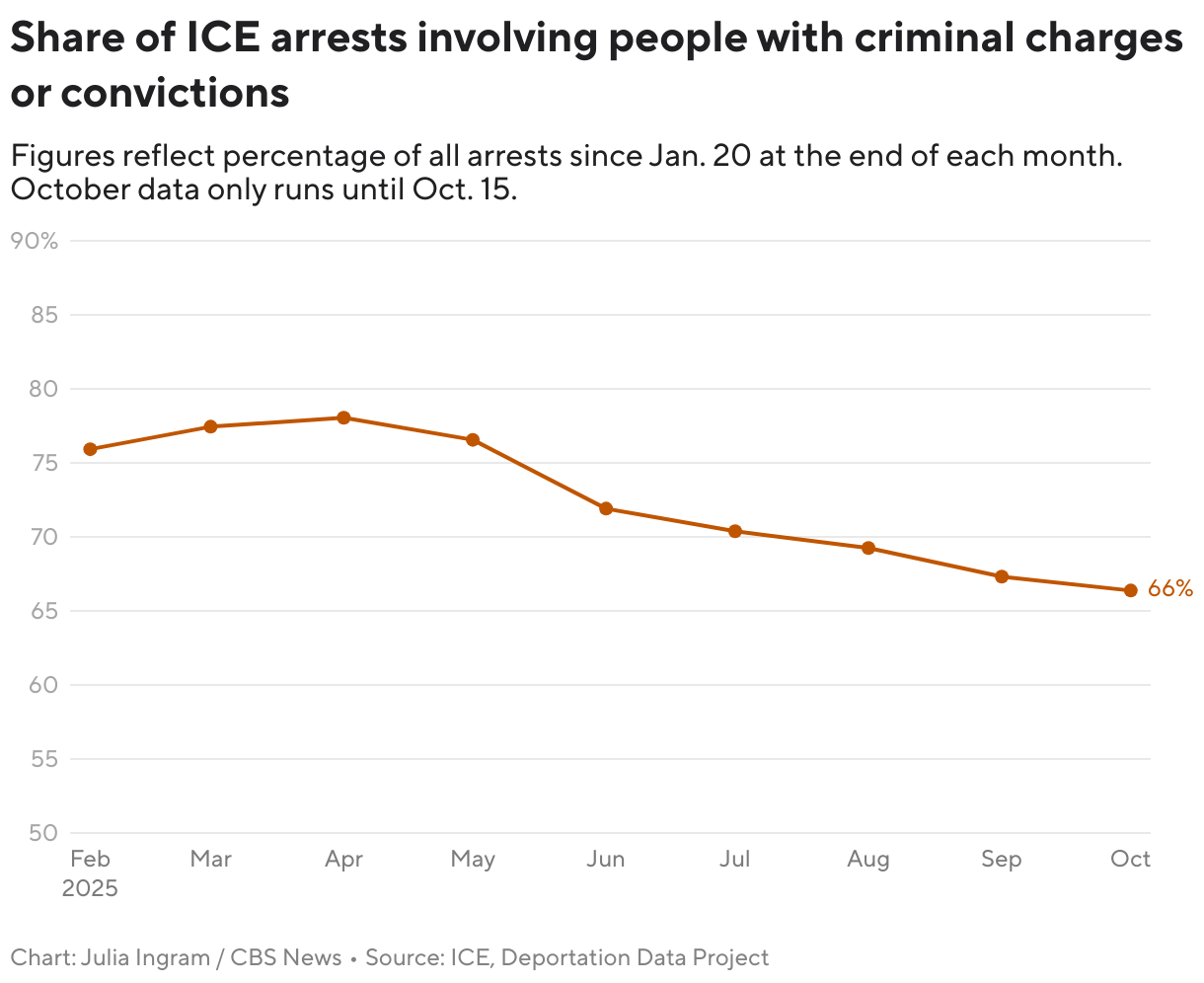
In response to reporting on the high number of non-criminals arrested, DHS has asserted that 70% of those arrested by ICE since the start of the second Trump administration have had criminal charges or convictions. Overall, that figure is roughly accurate, according to the newly released data, which shows that 66% of those arrested from Jan. 20 to Oct. 15 had criminal charges or convictions.
But that percentage has shrunk each month since April, the data shows. Those with only civil immigration violations have become the fastest-growing group held in ICE detention.
About 7% of those detained were convicted of violent crimes, including murder, rape, assault and robbery. The data does not indicate the severity of the charges for those who have not been convicted, which may range from serious felonies to misdemeanors and immigration-related crimes.
“Every single one of these illegal aliens broke our nation’s laws by being in the country illegally, DHS spokesperson Trisha McLaughlin wrote on X in response to previous CBS News reporting.
Being present in the U.S. illegally, after crossing the border or overstaying a visa, for example, has typically not been treated as a crime and generally handled as a civil violation in immigration court.
Read the full article here