


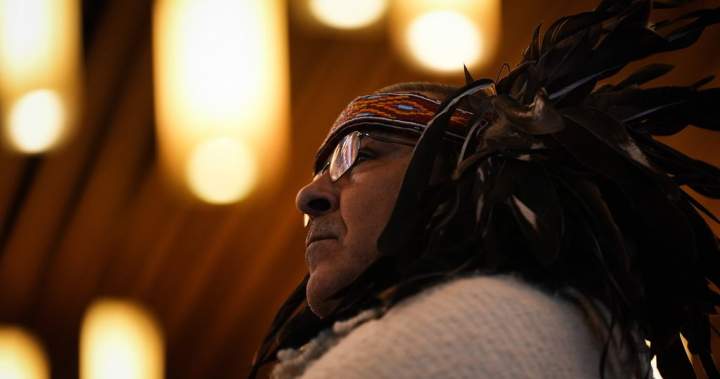
The Musqueam First Nation has signed three agreements with the federal government recognizing Aboriginal rights in Metro Vancouver.
According to a release from the government, the agreements also strengthen Musqueam’s roles in fisheries, stewardship and marine emergency management.
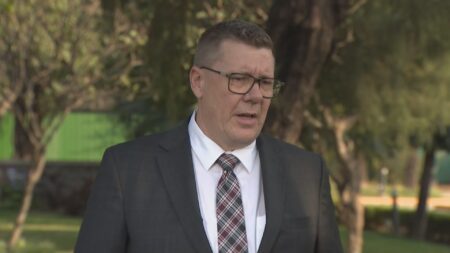
Thomas Isaac, chair of the Aboriginal law group at Cassels Brock & Blackwell LLP, called it “an acknowledgment of rights and title within a very large area of the Lower Mainland that includes waterways.
“I guess it’s the third largest metropolis in our country, and is an area of significant overlap with other First Nations.”
The details of the agreement were not immediately made clear, but have since been provided to Global News and the full agreement is embedded below.
“It is, from a process point of view, it’s, and I’ll say it again, absolutely unacceptable that public democratic governments are entering into agreements acknowledging Aboriginal title in any form when it’s an exclusive right to land, according to the Supreme Court of Canada, without consulting in some way with their constituency, which is the public,” Isaac said.
“It’s just unacceptable.”
Isaac said this is not the way toward reconciliation or economic stability.
On Aug. 7, the B.C. Supreme Court confirmed that the Cowichan Tribes hold Aboriginal title over more than 5.7 square kilometres of land on the Fraser River in Richmond, south of Vancouver.

Get breaking National news
For news impacting Canada and around the world, sign up for breaking news alerts delivered directly to you when they happen.
That created confusion and anger among homeowners in the affected area, despite the Cowichan Tribes insisting it has no intention of stripping private title holders of their property.
In a release on Monday, Spencer Chandra Herbert, Minister of Indigenous Relations and Reconciliation, and the Cowichan (Quw’utsun) Nation Chiefs, among others, said they remain in negotiations.
“The Cowichan Nation respectfully did not seek to invalidate any privately held fee simple titles,” the statement read.
“Instead, the Cowichan Nation sought and received a court declaration that the British Columbia government has a duty to the Cowichan Nation to negotiate in good faith the reconciliation of these continuing Crown granted fee simple interests with the pre-existing Cowichan Nation Aboriginal title, in a manner consistent with the honour of the Crown.
“Both parties are also proceeding with their appeals to the British Columbia Court of Appeal. For transparency, neither the Cowichan Nation nor British Columbia are seeking to invalidate any privately held fee simple titles on the Cowichan Title Lands through the negotiation or appeal processes.”
A separate B.C. Supreme Court ruling in September, which upheld the Haida Nation’s Aboriginal title over the Haida Gwaii archipelago in B.C., affirmed a deal between the First Nation and the province that would allow Aboriginal and private property rights to coexist.
“It’s absolutely appalling this was done secretly and that they have not released the agreements given what the province is facing on the Haidi agreements, the Cowichan decision, the UNDRIP legislation, the heritage conservation act proposed amendments, it just seems to be one wave after another of things to try to upset the economic apple cart that is our province,” Isaac added.
Chief Wayne Sparrow of the Musqueam Indian Band told Global News that the agreement signed with the federal government does not include private properties in that region.
“It does not include third party, it does not include land,” he said. We have an agreement with the government with MST (MST Development Corporation), which is in the core territory of all three in crown land and it does not include private properties.”
In a statement to Global News, a spokesperson for Crown-Indigenous Relations Canada also stated that the Musqueam Agreements do not affect privately owned land.
“The Incremental Recognition Agreement provides general recognition that Musqueam has Aboriginal rights and title within their Territory and establishes a framework for ongoing discussions and future negotiations to define how and where those rights and title could apply,” the spokesperson said.
Isaac said governments have to come up with a better way of engaging in reconciliation.
“I know what title means at law, there’s no debate,” he said.
“It’s the exclusive right to that land over and above everyone else, including the Crown government, according to the Supreme Court of Canada.”
Read the full agreement below:
© 2026 Global News, a division of Corus Entertainment Inc.
Read the full article here