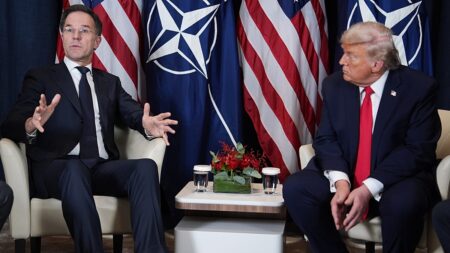




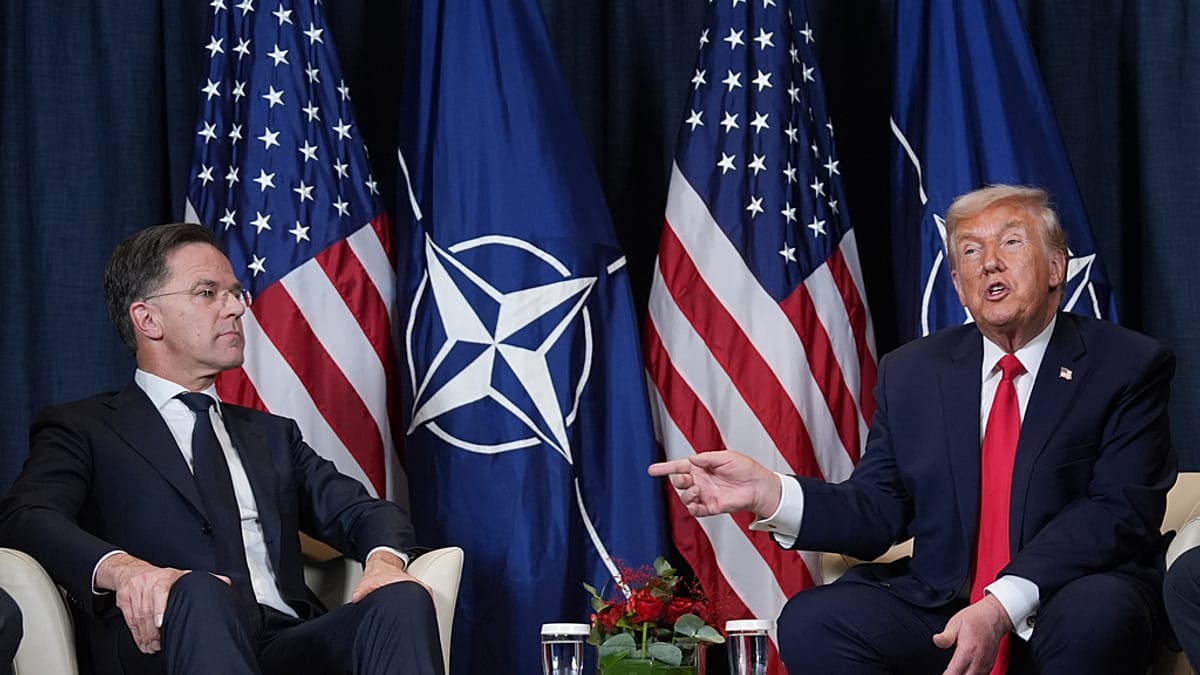
The chief of Spain’s diplomacy said that the deal cut bilaterally between Rutte and the United States President Donald Trump is a bilateral arrangement, “not NATO, (…) it is the Secretary General of NATO talking to one of the allies.”
Details of the arrangement are yet to emerge. “The only thing I know is the announcement that was made yesterday,” Albares said.
“I talked to the ministers of foreign affairs of all those allied countries, and they have the same information as I, just the announcement. And I’m sure that whatever has been discussed will be brought to the Council of NATO.”
On Wednesday, President Trump announced a deal between his administration and the NATO Secretary General for the security of the territory, which would allow Washington to increase its military presence in the Arctic and boost the number of US bases stationed in Greenland following weeks of tensions.
The Spanish foreign minister insisted that only the people of Greenland and Denmark can decide on the future of the coveted Arctic territory, “and the people have said it very clearly, they want to remain as part of Denmark.”
Earlier, Trump had threatened to slap tariffs on eight European countries, including Denmark, France and Germany, until a deal for the “complete and total sale” of Greenland was sealed on the basis that owning the territory represented a national security necessity for Washington to counter China and Russia’s ambitions in the region.
Danish authorities have repeatedly said the territory will not be traded and the sovereignty of the kingdom must be respected, as well as that of Greenland, where much of its population does not want to belong to the US, according to polls.
While the details of the agreement mediated by Rutte are scarce, Denmark said in response to Trump’s announcement that Greenland’s sovereignty was not part of the agreement.
Moving towards a European army
Albares told Euronews that the US’ behaviour was unacceptable and said the EU would not negotiate under coercion, indicating that the bloc has powerful tools to counter the US, too.
He also appealed for Europe to stand for its values, chiefly for peace. For this, Europe needs security and deterrence, and to start to move “towards a European army”.
“If we want to continue being a soil of peace in which no one can bring war or no one can use coercion on us, either the threat of the use of force or trade coercion, we need to have the deterrence in our hand,” he said.
“We need a coalition of the willing of European security, firstly, secondly, an integration of our defence industries and in the end, a European army,” Albares added.
Read the full article here