



An artificial intelligence tool that can predict who is at high risk of developing breast cancer in the four years following an all-clear mammogram has been heralded as “the most significant step in reducing deaths” in decades.
The tool, known as BRAIx, works by searching for patterns in breast mammograms to detect signals for risk the human eye can’t see. It was developed by Australian researchers using mammograms from nearly 400,000 women, and then tested on data from almost 96,000 women.
This allows the technology to overcome the limitations of current screening methods, which can struggle to detect early signs of cancer in dense breasts.
The findings, published in The Lancet medical journal on Wednesday, found that one in 10 women with the highest AI risk scores developed cancer within four years – even after receiving an “all-clear” breast screen.
This is the same level of risk that people with known genetic mutations such as BRCA1 or BRCA2 have.
“Machine eyes are able to detect those patterns of risk and early cancer with much greater accuracy than the human eye,” said lead investigator Associate Professor Helen Frazer, of St Vincent’s BreastScreen Melbourne.
“We think this has the potential to be the most significant step in reducing deaths from breast cancer since the breast cancer screening program started in Australia in the early ’90s,” she said.
The AI tool provides a personalised risk score of developing breast cancer that can be updated after each screening, and can also reduce unnecessary investigations such as further imaging and biopsies.
About 75 per cent of women flagged with a suspicion of cancer using current screening protocols received a low-risk score from the AI tool. Only 1 per cent of this cohort went on to develop cancer within four years.
Frazer said the tool was not troubled by dense breast tissue, which can appear the same white colour as cancer on mammograms, making it difficult for radiologists to detect.
People with dense breasts are also at a higher risk of developing breast cancer because it is believed they have more glandular tissue where cancer can form.
While AI is already being trialled to detect breast cancer, Frazer says the personalised risk-prediction tool is the next frontier.
Doctors currently use a patient’s age, family history and a breast density score to create a lifetime risk score of developing breast cancer. But Frazer says this can be inaccurate and overstate risk for some women, while understating it in others.
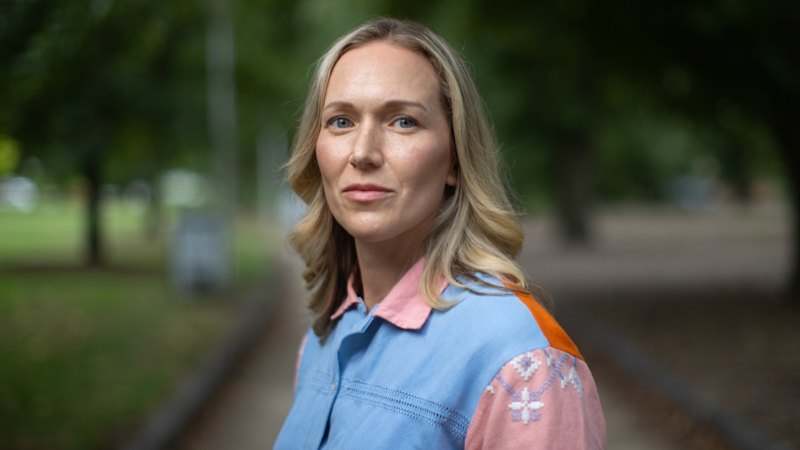
Jess Armstrong was 35 when she discovered a small lump under her armpit.
Her GP referred her to an ultrasound and a specialist, and six days later she was undergoing chemotherapy for breast cancer.
“I’m not on paper someone who would be described as high risk,” the mother of two from Melbourne’s south-east said.
Armstrong, who has been cancer-free since her October 2024 mastectomy, said the AI tool would reduce the immense psychological strain on patients by providing them with more accurate risk scores.
“Breast cancer, if it’s contained to the breast, won’t kill you,” she said. “It’s when it gets out that it becomes terminal. Early detection is everything.”
Her experience with breast cancer inspired her to create a low-toxic skincare line called FUCA (which stands for f— you, cancer).
Frazer acknowledges that receiving a high-risk AI score can be stressful. But she said this knowledge also empowered women to have contrast-enhanced mammograms or breast MRI to ensure early detection.
Though she would like to see the tool rolled out across the country within five years, the technology won’t replace the need for radiologists, who will still have oversight over the scans.
“It’s really an AI-assisted or augmented partnership between machine eyes and human eyes,” Frazer said.
Associate Professor David McCarthy, whose team at St Vincent’s Institute of Medical Research led the AI model development, believes a personalised AI approach could save even more lives.
“By taking this approach, we can improve early cancer detection, reduce false alarms, and potentially save lives without increasing costs,” he said.
“While more studies are needed before it is considered for use in routine care, BRAIx’s ultimate goal is to reduce the number of deaths from breast cancer to zero.”
Vicki Durston, Breast Cancer Network Australia’s director of policy and advocacy, said the current national screening program was outdated as it followed a one-size-fits-all approach.
She said she was thrilled by the new research, which she said could revolutionise the way we screen for breast cancer based on a person’s risk.
“It opens the door to a deeper understanding of who may be at higher risk in the years ahead,” she said.
“We want to move towards a model where we understand those women at a higher risk and give them access to screening that meets their needs.”
Australian women aged 40 and over are eligible for free mammograms every two years, but are not actively invited to participate in the program because they are more likely to have dense breast tissue that makes cancer harder to detect.
Women aged between 50 and 74 are invited to access the screening program.
Australia’s breast screening program has reduced breast cancer deaths by about 40 to 50 per cent in women aged 50 to 74, but there are concerns that the take-up remains too low at 52 per cent.
Start the day with a summary of the day’s most important and interesting stories, analysis and insights. Sign up for our Morning Edition newsletter.
 Henrietta Cook is a senior reporter covering health for The Age. Henrietta joined The Age in 2012 and has previously covered state politics, education and consumer affairs.Connect via X, Facebook or email.
From our partners
Read the full article here