



As Christmas draws closer, many of us are already in the holiday mood, putting up sparkly decorations, checking shopping lists and planning elaborate festive feasts.
However, many Europeans are breaking the mould by choosing to spend the holidays abroad, instead of at home with their extended families.
While some want to create their own traditions, or use the holidays to squeeze in some travel and adventure, others simply want to escape the stress, chaos and cost that comes with hosting Christmas at home.
For some, it’s all about escaping harsh European winters and soaring energy bills, in favour of sunny beaches and much cheaper accommodation abroad.
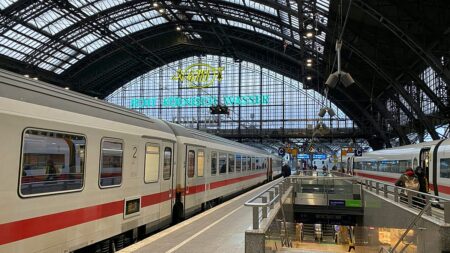
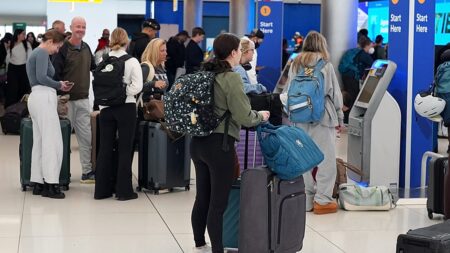
According to the UK Civil Aviation Authority, December 2025 could be the “busiest Christmas travel period in history”.
Some of the most popular Christmas travel destinations are classic skiing hotspots such as St. Moritz, Zermatt and Lech, with travellers lured by snow reliability and Christmas markets in places like Vienna, Prague and Strasbourg.
However, some travellers are also choosing sunnier places like Madeira, Cyprus and southern Italy, along with the Canary Islands, for a hit of winter sun.
But what’s actually behind this shift, and who’s leading it? And will Christmas ever be the same again?
How anti-ordinary Christmas is taking over Unconventional Christmas celebrations are on the rise, according to gift voucher company Virgin Experience Days.
They say some of the top ways to spend Christmas include choosing a Friendmas, celebrating Christmas on another day entirely or travelling on Christmas.
Gen Z appears to be leading this trend of anti-ordinary Christmases, with 25 per cent of 18-24 year-olds preferring to travel on Christmas Day, according to a Virgin Experience Days survey, mainly to create their own traditions.
“I’ve been celebrating Christmas the same way for 18 years, but since moving to the UK, away from family, I get to reinvent the period in any way I want,” Mohsan Lin, a 28-year-old graphic designer, originally from Hong Kong, said in the survey.
“In previous Christmases, I would tour the UK on my own and visit friends in the country. This way, I got to catch up with a lot of different friends and explore parts of the UK I’ve not been to.”
This year, Lin will be spending Christmas in Norway visiting friends, instead of heading back home to Hong Kong. While he’ll still be enjoying a Norwegian-style Christmas dinner, other planned activities also include exploring Oslo, snowboarding, skateboarding and trying out the sauna boats.
“I remember having Korean BBQ instead of turkey one year in Southampton and participating in the ‘Boxing Day Dip’ in Newcastle. In another year, I spent the weeks leading up to Christmas attending an Ice Hockey camp in Finland, where I got to train in facilities where the Olympic Finnish Ice Hockey team would train,” Lin added.
Convenience and comfort trump tradition
Christmas can be stressful, time-consuming, expensive and all-round chaotic, especially for families with young children, or people hosting for the first time with little help.
As such, for a lot of people, spending this time abroad is simply all about convenience and comfort. This includes not having to plan elaborate meals, but popping out for a luxurious dinner instead, with no washing up, or staying at a resort with childcare facilities.
For some, navigating complicated logistics becomes the driver to just bypass the whole tradition completely.
“Families are more geographically dispersed, making it easier to meet in a destination than gather in one home. Travel has become the neutral ground. Logistics are increasingly decisive. Travellers are prioritising journeys that feel contained and predictable, with direct flights, simple transfers and accommodation that works for all ages,” Andrew Harrison-Chinn, chief marketing officer at airport lounge access company Dragonpass, highlighted.
He also noted that this shift reflects practical change, rather than cultural rejection, transforming Christmas from a location to a shared experience.
Despite an ongoing cost-of-living crisis, people are still willing to splurge selectively on the things that matter the most to them – especially when these reduce stress and prioritise comfort. This includes small upgrades which ensure better flight and other transport timings, smoother transfers and calmer airports.
“Climate is another driver. Some travellers want reliable snow, others want light and warmth. Paying for certainty is now seen as sensible rather than indulgent. Social media amplifies these decisions but doesn’t create them,” Harrison-Chinn explained.
More travellers prioritise chosen family and wellbeing
While Christmas is traditionally seen as a time for families to get together and celebrate harmony, it can also unfortunately exacerbate clashes and tensions over a variety of issues.
As such, for a lot of people, Christmas and other family gatherings and holidays can become a source of major stress and anxiety. This is something that more people are trying to avoid entirely, by either going on a trip themselves abroad or spending time with their partner’s families instead of their own.
The rise of Friendmas, which is choosing to celebrate Christmas with a group of close friends, instead of families, highlights this shift, too. In some cases, this can even be a trip with friends abroad during Christmas.
“There is an increasing emphasis on ‘chosen family’ in which meaningful friendships are seen as vital to wellbeing, replacing traditional family rituals. With rising social, financial and work pressures, we also see people choosing to spend Christmas in a way that feels restorative,” psychotherapist Dr Jo Gee said.
For a lot of people, the end of the year is one of the only times they have to take off work, relax, rejuvenate and prepare for the new year, as well as travel and experience new things.
As such, they are increasingly protective about this time and how they choose to spend it.
Far from rejecting connection, this is more about redefining what meaningful relationships look like – with family and friends, but also with themselves.
In this way, Christmas travel becomes a lot more about choosing the best fit of how people want to spend their precious time off, rather than rejecting tradition.
45 per cent of 18-24 year-olds in the Virgin Experience Days survey revealed that “anti-ordinary” celebrations feel much more meaningful to them than traditional ones.
This also extended to Gen Z gifts, with 30 per cent of 18-24 year-olds wanting a voucher for a solo experience, rather than one for an experience with a loved one or friend. This trumped requests for physical gifts that they had asked for, as well as surprise physical gifts.
“Statistics show that our younger Brits are almost twice as likely to celebrate Christmas unconventionally, with Gen Z valuing authenticity, wellbeing and self-expression over tradition,” Dr Gee said in the Virgin Experience Days survey.
“Recent research outlines how young adults are prioritising experiences that align with their mental health and identity, viewing solo or alternative celebrations as acts of empowerment and self-care.”
These “anti-ordinary” celebrations don’t just stop at Christmas – they’re also being seen far more for celebrating events such as becoming debt-free, getting a new pet or completing a milestone.
Read the full article here