



Health authorities have warned the most dangerous impacts of Victoria’s heatwave may be still to come, as prolonged temperatures build through another four days in parts of the state and bushfires continuing to affect many.
On a day of scorching highs on Tuesday, the state’s all-time highest temperature was recorded in the tiny town of Walpeup in the Mallee region, where in the mercury hit 48.9 degrees at 3.36pm. Half an hour later, Hopetoun Airport, about 90 kilometres south of Walpeup, matched the record, according to Bureau of Meteorology observations.
Previously, Victoria’s highest temperature recorded was 48.8 degrees on Black Saturday in 2009.
Melbourne surpassed the forecasted 45-degree maximum, as Laverton, in the city’s west, hit 45.6 degrees at 4.54pm and Point Cook recorded 45.3 degrees at 4.31pm.
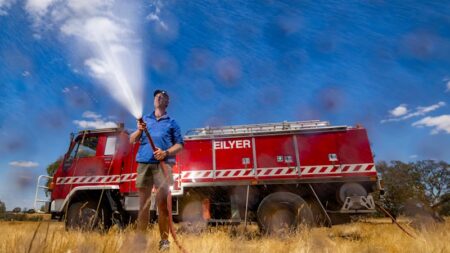
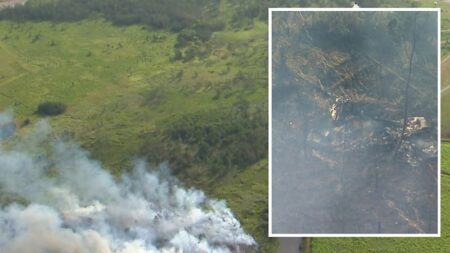
Bushfires raged across much of Victoria on Tuesday. By Tuesday evening, bushfires in the Otway Ranges – known as the Carlisle River fires complex – continued to trigger warnings to thousands across the state.
A total fire ban has been declared for the Wimmera and the north-east for Wednesday, where the regions will continue to be hot, dry and windy, and temperatures are forecast to reach into the mid-40s.
Health authorities continue to monitor impacts of heat-related illnesses on the state’s emergency departments, ambulance service, Nurse on Call and virtual emergency department, but late on Tuesday, a Department of Health spokesperson reported all services were operating within anticipated demand levels.
Statewide, there was a 27 per cent jump in Ambulance Victoria workloads in the Hume region, and breathing difficulty-related callouts rose by 67 per cent in the Lodden Mallee area. Paramedics also responded to three incidents involving children locked in vehicles.
Chief health officer Caroline McElnay said that for many Victorians, the worst impacts were yet to come.
“Continuous high temperatures can stop the body from cooling down normally. It can cause heat illness and even heatstroke, which is life-threatening,” McElnay said, warning that severe- intensity heat was more dangerous for people over 65, the very young and those with a medical condition.
“Take steps to protect yourself and others by keeping cool, staying hydrated, planning ahead to avoid the heat, and checking in with others.”
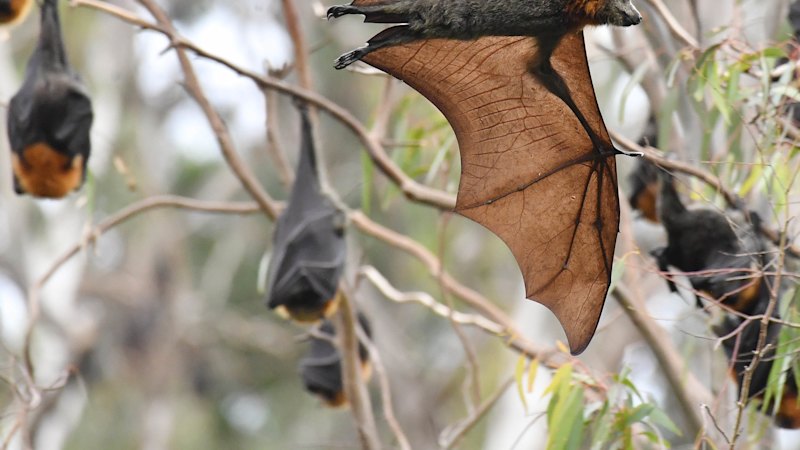
Animals are also being closely monitored. Wildlife services, veterinarians and qualified volunteers worked together to help protect the state’s bats, which experience heat stress once the mercury reaches 38 degrees, and start to die if it hits 40.
Parks Victoria’s treetop sprinkler system is activated when temperatures hit the high 30s, and experts are also on hand to provide help to animals.
In Melbourne, teams geared up for a long night to protect the grey-headed flying fox colony at Yarra Bend in Kew, while Wildlife Victoria crews were deployed on Saturday to monitor colonies at Tatura and Numurkah.
So far, both colonies – each home to about 10,000 flying foxes – are doing well, but conditions are expected to worsen later this week as the animals experience the cumulative impact of several consecutive days of intense heat.
With the long days ahead, energy officials have braced for power demand to hit a 17-year record high as Victorians turn up their air conditioners to cope.
On Tuesday at 9pm, more than 100,000 people had been affected by outages across the state, most on the Powercor and AusNet network. The bulk of Powercor’s impacts were in the region around Ballan, north-west of Melbourne, while smaller outages were reported across suburban Melbourne. AusNet had customers without power in Venus Bay and was investigating the cause.
Between 5pm and 8pm, an increased need for home cooling collided with a sharp drop-off in rooftop solar panel output, and pushed forecast grid demand to record levels.
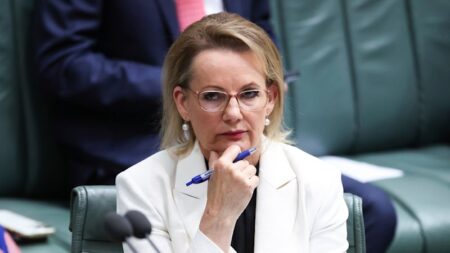
On Tuesday evening, Energy and Resources Minister Lily D’Ambrosio said Victoria surpassed a 17-year-old record for electricity demand.
“With record-breaking heat, Victoria has surpassed a 17-year old record for electricity demand this evening,” D’Ambrosio wrote on social media.
“Despite this, the independent market operator (AEMO) advises that Victoria has sufficient reserves in place to meet our needs.”
The outages are due to a combination of bushfires burning out electricity assets, trees falling on poles and wires, and heat-related equipment failure, she said.
Officials said the biggest concern for the power grid was the risk of wind gusts worsening the danger posed by bushfires in the Otway Ranges. The fires were bearing down on two critical transmission links in the state’s south-west and threatening to disrupt the supply of power to towns in the region.
Powercor, which owns and maintains the power poles and wires in central and western Victoria, activated emergency plans on Tuesday to try to keep the lights on, including sending a back-up generator to the coastal town of Apollo Bay.
Those who didn’t have air-conditioning or couldn’t afford to turn it on and those who were homeless were particularly vulnerable, City of Melbourne chief heat officer Krista Milne said.
”We have heard instances of people where their apartment is the same temperature as outside, so they’re going outside, sleeping under trees and in stairwells – so a whole range of people are vulnerable,” Milne said.
Milne said many cool places in the city stayed open later than usual on Tuesday to offer refuge, while more than 55,000 people flocked to the state’s patrolled beaches. Life Saving Victoria volunteers performed 19 rescues and administered first aid to eight beachgoers.
At Melbourne Park, the Australian Open’s “heat stress” scale hit the maximum score of five shortly after 1.30pm – prompting outdoor play to be suspended and the roofs to be closed on the arena courts. Some matches from the day session on outdoor courts were rescheduled to Tuesday night to avoid the hottest part of the day.
The last time Victoria experienced such a prolonged heatwave was in 2009, when the Mallee region recorded 12 days above 40 degrees during Black Saturday.
Bureau of Meteorology duty forecaster Michael Ephron Ease said a change would ease conditions in Melbourne and the south of the state but said there was little relief in sight for the north, where temperatures would remain “around 40 to 45 degrees until at least Saturday”.
“In terms of rainfall, we are going to, unfortunately, see generally dry conditions persisting at least until the weekend,” he said. “We may see some shower and thunderstorm activity over the eastern ranges, but certainly not that widespread rainfall that we need to really put these fires out.”
Start the day with a summary of the day’s most important and interesting stories, analysis and insights. Sign up for our Morning Edition newsletter.
 Rachael Ward is a journalist in the City team at The Age. Contact her at rachael.ward@theage.com.auConnect via email.
 Angus Delaney is a reporter at The Age. Email him at angus.delaney@theage.com.au or contact him securely on Signal at angusdelaney.31Connect via email.
 Nick Toscano is a business reporter for The Age and Sydney Morning Herald.Connect via X or email.
From our partners
Read the full article here