



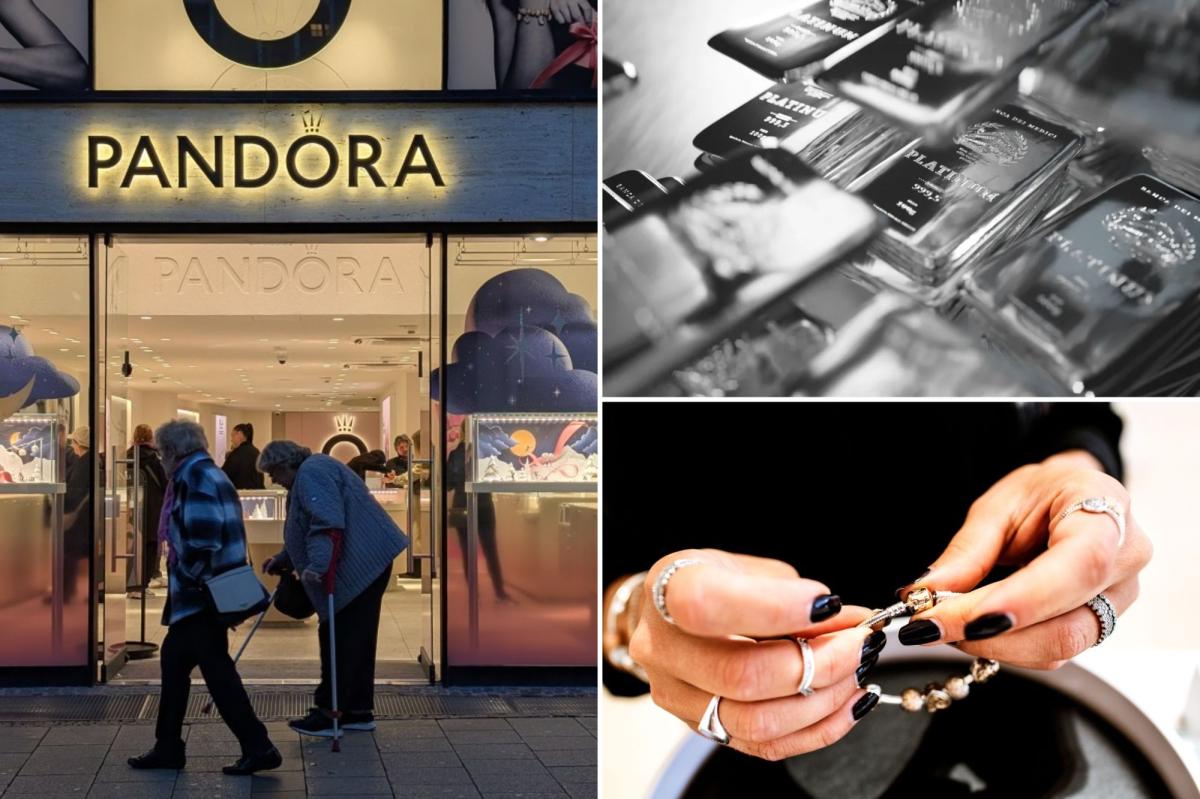
When it comes to bling, Pandora is officially breaking up with silver — and sliding into platinum’s DMs.
The world’s biggest jewelry brand by volume is leaning away from its once-signature sterling silver for shiny new platinum-plated pieces as precious metal prices go haywire, turning what used to be “affordable sparkle” into a profit-margin nightmare.
Translation: silver got too expensive, and Pandora isn’t about to let wild metal markets mess with its charm bracelet empire.
But according to jewelers, it’s also a smart emotional play — because most shoppers aren’t exactly metal purists.
Starting later this year, the Danish jewelry giant will roll out platinum-plated versions of its best-selling charm bracelets — the same ones millions of shoppers stack, gift and collect — keeping price tags roughly the same while quietly swapping what’s underneath the shine.
It’s a bold pivot for a brand that built its global following on silver.
Vivian Grimes, founder of fine jewelry brand Henri Noël, said the material itself often matters far less than the memories attached to it.
“It’s a strong play for Pandora so the company can keep prices comparable to their current sterling silver line,” Grimes told The Post.
“I do not think the customer cares so much what the metal is being used when purchasing Pandora, but about the emotional attachment they feel to the charms,” she added.
But lately, silver’s been acting more like gold’s dramatic cousin.
Over the past year alone, silver prices have more than doubled — spiking as investors piled into precious metals like they were the new crypto boom.
Gold soared, too, but silver stole the spotlight with roller-coaster swings that left jewelry makers sweating.
Grimes said the surge isn’t just about fashion — it’s being fueled by industry demand far beyond jewelry cases.
She noted that silver’s “heavy use in green energy” — from solar to industrial demand — has helped drive the spike, while platinum faces less outside pressure.
Pandora, which buys hundreds of tons of silver each year, felt the squeeze fast. The metal makes up nearly a third of its production costs — meaning every spike hits the company straight in the sparkle.
Enter platinum.
While usually considered a luxury metal, platinum prices have been far calmer, creeping up only slightly compared to silver’s wild ride.
And for Pandora, the plating strategy keeps pieces shiny, durable and budget-friendly.
But not everyone in the jewelry world is fully sold on plated sparkle as a long-term fix.
Fine jewelry designer Vickie Riggs warned that while platinum plating may keep prices down, it doesn’t always keep quality up.
Riggs said plated pieces typically appeal to shoppers who aren’t expecting heirloom longevity.
“Plated jewelry always deals with the issue of the plating wearing off, and the piece becoming less attractive when that happens over time,” she told The Post.
Still, Riggs said the soaring metal market is forcing shoppers — and brands — to get creative.
She noted that silver has climbed “roughly 270% over the past two years, compared to platinum’s approximately 140% rise” — and said predicting where prices head next is nearly impossible given the “complexity of global forces influencing metals.”
Across the industry, jewelers say cost pressures are reshaping how collections are designed from the ground up.
Alexandra Samit, founder of NYC’s Alexandra Beth Fine Jewelry, said rising prices are already squeezing margins and changing production decisions.
Samit said her team has absorbed “higher production costs on in-stock pieces” — tightening margins — while adjusting custom project pricing to reflect “increased material expenses and preserve craftsmanship standards.”
And rather than ditch precious metals altogether, many brands are simply using them smarter.
She added that designers are “reducing overall gold weight through semi-hollow and hollow chain designs” and “increasing stone-to-metal ratios” — pairing larger lab-grown diamonds or colored stones with lighter gold settings instead of heavy silhouettes.
For shoppers, that means jewelry is quietly getting lighter — but not necessarily cheaper.
And while some customers flinch at rising prices, others are leaning in harder, treating fine jewelry less like an accessory and more like an asset.
Angara CEO Ankur Daga said he’s seeing a split mindset emerge. He said the shift goes beyond simple price sensitivity.
“As gold continues to rise in value, some consumers are actually leaning in, viewing fine jewelry not just as adornment, but as a tangible asset that holds long-term worth,” he told The Post.
That mindset is also pushing designers toward mixed metals and smarter builds instead of relying on one volatile material.
Daga said brands are engineering pieces that use less metal but larger diamonds or gemstones to “maintain visual impact” while managing rising costs.
As big brands like Pandora rethink their core collections, many jewelers believe this could permanently change what fills jewelry cases.
Samit predicts silver-heavy lines may slowly fade out, declaring that prolonged volatility could push brands toward higher-margin gold pieces, curated investment-style collections, or made-to-order models less vulnerable to raw material swings.
And Grimes agrees that volatility is forcing a long-term rethink across the industry.
Grimes added that if silver remains unstable, brands will continue exploring alternative production methods to keep price points steady — though if the metal stabilizes, higher prices may simply become the new normal.
While silver may be sparkling like a stock market darling right now, for jewelry brands trying to stay affordable, it’s become a very expensive relationship.
For now, Pandora is betting that platinum’s steadier shine will keep customers stacking charms — without shocking their wallets.
Read the full article here