


The ancient saying, originating from Aesop’s fables, “United we stand, divided we fall”, does not have the visual impact of the Herald’s political commentators’ metaphors being offered to describe the Coalition’s self-destruction (“End of the road: Ugly divorce for couple at cross purposes”, January 23), such as stepping on one’s own rake, and chaos in a Titanic lifeboat, but offers an accurate account of it. As long as the Liberals and the Nationals behave like children, each opposing almost everything by nature rather than adults who oppose something on well-considered grounds, then they will be too distracted by their own self-focus to be able to work with one another and become an effective Opposition and potential alternative government. Paul Casey, Callala Bay
Other political groups, unimpressed with the rush but seeing the need to grab an opportunity to legislate while a subject of national importance was still on people’s minds, managed to pass the hate/gun legislation. The Nationals saw it as an opportunity to be rid of a female leader. Nice to know their priorities. Donald Hawes, Peel
Doesn’t the latest Coalition implosion mean that all future political polls will now have to list the former members as separate entities? Going to be some interesting reading over the next few weeks. Personally, I think it’s a NACO moment – Nats Always Chicken Out. They’ll be back at the Coalition benches before Trump has another hissy fit. Barry Ffrench, Cronulla
The ex-Coalition is like a bunch of seagulls fighting over stale chips wrapped in a newspaper. Ian Clarke, Terrigal
Much has been written about the second break-up of the Coalition and the reasons it happened. Part of this is due to the National Party changing. This started when the Country Party became the Nationals. The messaging was clear. This new party wanted to do more than represent non-metropolitan voters, it wanted some of its partner’s historic constituency. This included big business, like mining. But its new constituents have strong right-wing leanings. The aspirations of the rebranding did not materialise because big business hijacked the party. In the polls the Nationals drifted. Today the party continues to drift and as a result it is being threatened by One Nation. While this circus rolls on, spare a thought for our country cousins who do not have a political party option to represent them in our parliaments. Graham Hansen, Denistone
The continuous infighting among Coalition members supports the need for more independents, who genuinely represent their electorates and don’t squander time on leadership ambitions. Jill Stephenson, Woolwich
The Coalition has tried to fight a shadow, One Nation in this instance, and obviously came out a loser. It’s amazing that One Nation, with not a skerrick of policy, which can only make broad populist strokes, has sent the Nationals and the Liberals into a tailspin. They have lost an opportunity to come out as adults in the room in response to the Bondi terror attack. Unfortunately, their wanting to score political points by hurrying on the response process has bitten them, as they did not think through what needed to be done because they were spooked by One Nation banshees. I don’t think Anthony Albanese has played this five-dimensional chess and upstaged the rookies, but he has realised the Coalition would lose in this game of chicken with One Nation and has let that car crash happen. The tortoise wins again? Manbir Singh Kohli, Pemulwuy
“You put your right foot in, you put your right foot out. You put your right foot in and you shake it all about. You do the Hokey Pokey and you turn around.” Makes as much sense as any attempt to analyse the National’s petulant split from the Coalition. Bob Nicoll, Hat Head
Rocky relationship
With the fresh split between the Liberals and Nationals it’s tempting to empathise with both partners by admitting we never understood why they were together in the first place (“This Coalition can’t conduct itself”, January 23), that they were not good for each other, and that there are plenty of other minor parties and independents who might be more compatible. I’m going to resist that temptation, to avoid embarrassment when they inevitably reconcile and show up hand-in-hand at the next dinner party. Colin Stokes, Camperdown
As usual, Waleed Aly’s analysis has nailed it. “Attack” and “act” are different responses, and the now-former Coalition did plenty of the former but failed to get their act together, even on a day of national mourning. For the Nationals, it was all about themselves in what was essentially a graceless political suicide note to the electorate. What were they thinking? Deb McPherson, Gerringong
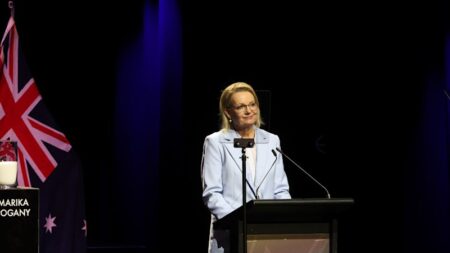
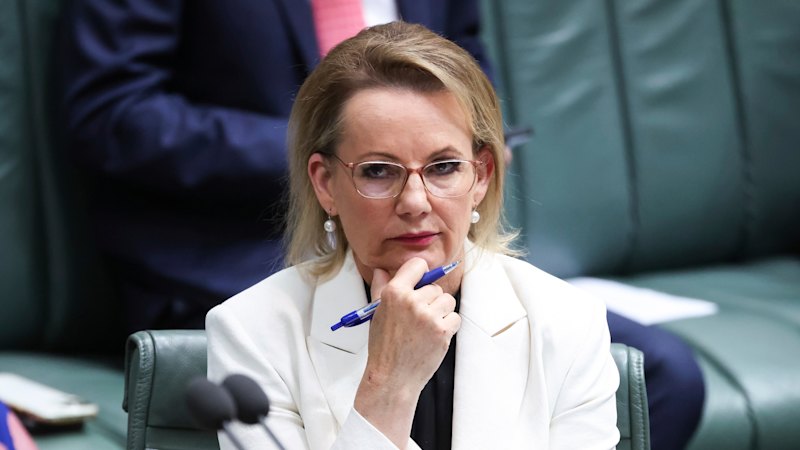
Sussan Ley’s over-the-top attacks on Albanese and urging him to apologise for the Bondi massacre were a parody and surely embarrassed some of her Liberal colleagues. But the swing to the hard right will result in a worse outcome than Peter Dutton’s election catastrophe in 2025. A continuation of Dutton’s targeting of regional and outer suburban seats to counter One Nation is off the mark, and the Liberals will continue to bleed in the metropolitan areas. Tony Simons, Balmain
Taylor’s priorities
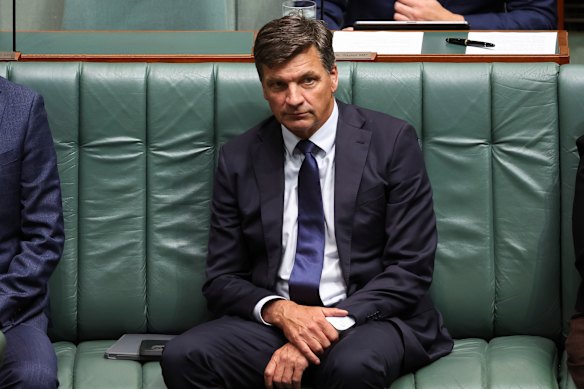
So Angus Taylor, a potential opposition leader and prime minister, couldn’t quite make it to parliament (“Ley and Littleproud’s leadership at risk”, January 23), which was debating legislation so monumental that it caused the disintegration of the Coalition and the possible demise of the two leaders – because he was on holidays. Now that’s what I call leadership. Tony Mitchell, Hillsdale
Courage or cowardice?
Your correspondent (Letters, January 23) misses a critical point. Nationals senators who “courageously voted according to their principles” defied cabinet solidarity. To be a member of cabinet or shadow cabinet – and enjoy the power, privileges and responsibility that come with it – is to make a binding commitment to uphold its collective decision, regardless of whether one supported it or not. The alternative is chaos. What would have been “courageous” is these three senators resigning from shadow cabinet after its collective decision was made, but before the vote being held in parliament. They didn’t do that. Maybe not so “courageous” after all. Brendan Jones, Annandale
Littleproud turns blind eye
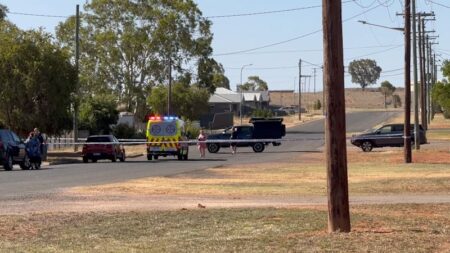
Only days after David Littleproud and his Nationals voted against new federal gun laws saying, “we don’t have a gun problem” (“Hanson lurked behind Coalition’s call on firearm laws”, January 21), and claiming the new laws discriminated against honest country gun owners, three people, including a pregnant woman, were shot dead, and another seriously injured, by an armed man in Lake Cargelligo (“Three dead as gunman fires in NSW town”, January 23).In August last year two police officers were shot dead in a rural property in Porepunkah in Victoria. Again the gunman fled, leading to an extensive police manhunt. In 2022 two police constables and a civilian were shot dead in the rural town of Wieambilla, Queensland. In November 2023, a policeman was shot dead, and another police officer injured, at a rural property in South Australia.
That’s nine dead and two others wounded in rural areas in the last few years alone. I’m certain that each of those grieving victims’ families would disagree with Littleproud. Alan Marel, North Curl Curl
PM’s profound apology offers hope
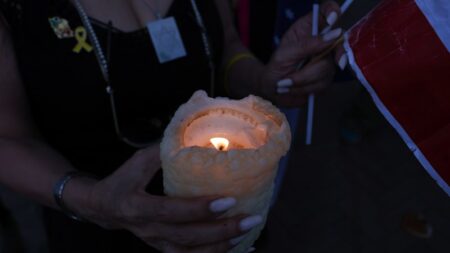
The greatest hope Prime Minister Anthony Albanese could give to Australian Jews after the Bondi massacre is his profound apology over our failure to protect the victims of this tragedy from the evils of antisemitism (“Let’s drive antisemitism from our door”, January 23). Fundamental to his apology is this claim to our collective conscience as a nation: “We cherish the promise that this country is a safe harbour.“The re is no doubt that many who have migrated to our distant shores over the years seeking refuge from the scourges of war can testify to this country abiding by its promise. But, given that some who perished on the shores of Bondi were themselves survivors of the Holocaust, that same promise has been broken to its deepest core. For to be killed because of one’s religious faith or the colour of one’s skin is a complete anathema to all we hold true as a democracy. From the wrongful enslavement of Indigenous people to the White Australia Policy, we have gradually learnt as a nation how to cherish our common humanity. So may the prime minister’s apology be another landmark on this journey in recognising we are all created equal. Rev Vincent Zankin, Rivett (ACT)
At this moment of mourning, let us remember a divided society would be a natural hotbed of terrorism. The healing can only begin when politicians cease to exploit public horror, grief and resentment for their own advancement. Anthony Albanese rose to the occasion as a statesman in offering his apology for “not protecting Australia’s Jewish community” to comfort the community. The same cannot be said of Sussan Ley.
What we have seen since December 14 could be described as deliberate fomenting of hatred by Ley. Her behaviour and public statements, including the groundless condemnation of Foreign Minister Penny Wong for not shedding a tear for the victims of the massacre goes to show Ley’s own character of hateful exploitation of grief and horror. When the Port Arthur massacre occurred, then Labor opposition, under Kim Beazley, stood shoulder to shoulder with John Howard’s government to address the crisis. That federal politics has taken such a sinister turn should warn voters we cannot allow our nation to splinter as the Coalition has, in this hour of another national crisis. Ley doesn’t deserve to be the leader of the opposition. Kim Woo, Mascot
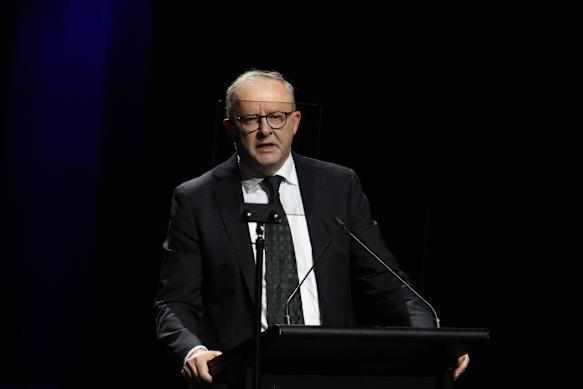
The prime minister’s speech on the National Day of Mourning at the Opera House was a redemption in his somewhat tarnished reputation after the December 14 terrorist attack. He was articulate, heartfelt and genuine in his delivery of the inclusive and compassionate speech to a welcoming audience. I thank him for this. Dorothy Gliksman, Cedar Brush Creek
Our prime minister has suitably addressed the tragedy that was Bondi with a Day of Mourning. On January 26, will he suitably address the Australia/Invasion Day discussion that has caused so much trauma to our Indigenous people? My ancestor, Edward Miles, arrived on the First Fleet and his descendants have benefited but I willingly acknowledge we British were invaders. Kevin Rudd did well with the apology to the stolen generations but, and especially after the rejection of the Voice, we need to do more. The least would be to change the date of a day that can only be a travesty of a celebration. It’s time. Nola Tucker, Kiama
Mourn DV victims too
Another woman, “former partner”, allegedly murdered by an inadequate male just because she didn’t want to be in a relationship with him any more (‴Gentle, loving, caring’: Pregnant woman shot dead in alleged triple homicide”, smh.com.au, January 23). And additionally, in this case, two other people also tragically lost their lives and a teenager was injured. When are we going to get serious about domestic violence? Admirably, parliaments are recalled when 15 people are murdered at Bondi but, meanwhile, inadequate males continue to murder a woman a week, as has been happening for years and nothing changes. Michael McMullan, Avoca Beach
With all the sadness over the 15 people who lost their lives, could we also have a day each year for the 52 women murdered last year? These are the forgotten women. Zuzu Burford, Heathcote
On the wrong track
In the 1890s, Mark Twain wrote about the “most baffling and unaccountable marvel that Australasia can show”, ie, the need to change trains to go from Sydney to Melbourne. Fast forward to 2026 (“Late train delivery adds to woe for delayed metro line”, January 23). Twain could well have been writing about the Western Sydney Airport metro. Carriages 30 centimetres wider than everything else on the network. The need to change at St Marys to go anywhere except St Marys. No connection to Kingsford Smith Airport. The line can never be extended to join the rest of the network without major reconstruction. How much cheaper would it have been to extend the Sydney Trains line to the airport and then on to St Marys? Grant Robinson, Springwood
I’ve just read that the trains to the Western Sydney Airport will be 30 centimetres wider than other Sydney Metro trains. Does that mean they’ll be incompatible with the rest of the system if and when integration is attempted? Vivienne Mackenzie, Port Hacking
Cull cars not sharks
As a keen surfer who also patrols Sydney’s beaches as a lifesaver, the ocean is not an abstraction to me. It is a workplace, a classroom and, increasingly this week, a source of fear.
Like many high school students, myself included, who spend their summer mornings on the sand, I have felt the recent cluster of shark attacks off Sydney’s coast not as distant headlines but as lived uncertainty. The events have understandably shaken beachgoers. Yet from the shoreline, what is most striking is how quickly tragedy gives way to policy reflex. In response to these tragedies, renewed calls for tougher shark control measures – Tony Abbott among their proponents – have resurfaced. These proposals are decisive-sounding interventions designed to project certainty in moments of fear. Yet, those of us who spend long hours in the water understand that risk is inseparable from the ocean. The question is not whether danger can be eliminated, but how it is managed.
Evidence suggests lethal measures offer limited returns. Western Australia’s earlier culling programs failed to demonstrate a sustained reduction in shark incidents, while NSW’s use of SMART drum lines has shown higher rates of shark survival and improved real-time monitoring without increasing risk to ocean users. At the same time, healthy marine ecosystems underpin tourism and fisheries worth billions annually, meaning environmental damage carries real economic costs.
I am wary of policies that mistake action for effectiveness. Good environmental policy, like good surf awareness, respects uncertainty, weighs trade-offs and prioritises long-term outcomes over short-term comfort. Joseph Budden, Bellevue Hill
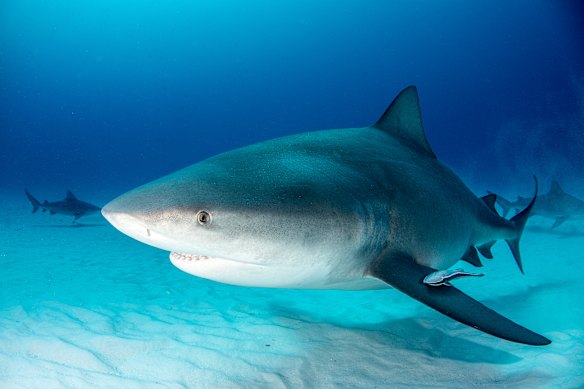
The recent spate of shark attacks has been accompanied by some strange claims including that it is “unprecedented”, that it is a manifestation of climate change, and that shark nets are useless. It seems worthwhile adding some facts to the debate. In 2009, the NSW Department of Primary Industries provided a detailed report on shark netting. From this, there were 10 fatal shark attacks on Sydney ocean beaches between 1922 and 1936. Six of the deaths occurred in clusters of two – 1922 Coogee (February and March), 1929 Bondi (January and February) and in 1935 North Narrabeen on March 2 and Maroubra on March 9. Shark nets were introduced in 1937. Although there were incidents, in the following 70 years there were no further fatal shark attacks at a Sydney ocean beach. Shark nets may be horrible because of the damage they do to other marine life but are they “useless”? Paddy Grattan-Smith, Matraville
Sharks inhabit the wilderness that starts at the shore. Those calling for shark culls need another perspective. In 2025, there were 512 deaths on NSW roads. In 2023-24 there were 90 deaths nationally attributed to domestic violence. I suggest we cull cars and bullies instead. Tim Coen, Ashfield
Don’t break the glass
So it seems the price of heritage is eternal vigilance (“Stained glass backdown at QVB”, January 23). By withdrawing their application to remove heritage-listed stained glass, the developers highlight how important heritage is to our sense of place and sense of purpose. Andrew Woodhouse, Potts Point
Tennis racket
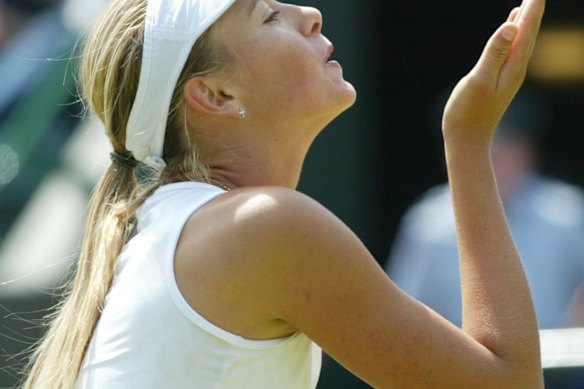
Does Mitchell Starc scream or grunt loudly as he releases a rocket at a batsman? Does Lionel Messi when he takes a shot towards a goalkeeper? Does Nathan Cleary when he runs at an opponent near the try line? It doesn’t happen in any sport except tennis – why is that? The crowd is not allowed to utter a sound in case it upsets the overpaid, pampered darlings on the court, but players are allowed to scream and grunt at whatever decibels they like. There is no physical or biological reason to do this. It has nothing to do with skill – it is cheating pure and simple. If tennis authorities won’t stop it, then the crowd should be given the same privilege during play. Patrick Dodd, Narrabeen
- To submit a letter to the Sydney Morning Herald, email letters@smh.com.au. Click here for tips on how to submit letters.
- The Opinion newsletter is a weekly wrap of views that will challenge, champion and inform. Sign up here.
Read the full article here