



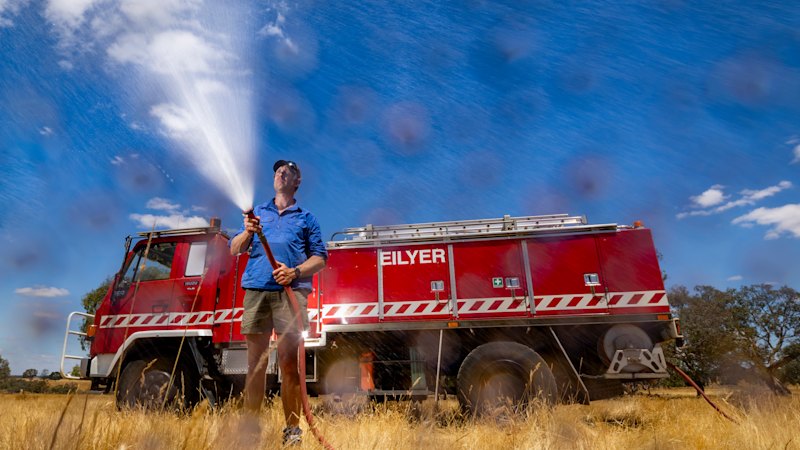
For most of the year, the two ex-CFA tankers bought by Michael Blackburn for about $30,000 each aren’t used for fighting fires. Instead, the Woorndoo CFA captain uses them for duties such as transporting water for livestock and undertaking controlled fires when burning crop stubble at his farm of about 4000 hectares.
But when fire devastated Streatham earlier this month, Blackburn said, his truck, along with utes and ex-CFA tankers owned by other locals, played a pivotal role in bringing the blaze under control.
“We had [CFA] strike teams come in later … but if private units weren’t there that day, it would not have been stopped in the time it was,” Blackburn said.
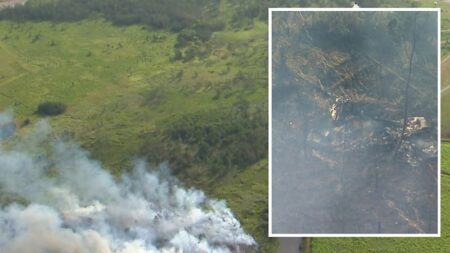
Private vehicles were also essential earlier this month in Natimuk, near Horsham, where a grassfire destroyed 17 homes and about 8000 hectares.
Horsham Mayor Brian Klowss said that in rural areas where it could take more than 30 minutes for fire crews to arrive, farmers operating private vehicles to fight dangerous fires were crucial.
“That’s where all these private units have come in because people have got them sitting at the back door, like an old Hilux or Land Cruiser or whatever. Even the blokes with a 1000-litre shuttle on the back of the ute and a firefighter [joined in],” said Klowss, whose farm was severely affected by the fire.
Klowss estimated that between 200 and 300 private units, travelling as far as 100 kilometres to help, had fought the fire. Natimuk firefighters recalled seeing a homemade 10,000-litre tanker on the fire ground.
Natimuk CFA captain David Sudholz said: “People just drop what they’re doing, and they run to assist in any way they can, whether they’re in the CFA or not, all in their own private units … [They] will all use their own equipment free of charge and not even think about their own safety sometimes.”
Professor Jason Sharples, University of NSW bushfire behaviour expert, previously said that although Australia had always experienced unstoppable bushfires, “catastrophic” fires – in which the danger posed cannot be accurately predicted – are becoming more common.
“In the fire services, there has been that acknowledgement for quite a while now that there are just some fires that you can’t stop and your best option might be to just pick a house and try to defend it the best you can, rather than trying to stop the fire,” he said.
This increase in fire severity, coupled with more frequent warnings to evacuate, means more people are expanding their efforts privately.
Blackburn said his trucks were useful year round and offered him additional fire protection. But he and others fear private fleets are becoming a double-edged sword, and are at risk of being relied upon rather than seen as as-needs additional support.
Brad Marson, vice-president of the CFA Volunteers Group and Grassdale brigade captain, said: “It’s just easier for them to buy their own tanker, buy their own firefighting appliance, and just run out if something happens, and go and put it out themselves.”
Before this week’s dangerous conditions, Marson said the reliance on private firefighting vehicles had left communities vulnerable “as private units typically only cover their own property and neighbours”.
Some volunteers who brought the Streatham and Natimuk fires under control in private vehicles said they felt taken for granted.
“We feel like we have to pay to put out our own fires,” said Blackwell.
For many volunteer firefighters, the importance of private units is linked to a series of grievances with the state government. This includes cuts to CFA funding over a number of years before 2024-25, and the state government’s proposed doubling of the Emergency Services and Volunteers Fund, which will impact large farming properties.
A CFA spokesperson said private firefighting units played an important role in the prevention and suppression of fires in rural Victoria, especially on privately owned land.
“However, it’s important that firefighting is co-ordinated under a single command structure to ensure the safety of all personnel on the fire ground and to effectively manage the fire attack,” the spokesperson said.
The spokesperson did not divulge how many fire trucks had sold at auction each year, but said tankers were replaced throughout the year as new trucks became available.
Replaced vehicles are kept with brigades throughout the bushfire season to respond to increased fire risk, before being decommissioned and sold at auction – such as those acquired by Blackburn – at the end of summer.
The CFA’s latest annual report reveals the government gave $361.3 million to the CFA in 2024-25, an increase on the year before after several years of decreased funding.
A Victorian government spokesperson said: “As well as increased funding, we’ve announced a $40 million rolling truck replacement program for the CFA.
“That builds on almost 100 new vehicles currently on the production line and 95 vehicles recently delivered to brigades across the state.
“We will always back the CFA and its volunteers with more resources and better equipment so they can do what they do best – protect Victorians.”
Start the day with a summary of the day’s most important and interesting stories, analysis and insights. Sign up for our Morning Edition newsletter.
 Angus Delaney is a reporter at The Age. Email him at angus.delaney@theage.com.au or contact him securely on Signal at angusdelaney.31Connect via email.
From our partners
Read the full article here