



Their efforts may be in vein.
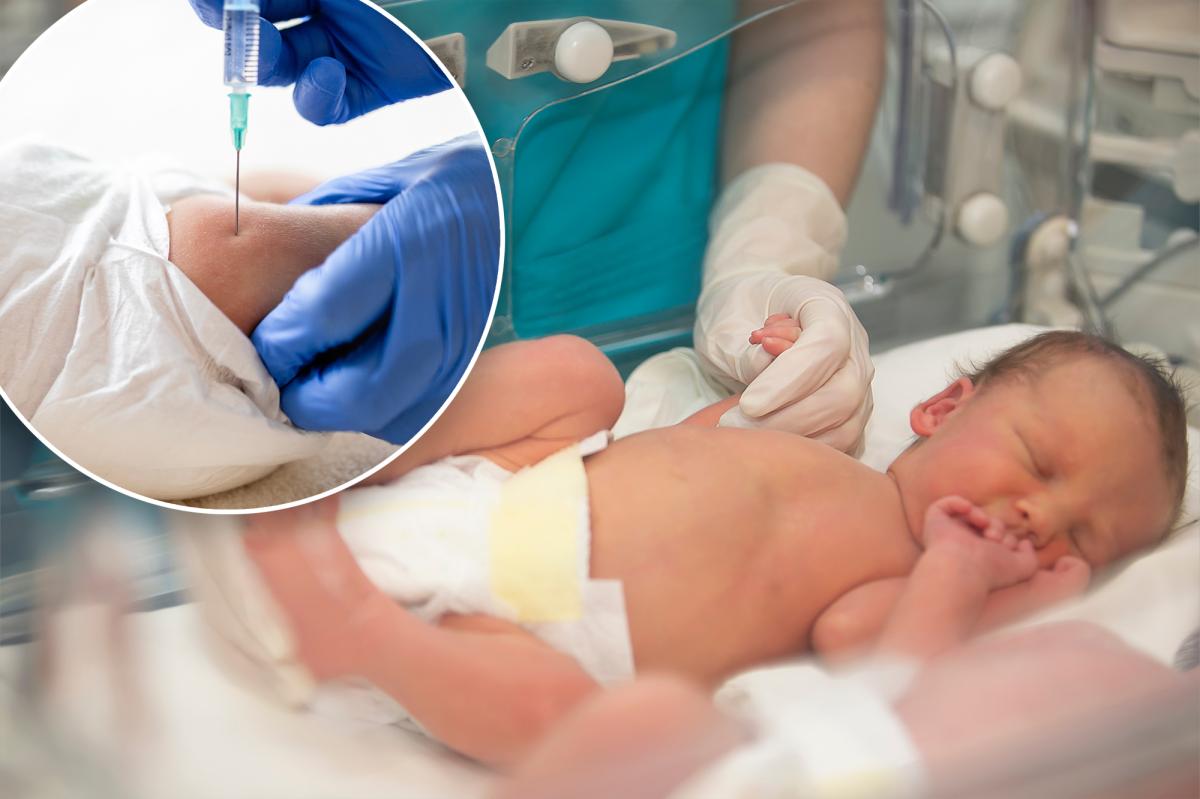
Medical experts have been strongly advising new parents to make sure their newborns receive a specific vitamin shot to prevent a potentially fatal condition characterized by internal or external bleeding.
For a new study, National Institutes of Health researchers analyzed more than 5 million health records between 2017 and 2024.
They discovered that 5.2% of newborns did not receive a vitamin K injection at birth — almost 200,000 newborns — and noted a 77% increase in infants not receiving the shot between 2017 and 2024.
Several physicians, including Dr. Candice Foy, a pediatrician and medical director of the newborn nursery at Stony Brook Children’s Hospital, say this trend is concerning for one big reason.
“Babies are born with a limited amount of clotting factors that get used up pretty quickly,” Foy told The Post. “Vitamin K helps them make more clotting factors to help prevent significant bleeds.”
Not only do newborns lack this nutrient right off the bat — as it doesn’t pass from mother to child via the placenta — but breast milk only contains small amounts as well.
Foy warns that without vitamin K, the risks of serious bleeding greatly increase within the first week.
“That decreases a little bit over the next six months because babies don’t get vitamin K… until they start having purees with leafy greens such as spinach,” she said.
This deficiency puts them at risk of a rare but life-threatening bleeding disorder called vitamin K deficiency bleeding (VKDB).
“What [vitamin K deficiency bleeding] looks like is significant hemorrhage of the brain and gut,” Foy explained. “Babies can present lethargic, not breathing, vomiting blood or having blood in their stool.”
“They can also present with unexplained bruises, which is one of the milder forms,” she added.
Newborns who don’t receive a vitamin K shot at birth can develop VKDB in their first six months.
But more parents are questioning the necessity of the shot, whether from misinformation or distrust in medical systems.
There could also be confusion that the vitamin injection is a vaccine, when it’s actually a supplement.
Vaccine advisers recently ended the longstanding recommendation for newborns to receive a hepatitis B vaccine, but not for vitamin K.
The American Academy of Pediatrics has recommended that vitamin K be administered to all newborns shortly after birth since 1961.
Parents may also be concerned about a potential link between the vitamin K shot and childhood cancer, but several studies have ruled out that possibility.
And importantly, damage from previous bleeding can’t be undone and can result in serious issues.
“A lot of babies with severe brain bleeds can have significant issues such as cerebral palsy, learning disabilities, if it’s mild or death in the worst-case scenarios,” Foy said.
Read the full article here