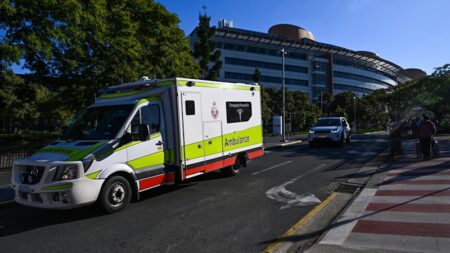





For the clinical teams at Sydney’s Royal Prince Alfred Hospital, the pieces of the puzzle came together slowly, then all at once.
On December 3, a patient on the hospital’s transplant ward was found to have contracted a potentially deadly fungal infection. The same infection was found in another patient on December 9. One or two infections over a year were not uncommon; most of these patients are on immunosuppression drugs to prevent their bodies from rejecting their transplants, making them easier targets for opportunistic infections. But two cases so close together set off alarm bells that reached the top of NSW Health.
The most likely culprit was Aspergillus, a common mould found in soil, plants and damp environments. We inhale these spores every day, but they are easily cleared by healthy immune systems. In people with weakened immune systems, this doesn’t happen. The spores lodge deep in the lungs, spawning filaments that can penetrate cells and blood vessels. It is devilishly difficult to treat; one in three immunocompromised patients who contract an Aspergillus infection dies within 90 days.
This is why the air inside transplant wards is filtered – and why the two cases in quick succession were so alarming. Clinical teams urgently reviewed their patients from previous months and discovered four more victims in a cluster stretching back to October. Another case from May was initially identified, but excluded because it was considered outside the normal incubation period.
Patients and staff were transferred from the transplant ward. Air monitoring and filtration were inspected and upgraded. Walls and ceilings were examined, cleaned and fixed.
By the time Sydney Local Health District chief executive Deb Willcox called the state’s chief health officer, Dr Kerry Chant, she was armed with laboratory results and case notes. They had reached a trigger point. On December 24, they convened an expert panel to go through the evidence, patient by patient, line by line, and declare the cases a cluster.
The Christmas Eve panel drew on experts from Westmead as well as RPA clinicians who had contact with the patients.
As the teams began digging into potential sources of the Aspergillus infections, a prime suspect emerged: the $940 million construction site next door. But they could not be certain. On Friday, Chant said health authorities may never have a definitive answer.
Other contingencies were made. A draft media statement was prepared in case journalists asked questions, but it did not mention how many cases were in the cluster, nor that two patients had died.
It was around this time that NSW Health alerted Health Minister Ryan Park’s office to the cluster. But Park himself was not told, nor was he briefed when he returned from leave in early January. Park told budget estimates on Monday that the first he knew of the cluster was early February, around the time the opposition put in a parliamentary document request that would have uncovered the deaths.
Opposition health spokeswoman Sarah Mitchell, whose office has been trawling through 10 boxes of documents exposing maintenance issues across NSW’s hospitals, seized the opportunity to go on the attack on Monday.
“So until I moved to call for papers, where, obviously, these documents were going to become available and in the public arena, you were not aware of this particular issue?” she asked.
“Not that particular issue,” Park said.
The public only learnt about the cluster two months later, when this masthead revealed the cluster had claimed two lives.
Mitchell claimed a cover-up. Park has strenuously denied the government and the hospital deliberately obscured the cluster. “We wanted to make sure staff were informed, patients were informed,” he said on Monday. “But we didn’t want to unnecessarily concern the community about a mould that exists in the environment.”
Willcox said the expert panel, chaired by Chant, advised that a public statement was not necessary.
“The situation was under control,” Willcox said. “The air sampling had indicated the air was clear, and the patients and the outpatients and the clinical staff who were directly affected were absolutely aware.”
Willcox and Park still have questions to answer about how these vulnerable patients were exposed to the deadly fungus. In an email sent on January 15, Willcox said formal testing of the transplant unit had found mould levels on the transplant ward were around 10 times higher than other sites in the hospital. Additional testing on January 19 found widespread mould and water damage on at least four floors of the hospital.
Asked on Monday if the state of NSW hospitals was acceptable, Premier Chris Minns said: “The short answer is no.”
Minns said the government was investing $10 billion over four years in the health system, “in many cases to tear down old, dilapidated hospitals and build brand-new ones”.
It is a point Park has repeatedly made. “It is an old hospital. It’s part of the reason why there’s a $900-plus million redevelopment taking place,” he said during a nearly hour-long press conference on Friday.
The prospect of the construction site being the source of the infections highlights a wicked problem for Park and for people running hospitals anywhere. Many of NSW’s 4400 hospital buildings are ageing, water-damaged, and, in some cases, riddled with vermin.

The redevelopment of RPA is a vital refurbishment of a 150-year-old hospital riddled with mould and water damage. But in making these upgrades, construction teams may have unwittingly disturbed spores that could be deadly to some of the hospital’s sickest patients.
Air control monitoring on the construction site between September and December showed “no issues of concern”, estimates heard.
An expert panel from the Centre for Disease Control is due to meet this week and will likely look at how deadly mould spores were able to bypass existing controls in the transplant ward. Willcox said the investigation will “take as long as it needs to take”.
The ward was upgraded, including the addition of new ante chambers, and reopened on February 9. On Friday, Chant said hospitals needed to remain constantly on guard against threats such as Aspergillus.
“There will always be fungal infections in transplant patients, sadly,” Chant said. “It is a risk, as are other infections.”
Start the day with a summary of the day’s most important and interesting stories, analysis and insights. Sign up for our Morning Edition newsletter.
Read the full article here