




Dogs and people have been side by side for thousands of years, but growing populations of dogs can cause problems for certain communities.
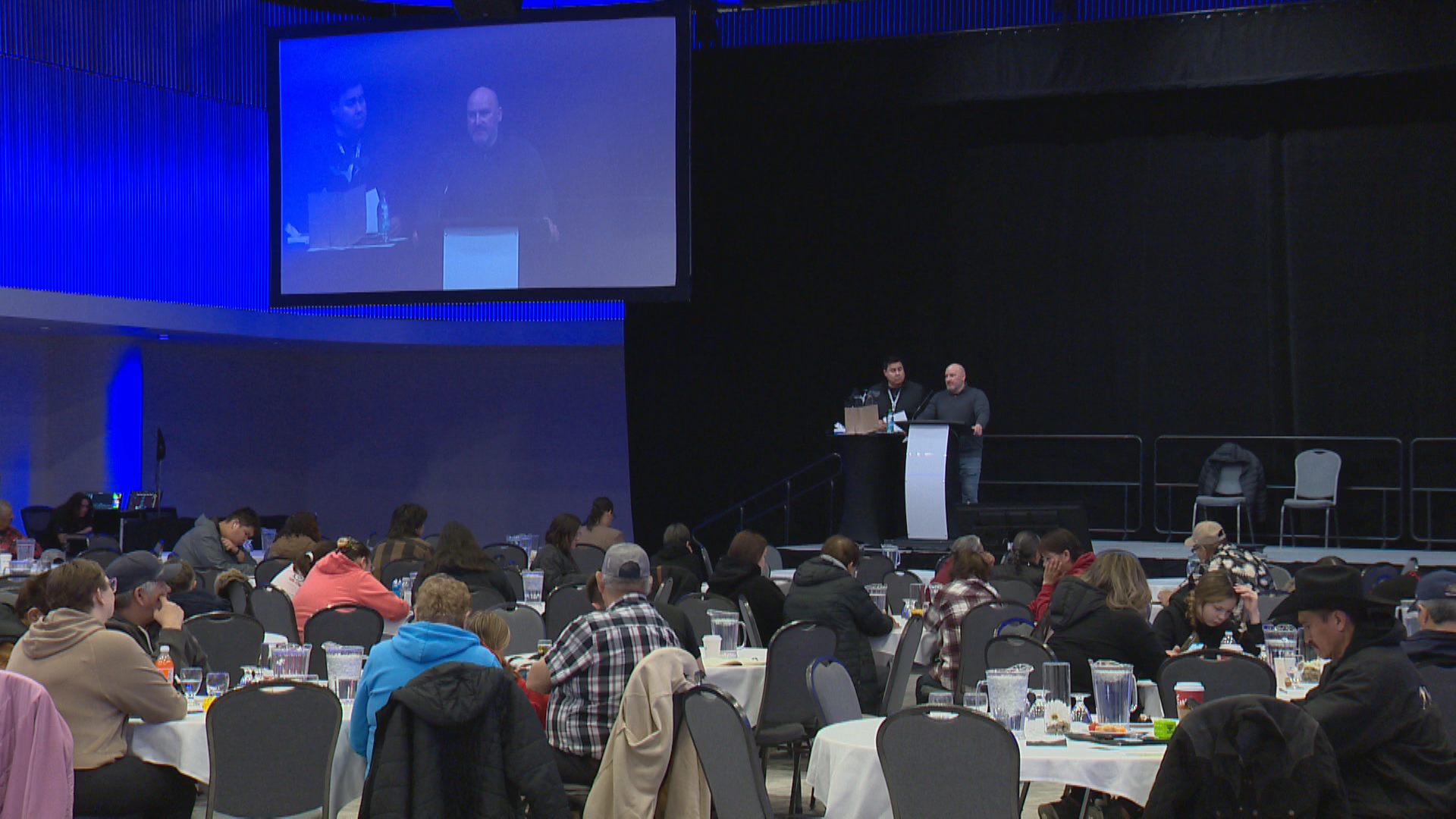
A dog management summit held at Prairieland Park in Saskatoon allowed nine First Nations communities to gather and come up with solutions.
“Working within each of the communities sort of as a tribal council to think about what are the things that can match the community context and the community values that can start to change the situation on the grounds so that dogs who are valued members of communities can stay, live safely and in a healthy way,” said Dr. Jordan Woodsworth, veterinarian and director of Northern Engagement and community outreach at the University of Saskatchewan vet college.

Get breaking National news
Get breaking Canada news delivered to your inbox as it happens so you won’t miss a trending story.
Being able to gather as a community with youth, elders, and speakers to talk about how people can better protect their dogs and community as a whole is important to tackle the issue.
“Regarding dog awareness, it’s a really big impact and I think more First Nations should be involved in it. So, this way we can all come together to share our ideas on how we can control our own pets in our community.”
In the past, humans heavily relied on dogs, which isn’t so much the case today.
“Dogs back then were very respected because that was the animal that took us places from point A to point B, plus also to help us hunt,” said Trevor Moberly, band councillor for Birch Narrows Dene Nation.
“Our dogs came a long time ago. That was our way of life, our tradition,” said Rodrick Apesis, an English River Elder.
Some solutions brought up in the summit include spaying and neutering and community engagement, but community members say they need funding and resources to be able to do that.
“A lot of the stuff that’s going on in communities doesn’t only happen in Northern and Indigenous communities, it happens in many. It’s just that the resource availability is different in different places,” said Woodsworth.
“This isn’t a dog problem, and it isn’t solely a First Nations problem — it isn’t an isolated problem for each of these communities. It’s a system problem.”
Watch above for more on how communities gathered to help protect their animals.
© 2026 Global News, a division of Corus Entertainment Inc.
Read the full article here