



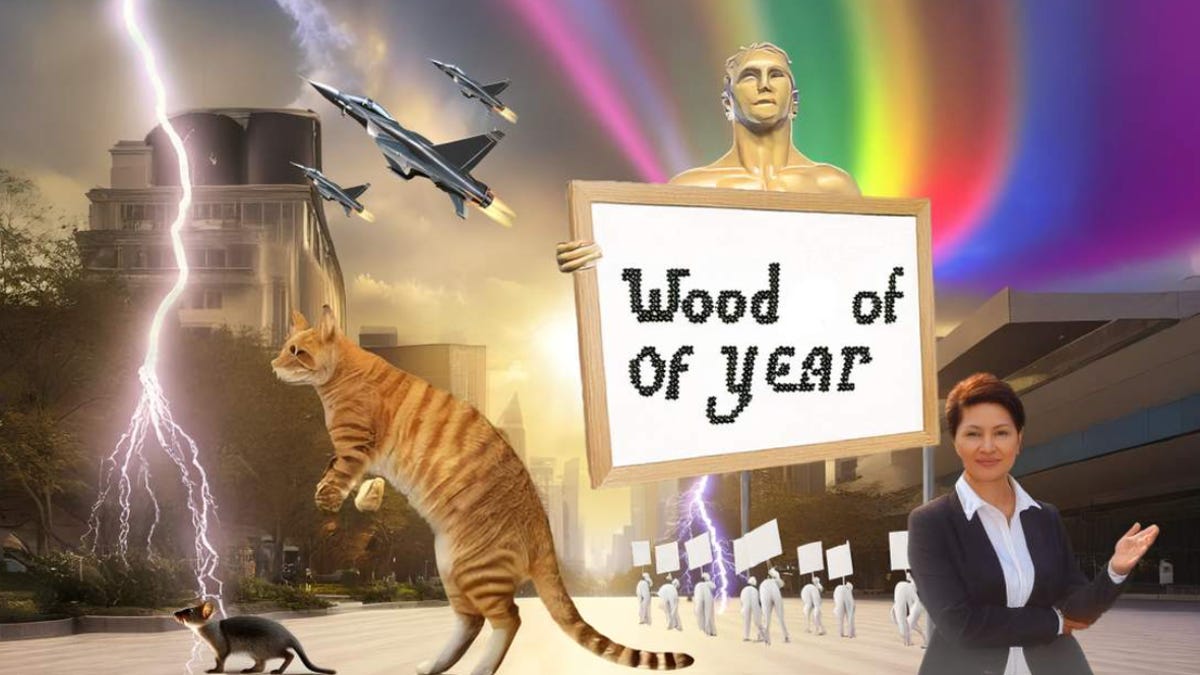
In a year dominated by the booming AI industry and an overwhelming flood of digital creations, Merriam-Webster has crowned “slop” as its 2025 Word of the Year. This four-letter word acts as a judgment on the sprawling glut of low-quality content now clogging screens and social media feeds everywhere.Â
Originally used in the 1700s to refer to soft mud and in the 1800s to describe food waste or rubbish, “slop” now takes on a decidedly 21st-century twist. Merriam-Webster defines it as “digital content of low quality that is produced usually in quantity by means of artificial intelligence.”Â
Think ridiculous videos, glitched-out ads, fake news that almost fools you, crappy AI-authored books and, yes, talking animals. Now, even luxury brands like Valentino are pushing out “slop” ads.Â
“Like slime, sludge and muck, slop has the wet sound of something you don’t want to touch,” Merriam-Webster quipped in its announcement, capturing a widespread cultural mood that’s part bemusement, part exasperation with today’s worsening AI landscape.
Read also:Â $1B for AI Slop? Why Disney Is Spending Big and Bringing Its Iconic Characters to OpenAI
Don’t miss any of our unbiased tech content and lab-based reviews. Add CNET as a preferred Google source on Chrome.
2025: A year defined by the AI content deluge
Tech platforms, both large and small, have grappled with the surge of generative AI content in 2025, from deepfakes to clickbait-style creations that prioritize volume over value. The wave of AI slop reflects not just how easy it’s become to generate content at scale, but also how little of it often resonates meaningfully with human audiences.Â
Merriam-Webster’s editors say the word stands out because it captures both a cultural trend and a collective sentiment — one that’s less about fear of technology and more about poking fun at how mindlessly content can spread.Â
Other words that shaped 2025
While slop snagged the top spot, Merriam-Webster also highlighted other terms that defined the year’s discourse, including:
- 67, a viral slang term born on social media, delighting Gen Alpha with an inside-joke energy.
- Performative, used to call out behavior done for show or clout rather than substance.Â
- Touch grass, a phrase urging people to disconnect from digital obsession and reconnect with the real world.Â
- Gerrymander and tariff, words driven by political and economic headlines.Â
These picks show the breadth of public interest in 2025, ranging from internet culture to politics to how we live with technology.Â
A global linguistic snapshot of the past year
Merriam-Webster isn’t the only publication weighing in on the year’s language. Here are some other 2025 Words of the Year:
- Oxford University Press chose “rage bait,” highlighting content designed to spark outrage and engagement online.Â
- Macquarie Dictionary in Australia spotlighted “AI slop,” which is similar to Merriam-Webster’s theme of digital clutter.Â
- Cambridge Dictionary picked “parasocial,” focusing on one-sided relationships with online personalities and AI chatbots.Â
- Dictionary.com embraced the slang term “67,” a viral and almost meaningless expression that captured a slice of youth culture.
Together, these choices mirror a generation negotiating fatigue, fascination and frustration with the digital world.Â
Why it matters
For a tech-savvy audience, slop isn’t just a funny word; it’s a symptom of deeper trends in AI deployment, content moderation and cultural perception. Our CNET experts have covered AI slop in depth, from defining what it is and how it’s showing up on the internet and in commercials, to analyzing how it’s turning social media into a wasteland.Â
As tools for automatic generation become increasingly common and easier to use, the signal-to-noise ratio in digital spaces will only become more pronounced and important. Whether you’re building apps, curating feeds or trying to avoid the next wave of meaningless memes, the 2025 Word of the Year is a reminder that quality still counts and sometimes language itself can call that out with perfect clarity.
Read more: Why Time Magazine Dubbed ‘AI Builders’ Person of the Year
Read the full article here