

With Budapest going head-to-head against Kyiv over the fate of the Druzhba oil pipeline, Brussels is looking for a way out of the spiralling crisis – sooner rather than later.
“Something has to give,” as one EU official put it.
Hungarian Prime Minister Viktor Orbán has blocked a critical €90 billion loan to Ukraine over what he claims is a deliberate, politically-driven effort to disrupt the transit of cheap Russian oil by President Volodymyr Zelenskyy.
Orbán, in the midst of a brutal election campaign, has turned the damaged pipeline into a matter of national sovereignty, so far refusing to budge. Meanwhile, Zelenskyy insists Russian drones bombed the pipeline and suggests Orbán seek answers in Moscow.
Caught in between the two is the European Commission, which must balance the need to maintain energy security for all member states and support a country under invasion.
“We will deliver on the loan one way or the other,” Commission President Ursula von der Leyen said in Kyiv, standing next to Zelenskyy.
“Let me be very clear: we have different options, and we will use them.”
But what are these options, and how feasible are they? Euronews takes a closer look.
The Druzhba option
EU officials and diplomats agree that the most logical and practical solution to the dispute is for Ukraine to fix Druzhba.
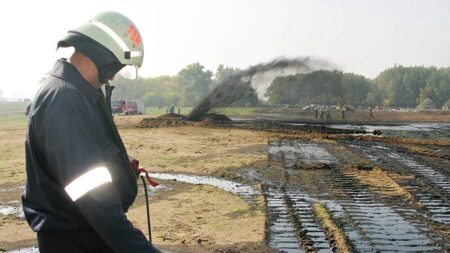
According to Kyiv, the section of the pipeline that runs through the Lviv region was severely damaged by a Russian drone attack on 27 January.
Von der Leyen conveyed the message to Zelenskyy during her visit to Kyiv, asking for the repair works to be “accelerated”. It was notable that the Commission chief delivered the request publicly at a press conference.
Zelenskyy heeded the call but warned that the intervention cannot happen “that fast” because of relentless Russian bombardment.
During an experts’ meeting on Wednesday, Ukraine provided a document, seen by Euronews, saying that it was “actively carrying out repair and restoration works”.
“Security and stabilisation measures continue amid daily threats of new missile attacks,” the document said. “The Ukrainian side is interested in restoring transit as soon as possible within the available legal framework.”
On Thursday, Orbán proposed to set up a fact-finding mission to inspect the damaged section of the pipeline. Slovak Prime Minister Robert Fico, whose country also depends on the Druzhba, endorsed the initiative and urged Brussels to join in.
The Commission welcomed the idea, seeing it as a first step to diffuse tensions, but did not make any commitment. The plan remains in very early stages, and the executive does not have a track record of participating in exercises of this type.
Although the fact-finding mission offers a potential way out, it is still unclear whether Kyiv will grant permission to inspect the site. Energy infrastructure is considered a strategic point, which further complicates access.
After a phone conversation with Zelensky, Fico said: “I gained a clear impression that the Ukrainian side has no interest in resuming the transit of oil through Ukrainian territory.”
The Croatian option
Given the dangerous and unpredictable circumstances on the ground, Kyiv has not yet provided Brussels with a clear timeline on when and how Druzhba will be repaired.
As a result, the Commission is promoting the Adria pipeline, also known as JANAF, which begins in Croatia and connects several Central European nations, as the most viable alternative to ensure that Hungary and Slovakia continue to receive oil supplies.
JANAF said this week that it has the capacity to meet “the full annual needs” of Hungary (5.75 million tons of oil) and Slovakia (4.66 million tons). Both countries have already tapped into their emergency reserves in reaction to the Druzhba interruption.
Croatian Prime Minister Andrej Plenković echoed the message to make the case for Adria, which offers lucrative opportunities for the national economy.
“Croatia is here as a neighbour, partner and friend to ensure the energy security and smooth functioning of the economies of both Hungary and Slovakia,” Plenković said.
The Croatian pitch has gained traction in recent days, even though Budapest and Slovakia insist they are exempt from sanctions and the Russian crude they buy comes at a heavy discount compared to the alternatives.
The MOL Group, Hungary’s energy major, has asked Croatia to transport Russian crude through Adria by making use of the open-ended exemption to which Hungary and Slovakia are entitled. MOL has threatened a lawsuit if the request is denied.
The Croatian government has countered the point, arguing it is not legally obliged to carry Russian oil through Adria and that EU and US sanctions must be upheld.
The legal option
EU officials are considering inventive legal avenues to lift the Hungarian veto and break the impasse on the €90 billion loan.
The clock is ticking fast: Ukraine needs a fresh injection of assistance by early April due to the complete withdrawal of American support. If the aid does not arrive in time, the country at war will have no choice but to make painful cuts to its public services.
The task is tricky because the complex texts underpinning the loan have already been negotiated by ambassadors and approved by the European Parliament. Any attempt to amend the wording and find a shortcut risks pushing back the start date.
Earlier this week, High Representative Kaja Kallas suggested the bloc could revert to “Plan A” based on Russia’s immobilised assets. But that option would upend the delicate deal struck in December and force leaders into a new contentious debate.
Belgium, the main custodian of the Russian assets, remains firmly opposed.
Triggering the so-called “passerelle clause” under Article 48.7 of the EU treaties to move from unanimity to qualified majority is a Catch-22 because it requires a unanimous vote to enable the switch, which Budapest would never permit. Meanwhile, the suspension of Hungary’s voting rights through Article 7 is lengthy and cumbersome.
The declarations denouncing Orbán’s veto have shed light on two additional provisions.
First, Article 4.3, which enshrines the principle of sincere cooperation and compels all member states to “refrain from any measure which could jeopardise the attainment of the Union’s objectives”. The Commission has used this passage in the past to launch legal action against governments whose actions undercut mutual trust.
Second, Article 327, which relates to enhanced cooperation, the mechanism that Hungary, Slovakia and the Czech Republic invoked in December to secure an opt-out from the €90 billion loan, to be financed by common debt.
Article 327 states that those excluded from enhanced cooperation, like Hungary in this case, “shall not impede its implementation” by those included.
The SAFE option
Tangled in the dispute over the Druzhba pipeline is a multi-billion-euro programme that the EU established last year to boost defence spending through cheap loans.
SAFE, as the scheme is known, is based on low-interest loans that the Commission raises on the markets and wires to member states. Those who want to tap into the €150 billion pot need to present a national plan detailing their objectives and investments.
As it happens, there are only three plans left to be approved: Hungary (€16.2 billion), France (€16.2 billion) and the Czech Republic (€2 billion).
The Commission insists the three plans are “still being assessed” and refuses to make any connection between SAFE and Druzhba. But the convergence of events has inevitably thrust the defence programme into the political storm.
Some diplomats believe that the procedural delay has given Orbán an additional pressure point to demand concessions in exchange for lifting his veto and that the Commission now finds itself at a perilous crossroads.
If Hungary’s €16.2 billion plan is approved at this stage, Orbán will claim it as a political win ahead of the elections on 12 April. If it is rejected, he will have a chance to double down on his grievances and dig in his heels.
The Commission has grown increasingly concerned about the instrumentalisation of its decisions on the campaign trail as Orbán claims Brussels and opposition candidate Péter Magyar have entered a secret deal to defeat him.
It would not be the first time the Hungarian premier has played the money card: he has repeatedly lashed out against Ursula von der Leyen for withholding cohesion and COVID funds in response to the democratic backsliding in Hungary.
Read the full article here