



NEWYou can now listen to Fox News articles!
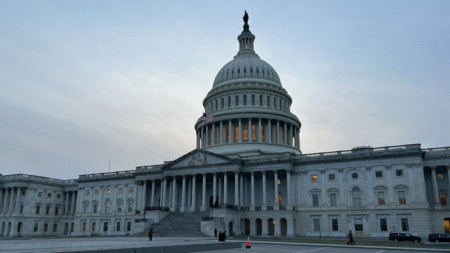
The Supreme Court appeared poised to give President Donald Trump one of his biggest legal setbacks in office, offering strong support Wednesday for Federal Reserve Governor Lisa Cook remaining in her leadership position — at least for now.
The justices debated in their packed courtroom whether Trump has broad unilateral executive authority to fire someone from the central bank, despite its special status as a stand-alone federal agency.
During nearly two hours of oral arguments, a majority seemed to agree the Fed’s unique public-private hybrid structure limited removal without clear “cause,” and that Trump did not meet his legal obligations when seeking Cook’s dismissal for alleged private mortgage fraud.
REPUBLICAN SENATOR VOWS TO BLOCK TRUMP FED NOMINEE OVER POWELL INVESTIGATION
The case comes before the Supreme Court on an emergency basis — with the government seeking to dismiss Cook now, for as long as the courts decide the matter, a process that could last months.
The justices could decide the larger constitutional questions now or give the lower federal courts a chance for a full examination of the facts, with some guidance from the high court on the standards of “for cause” removal.
In arguments, most on the court seemed skeptical of Trump’s actions.
“That’s your position that there’s no judicial review, no process required, no remedy available?” Justice Brett Kavanaugh asked Solicitor General D. John Sauer. “Very low bar for cause that the president alone determines. And that would weaken, if not shatter, the independence of the Federal Reserve.”
“Let’s talk about the real-world downstream effects of this. Because if this were set as a precedent, it seems to me just thinking big picture, what goes around, comes around,” added Kavanaugh, who has typically been an ardent defender of executive power. “All the current president’s appointees would likely be removed for cause on January 20th, 2029 — if there’s a Democratic president or January 20th, 2033. And then, we’re really at, at will removal.”
Others on the bench raised questions of “public confidence” if the president could fire Fed governors without fully explaining or justifying the reasons.
“We have amicus briefs from economists who tell us that if Governor Cook is” fired, asked Justice Amy Coney Barrett, “that it can trigger a recession. How should we think about the public interest in a case like this?”
The Competing Arguments
Cook’s lawyer told the nine-member bench court the Federal Reserve System was created by Congress in 1913 as a wholly independent entity, to insulate it from political influence, and from any one president “stacking the deck” with their own nominees.
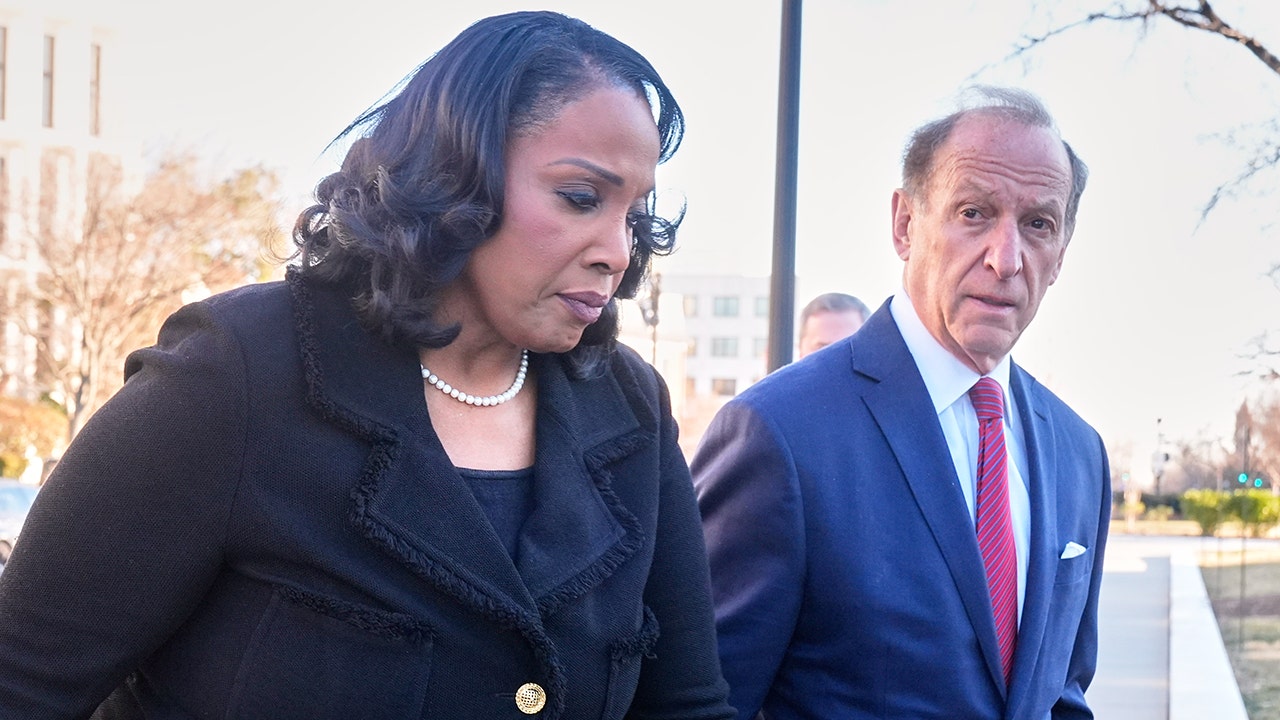
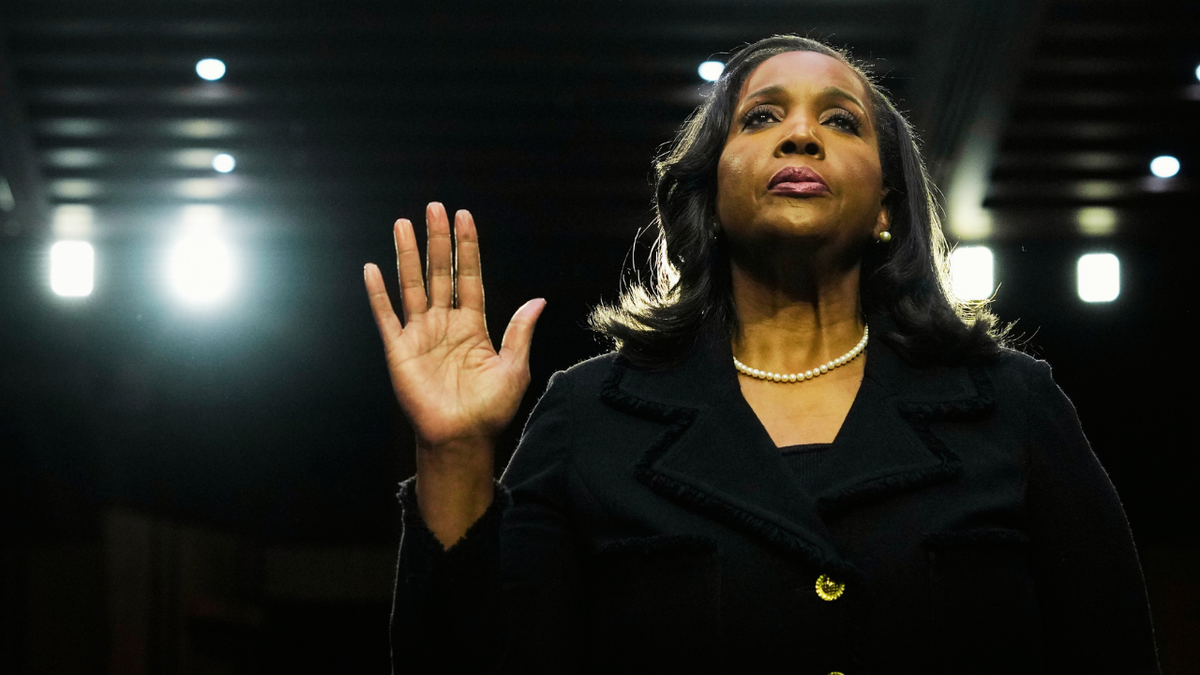
The first Black female Fed governor claims to be a political pawn in Trump’s very public efforts to dictate the board’s interest rate policies and by exploiting what she calls “manufactured charges” of wrongdoing.
GOP SENATOR SUGGESTS FED CHAIR POWELL RESIGN NOW TO DODGE POTENTIAL CRIMINAL INDICTMENT
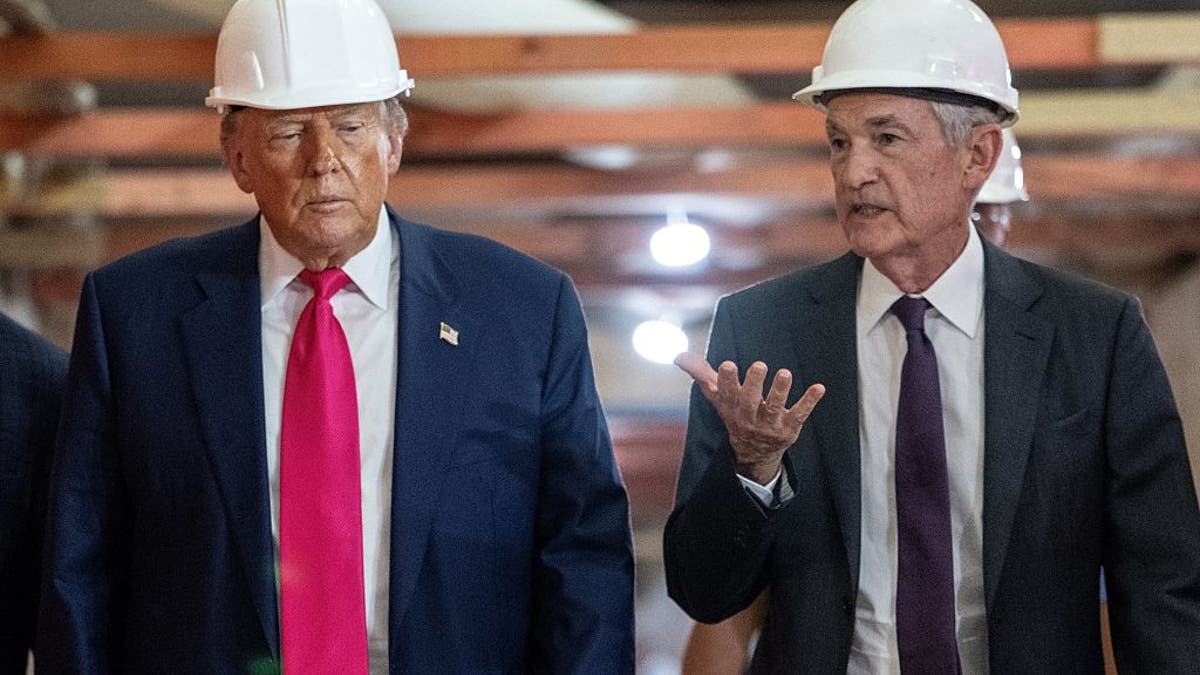
With Cook in the audience as a show of support was Fed Chairman Jerome Powell, whom Trump has also sought to remove in a broader, ongoing feud with the agency over the pace of lowering benchmark interest rates to spur the domestic economy.
But the Trump Justice Department said he had executive authority to seek Cook’s removal, free from judicial review.
Independent Agency Review
The conservative court has allowed much of Trump’s challenged executive actions to be enforced at least temporarily — including upholding firings of members of the National Labor Relations Board, the Merit Systems Protection Board, the Consumer Product Safety Commission, and the Federal Trade Commission, despite federal laws protecting them against removal without good cause.
The justices last month heard arguments in a separate case, on Trump’s efforts to remove Democrat-appointed Rebecca Slaughter from the Federal Trade Commission (FTC), which, like the Fed, is a congressionally-created independent, multi-member regulatory agency.
The 6-3 conservative majority in that petition appeared ready to rule for the president when it involves semi-autonomous agencies like the FTC.
But in the Federal Reserve dispute, the high court clearly indicated this institution was different.
In the Cook case, lower courts ruled she did not receive due process when the president tried to fire her.
The current posture of the case is whether Trump can remove Cook — at least temporarily — while the dispute continues to play out on the merits.
The “for cause” removal restriction’s constitutionality is not directly before the justices, but nevertheless played a key role in the oral argument session.
The Supreme Court could go ahead and settle the competing issues now — which seems unlikely — or leave it to the lower courts to continue hearing the appeal, with guidance on how to proceed.
Focus on the Fed
Though its leaders are appointed by the president and confirmed by the Senate, the seven-member board is considered an independent government agency, since its monetary policy decisions do not need presidential or legislative approval. But the agency does provide Congress with regular reports on its work.
It also does not receive any federal funding, and the terms of the members of the board of governors span multiple presidential and congressional terms.
Under law, the Federal Reserve’s leadership has a three-fold mandate: “maximum employment, stable prices, and moderate long-term interest rates.”
The 12 Federal Reserve Banks are not part of the federal government, but set up like private corporations, and regionally located across the country.
In arguments, most justices agreed Cook deserved some chance to make her case that a dismissal would be improper.
SUPREME COURT PREPARES FOR MAJOR TEST OF PRESIDENTIAL POWER IN TRUMP EFFORTS TO FIRE FEDERAL RESERVE GOVERNOR
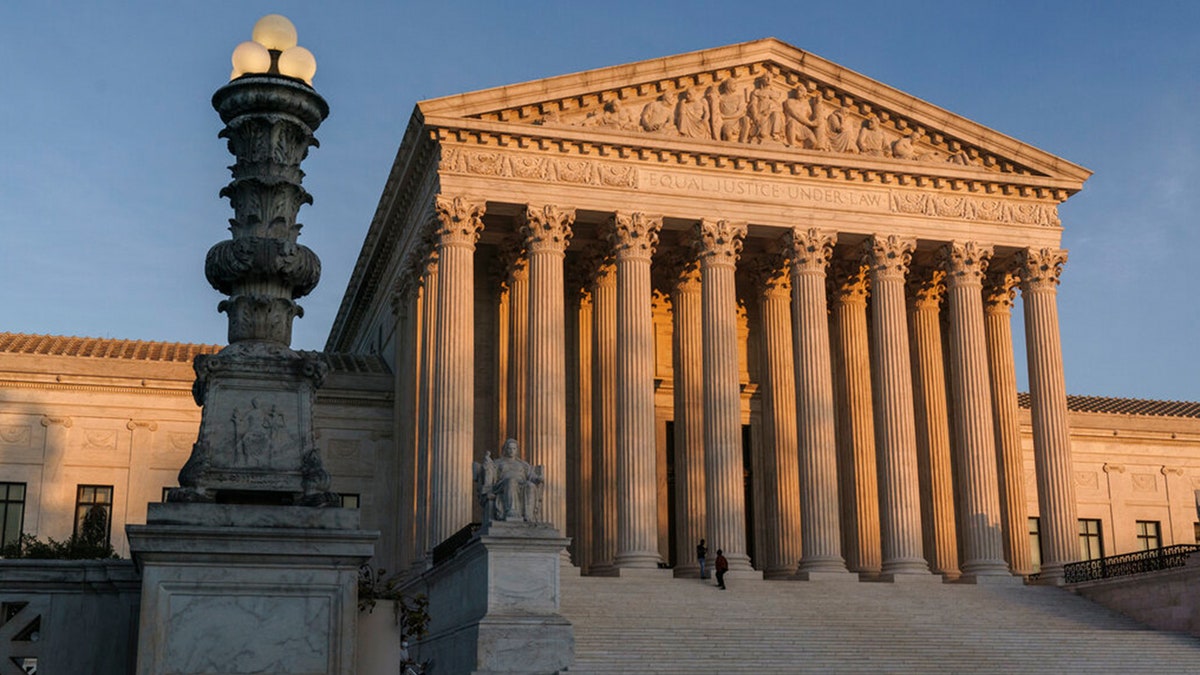
“Why are you afraid of a hearing?” asked Justice Amy Coney Barrett, at one point.
Justice Neil Gorsuch asked: “Let’s, just suppose with me, hypothetically, for the moment, that the court read the act to require notice and a hearing … What would that hearing look like?”
Gorsuch asked if the president could just call Cook into the White House Roosevelt Room. “So just a meeting across a conference table, finish with ‘you’re fired?'”
But Chief Justice John Roberts repeatedly said a hearing on the allegations would serve little use if her only defense is she made an “inadvertent error” on her mortgage application.
The public session also focused extensively on the standards of “cause” that would permit Cook’s dismissal. Several justices suggested the mortgage fraud claims against Cook were not serious enough to trigger emergency action requested by the government to remove her at least temporarily.
Existing statutory removal protections include the so-called “INM standard” — “inefficiency, neglect of malfeasance.”
“The question becomes, is it grossly negligent to make a mistake on a mortgage application?” said Justice Sonia Sotomayor.
Justice Samuel Alito also asked why the case was handled “in such a hurried manner,” suggesting concern the allegations against Cook have not been properly adjudicated, either by the courts or by the president himself.
In a statement after the hearing ended, Cook said her case is “about whether the Federal Reserve will set key interest rates guided by evidence and independent judgment or will succumb to political pressure.”
The Impact
The Federal Reserve Act (FRA) says the president can only remove members of the Fed board and FOMC “for cause.” The exact parameters of that standard were not spelled out in the original law, and never fully tested in the courts.
Cook — appointed for a 14-year term by former President Joe Biden in 2023 — will remain on the job at least until the court decides the current legal questions.
SUPREME COURT TEMPORARILY GREENLIGHTS FIRING OF BIDEN-APPOINTED FTC COMMISSIONER
No president has fired a sitting Fed governor in the law’s 112-year history.
She strongly denies accusations of falsely claiming two homes in Georgia and Michigan as her primary residence to secure better mortgage terms. She has not been charged with any crime.
Cook sued the administration last August in a bid to keep her job.
Just after the court arguments ended, Cook released a statement saying her case is “about whether the Federal Reserve will set key interest rates guided by evidence and independent judgment or will succumb to political pressure.”
The next Federal Open Market Committee (FOMC) meeting is scheduled for January 27 and 28, with an expected interest rate decision. Both Powell and Cook are each set to participate.
CLICK HERE TO DOWNLOAD THE FOX NEWS APP
Financial markets, private banks, businesses, and investors will be closely watching what the Supreme Court does in the Federal Reserve dispute, and a separate pending appeal over Trump’s sweeping reciprocal global tariffs.
A written ruling in that import tax case, which was argued by the justices in November, could come at any time.
The Fed case is Trump v. Cook (25a312). A decision there could come relatively quickly within weeks, or potentially as late as June or early July.
Read the full article here