



For most of my life, I’ve moved from one pocket of congestion to another — from the crowded streets of Hyderabad to the tram-clogged corridors of Camberwell during my RMIT days, then on to the traffic of Parramatta and Chatswood in Sydney. After time spent living by Essendon’s roundabout of chaos on Keilor Road, it’s fair to say I was looking for a change.
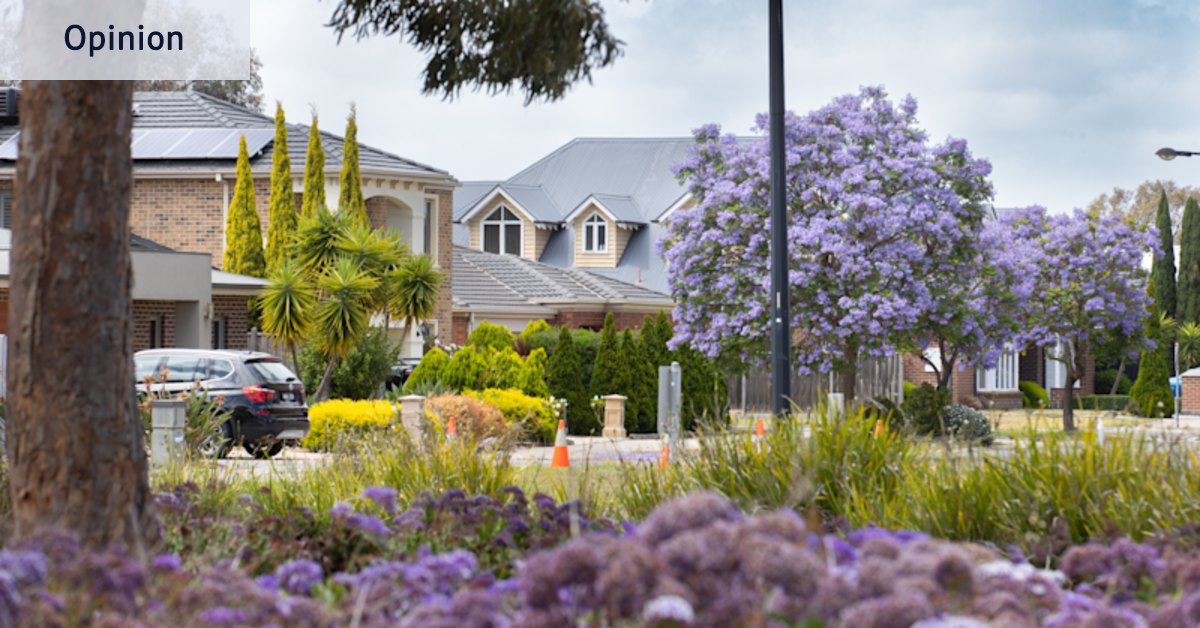
My family wanted a breath of fresh air. A place with wide, leafy streets that have barely a car parked along them and big front yards where you can hear the birds in the morning. To get that calm feeling of suburban life after the roads finally open up.
So we made the very intentional decision to move west, to Taylors Hill. Some friends thought we were “moving too far out”, but it never felt that way to us. We were looking for somewhere that balanced lifestyle with affordability, with enough room for kids to grow up riding bikes and playing games in the street.
When we arrived 10 years ago, Taylors Hill had that “almost-finished” feel — new homes settling into place, young families unpacking moving boxes, and streets still finding their rhythm. Back then, you could drive along Taylors Road without feeling like you were joining the peak-hour Olympics, and Westwood Drive felt more like a local shortcut than the arterial it has reluctantly become.
Look at my suburb on Google Earth – it’s remarkably square-shaped, isn’t it? – and you’ll take for granted that it is fully developed. When we first arrived, Taylors Hill felt like two distinct suburbs — the older, established pocket around Watervale Shopping Centre in the south, and the newer areas still taking shape along Gourlay Road, in the west.
I’ve watched the half-built estates gradually fill up with schools, parks, and housing developments as it became the complete place it is today. At last count, we had almost 20,000 residents.
On the western edge of Melbourne, Taylors Hill is not the loudest suburb, but stands out for its balance of space and accessibility. It’s less than 30 minutes’ drive to the airport and, on a good run, the city, 15 minutes to Watergardens Shopping Centre, Keilor Plains or Caroline Springs stations, and has reliable bus links. Daily essentials like shops and schools are within walking distance, making it self-contained.
Some people look at a map and imagine the suburbs here in Melbourne’s north-west are just cookie-cutter repetitions. They’re not. There’s the older suburbs of Delahey and Hillside, the ever-polished Caroline Springs, and the youthful sprawl of Fraser Rise and Deanside.
Taylors Hill stands out with something increasingly rare in modern Melbourne: modern homes on generous 500 to 900 square metre blocks. That means they’re big enough for cricket in the backyard or a trampoline the kids swear they’ve outgrown but still use at every BBQ.
Taylors Hill had a reputation for restrictive covenants with requirements such as minimum house sizes, muted colour palettes and front landscaping. By the time we started building in 2014, many of the more onerous rules had softened or expired.
But the sensible ones endured: double garages remained compulsory, brick homes were still the norm, and council planning rules — such as a minimum five-metre front setback — continued to shape the suburb. At first, these rules felt mildly constraining. Living here, however, has taught me their quiet value.
In Taylors Hill, streets are wider, sightlines are clear, and there is a sense of order that makes life calmer. You can spot a child darting across the road from a distance, and that visibility brings a quiet reassurance.
Within this planned suburb, there is history at the heritage-listed Dalgook Farm complex, now known as Morton Homestead. The Federation-style homestead, built in 1906, has been thoughtfully repurposed into a park.
While Taylors Hill is mostly residential, we borrow many of our amenities from our neighbours. Caroline Springs, with its lake and shopping precinct, is the place to go for a good coffee. Hillside, with its community facilities, is where you go for weekend sports. Delahey for handy access to transport links. It’s like living in the centre of a tight family cluster.
Today, Taylors Hill boasts what I believe is the best Coles in all of Melbourne (yes, I said it). Why? I’ve seen it go from a convenient corner shop to a community landmark where you can’t buy milk without bumping into someone you know. It’s clean and well-stocked compared to others and the kind of place where the cashier knows which footy team your kids barrack for.
Plus, it avoids that cramped, chaotic vibe you find elsewhere – the aisles are wide enough to actually get your trolley through on a busy Saturday. It feels like a community hub, not just a place to dash in and out.
Taylors Hill doesn’t make headlines often, and when it does, it’s sometimes for the wrong reasons, like crime reports or the occasional shooting story. A period of trouble in 2018 — including a fight among two groups of youths – did spark concern and cast a shadow on the suburb’s reputation.
But those of us living here view it as the kind of growing pain that often comes with a rising population of teenagers and view the suburb overwhelmingly as safe, family-oriented, and connected.
We’re defined by the quiet strength of our people, our diversity, and how the community thrives without fanfare. Analysts have frequently named Taylors Hill among the best suburbs in the country for raising a family and a house on Frome Court recently sold for $2.1 million.
What I treasure most here is the community — this mix of first-generation migrants from every corner of the world living alongside 10th-generation Australians, all settling into routines that feel distinctly, proudly suburban.
Halloween here is no small affair. Some years, I’ve misjudged badly and had to raid my kids’ stash to avoid a riot at the door. I think of Easter egg hunts and kids sprinting across lawns like it’s the Olympic qualifiers and houses glowing at Christmas, kids up well past bedtime and parents chatting on driveways, pretending they’re not freezing.
I’ve watched childhoods unfold in front of me. The little boy who used to wobble past my house on trainer wheels now rides a motorbike and waves on his way to work. The primary schoolers who once knocked on our door for trick-or-treat now talk to me about their uni exams and trade apprenticeships. Their parents and I often look at each other, wondering when exactly this happened.
It’s in those simple moments — leaning over the fence to chat, dragging the bins out at the same time as my neighbour for the 100th consecutive week, sharing leftover Diwali sweets or homemade Anzac biscuits — that I’m reminded how woven into each other’s lives we’ve become. It’s like we’re living our own real-life episode of Neighbours.
Taylors Hill is suburban Australia at its finest, and filled with the kind of small, everyday moments that make the passing of a decade feel like a blink.
Giridhar Vemulapalli is a microbiologist and project manager in clinical research.
From our partners
Read the full article here