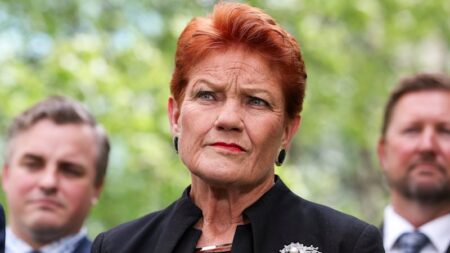




When Opposition Leader Jess Wilson toppled crime-focused Brad Battin as Liberal leader late last year, she sought to make housing affordability a key plank of the party’s re-election pitch.
Now, with less than nine months until the November election, the Coalition has finally unveiled its first major housing policy, which focuses on its high-density push in inner-Melbourne Labor and Greens seats.
It marks a direct challenge to the Labor government, which has staked much of its third term on a pledge to deliver homes for Millennials and spread its high-density agenda across Melbourne suburbs. Premier Jacinta Allan routinely ridicules the Liberals as a party of “blockers” standing in the way of young Victorians while crusading against NIMBYs.
Labor’s housing policy has been controversial – stripping objection rights away from local communities and councils in favour of fast-tracking planning applications. But the Liberals’ counter policy – which protects inner and middle ring suburbs from intensive development – has failed to win the backing of many prominent economists and urban planners.
What are the plans?
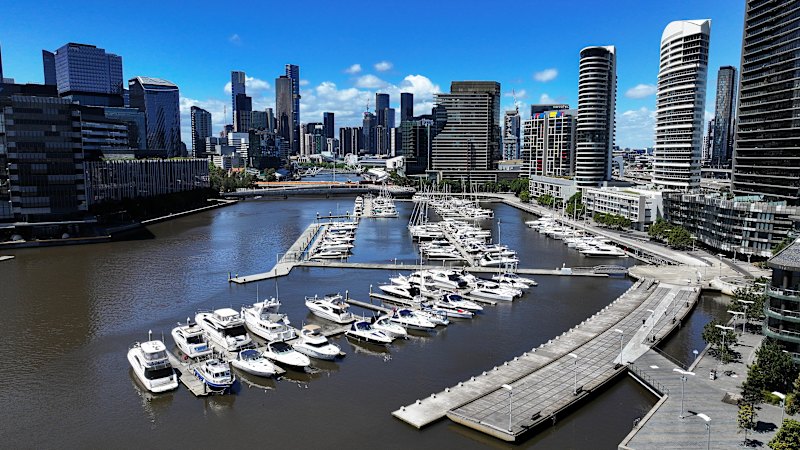
The centrepiece of the Liberal plan is an expansion of the Capital City Zone. Under the proposal, the high-density zoning currently reserved for the CBD would be extended to swallow Southbank, Parkville, North Melbourne, Collingwood, Fitzroy and Fishermans Bend.
The policy would allow higher towers in these suburbs, including heritage areas, to rejuvenate the city centre following the pandemic. Wilson said the plan would feature scaled-down development as it moves towards established residential streets, but details on specific height limits and house-completion targets remain limited.
It’s a direct counter to Labor’s activity centre policy, which aims to rezone 60 suburban hubs near public transport – including many in the middle ring – for towers of up to 20 storeys to deliver 300,000 new homes by 2051.
The Coalition also pledged to break a bottleneck in Melbourne’s sprawling urban fringe by imposing a two-year limit on the approval of 27 Precinct Structure Plans. Wilson argues the current system is “broken”, with some timelines stretching into the 2030s. Labor’s 10-year plan currently aims to approve 27 new or updated structure plans to deliver 180,000 homes in greenfield areas.
The Liberal plan to protect middle-ring suburbs from high density has failed to win the backing of several prominent urban experts. Stephen Glackin, a senior research fellow at Swinburne University, said the policy ignores the fact that Melbourne is becoming a city of “urban villages”, where people stayed close to where they live.
“To ignore the amenity that the middle suburbs has is nonsense. These are well-serviced areas and if they get more dwellings there, they will only get more vibrant,” he said. “The state is looking at the city as a whole, and rightly so.”
Grattan Institute economic policy program director Brendan Coates said the opposition’s plan to expand the CBD was “very back to the future”.
“It’s really just doubling down on the thing Victoria is already doing well,” he said.
He said Victoria already built many homes on the urban fringe, which was a key reason for the relative affordability compared to other states.
But Urban Development Institute of Australia chief executive Linda Allison welcomed the greenfield plan, saying costly delays were hurting affordability in Melbourne’s newest suburbs where the majority of new homes are built.
Labor’s plans also face significant hurdles. Glackin noted that activity centre developments might take 20 to 30 years to materialise due to slow building rates and the difficulty of developing on small subdivisions.
Data from the Grattan Institute shows that of the 600,000 homes possible in Labor’s activity centres, only about 110,000 – roughly 18 per cent – are currently economically feasible to build.
Critics and local councils have also slammed Labor’s program as a top-down planning takeover that erodes community appeal rights.
David Hayward, emeritus professor of public policy at RMIT, has questioned the core logic of both parties’ plans, arguing they rely on unproven assumptions about housing shortages while ignoring deeper market dysfunction. He has called for greater government intervention in the housing market instead of the market-driven approach.
Hayward said the Liberal plan was firmly focused on the election as it shielded inner and middle-ring suburbs the party wanted to win or retain, and shifted high-density development into safe Labor and Greens seats. He noted there was already a surplus of unsold apartments in the CBD.
What do Millennials want?
When 25-year-old Mohi Gholamy, who works in the property industry, was deciding where to buy, she was torn between buying an apartment somewhere she wanted to live or buying a house in the outer suburbs that would have a better capital return.
Ultimately, she decided to buy a $700,000 two-bedroom apartment in the inner-eastern suburb of Balwyn, a seven-minute drive away from the home she grew up in.
“Some of my work mentors suggested buying in an outer ring suburb for investment growth, but I didn’t want to be that far away from work. It was more of a lifestyle choice,” she said. Gholamy sees the apartment as a place to live, not to make money off, and intends to buy an investment property later.
She said that when buying an apartment she prioritised spacious properties with lots of natural light, a central location near shops and transport, and a lack of defects.
“I’m really happy with the decision. I’ve never had to use my car so little,” Gholamy said.
This preference for staying local mirrors the premier’s own pitch to younger voters: that Labor’s activity centre program will help make sure Millennials aren’t priced out of the suburbs they want to live in.
“We’re making sure more Victorians can live in the suburbs they grew up in – with more homes close to trains and trams,” Allan said earlier this month.
The missing middle
The Coalition’s policy was notable for its silence on the “missing middle” – medium-density townhouses and low-rise apartments.
In early 2025, the Labor government introduced a statewide Townhouse Code, setting uniform standards for low-rise developments. Under these “deemed to comply” rules, if a project meets the code, councils must approve it without the risk of a VCAT challenge.
The Coalition opposed the code at the time, arguing it strips power from local communities. While Liberal leaders in NSW have since called for the state to copy Allan’s reforms, the Victorian Coalition under Wilson is yet to state its position on the code. However, in a speech to the Property Council last year, Wilson said she would prioritise medium-density housing, such as townhouses and small apartment blocks.
Coates said the Townhouse Code was currently the government’s strongest policy for supply. He said the code unlocked capacity for nearly 1 million extra homes, of which 400,000 can be profitably built today – far exceeding the viable output of the activity centres.
Parts of the code, as well as other planning reforms that stripped away third-party consultation, faced strong criticism from community groups and the Municipal Association of Victoria, which said councils were being unfairly blamed for housing shortages and stripped away communities’ consultation and objections rights.
The MAV declined to comment on the Liberals’ new housing policy.
Planning Institute Victoria president Patrick Fensham said the Coalition’s proposal would result in more apartments in the inner city, and detached housing in the outer ring, but it missed the opportunity for a greater diversity of housing in middle-ring suburbs.
But in reality, he said, the potential for new housing around activity centres was already “baked in”, and it was unlikely the Coalition could roll it back.
Fensham said that proposed expansion of the CBD into surrounding neighbourhoods would be limited by the availability of sites big enough for large apartment buildings.
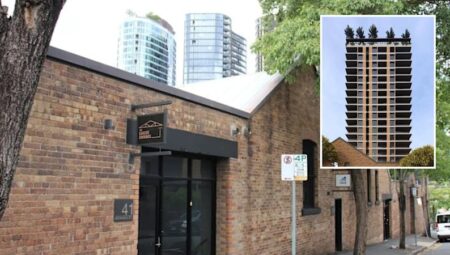
“Collingwood and Fitzroy are places that are fine-grain subdivisions. It might seem like a good idea to get higher density in areas with good access to the city, but there is a structural barrier to achieving that,” he said.
Fensham said there was already potential for higher-density living in the existing CBD zone but it was being held back by a soft development market.
Industry figures warn that planning reform alone will not solve the crisis. Beau Arfi, a property investor and chief executive of Maple Property Group, said high taxes and construction costs remain the primary barriers to new supply.
“If tax settings discourage investment and development, projects simply won’t proceed, regardless of planning approvals,” he said. “Victoria needs both planning reform and tax reform.”
In its election platform, Urban Development Institute of Australia called for urgent tax reform, saying windfall gains tax and additional surcharges on foreign investors should be removed to boost supply.
Start the day with a summary of the day’s most important and interesting stories, analysis and insights. Sign up for our Morning Edition newsletter.
 Daniella White is a state political reporter for The Age. Contact her at da.white@nine.com.auConnect via X or email.
 Patrick Hatch is transport reporter at The Age and a former business reporter.Connect via X or email.
From our partners
Read the full article here