



At its heart, science is about the joy of discovery — extending the boundaries of what we know and learning more about the world and our place in it. Research over the last year was no exception, delighting us with the silly to the profound. So take a minute to savor 2025’s smattering of scientific treats. After all, research shows that cultivating small moments of joy is quite good for you.
Tiny elephant nestles in human cells
Measuring just 10 micrometers from trunk to tail, a tiny elephant was 3-D printed inside living cells. The minuscule feat could lead to new ways to control cells, researchers say. More delightful still is the playful absurdism of a very, very tiny behemoth.
Gender gap shrinks for cooking and cleaning

Men are spending more time on jobs that traditionally fall to women. Over the last two decades, the gap between women’s and men’s efforts shrank for tasks such as cooking and cleaning. The score isn’t even yet — women are still putting in 2.5 hours for every man’s one hour. But still, as one sociologist puts it, “there is a hopeful story here.” Here’s hoping the gap shrinks even more in 2026.
Vaccines could be delivered with floss
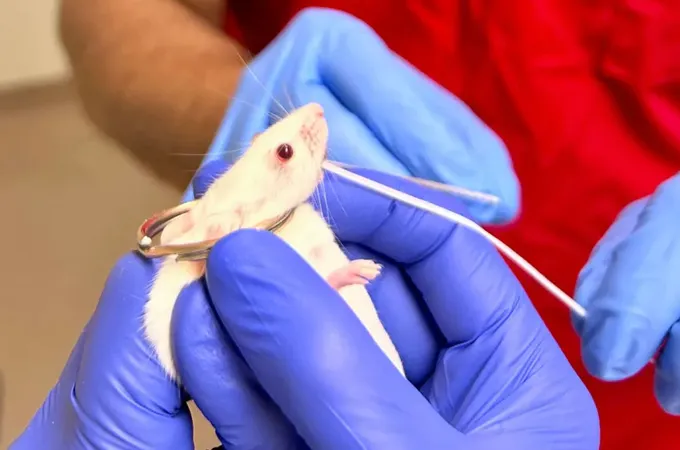
This past year found some researchers gently flossing mice. It sounds funny, but the murine dental care was in service of a worthy goal — the possibility of vaccinations with dental floss. Mice were vaccinated against the flu with nothing more than a gentle flossing with specialized floss. This ingenuity may lead to convenient and less painful ways to build up immunity.
Good news amid bad news for axolotls
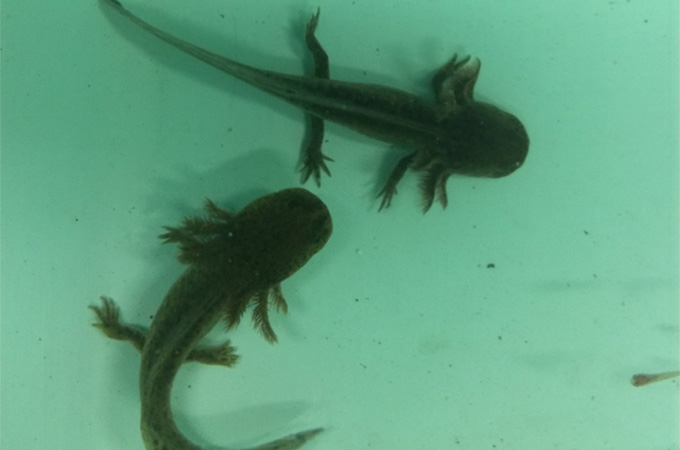
Wild axolotls are facing extinction. That’s the bad news. But take heart: Cutie-pie axolotls bred in captivity may be able to replenish their wild brethren’s population, a conservation study suggests. These adored aquatic salamanders may just have a shot at survival.
Posterior disguises help blowflies blend in
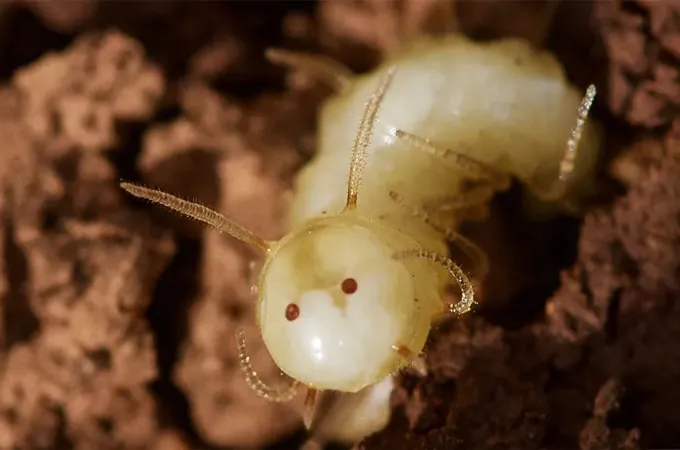
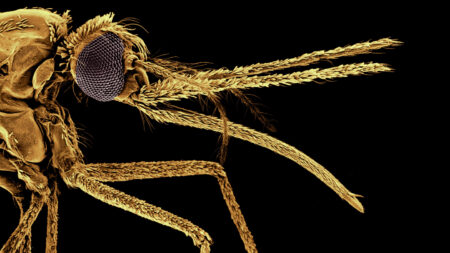
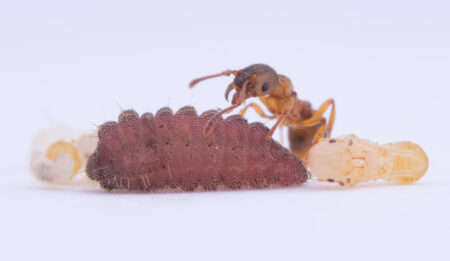
A study of blowflies gives new meaning to the term “butthead.” Larval blowflies squatting in a termite nest in Morocco surprised scientists with their rear-end mimicry. These larvae had false termite faces on their rears, including antennae, eyes and other small bits, all of which fooled the termites into accepting the interlopers.
More butt news, this time for people
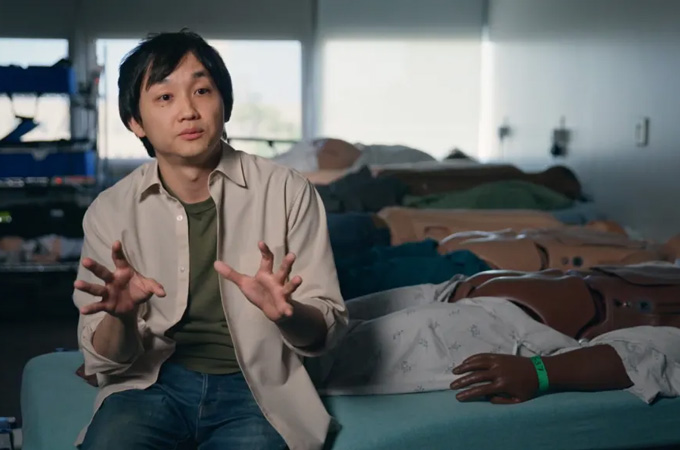
Humans breathe air in through the nose and mouth, but there is another, less enticing, entrance. In a heroic act of volunteerism, 27 men gamely accepted an oxygen-rich liquid up the anus and held it in for an hour. Most of these intrepid volunteers tolerated the liquid. Future tests will reveal whether these intestinal deliveries can raise oxygen levels in the bloodstream.
The sound of two hands clapping, explained
Clapping is one way we express joy. Now we know the physics that lets us make this happy noise. When two enthusiastic hands meet for a clap, the resulting sound can be explained by a phenomenon known as the Helmholtz resonance. This concept describes the sound made when a person blows across the top of a glass soda bottle. A Helmholtz resonator is at work as sound waves burst forth from clapping hands, scientists report.
OK 2025, you’ve taken your bow. We welcome 2026 to the stage, with its scientific joys just waiting to be discovered.
Read the full article here