




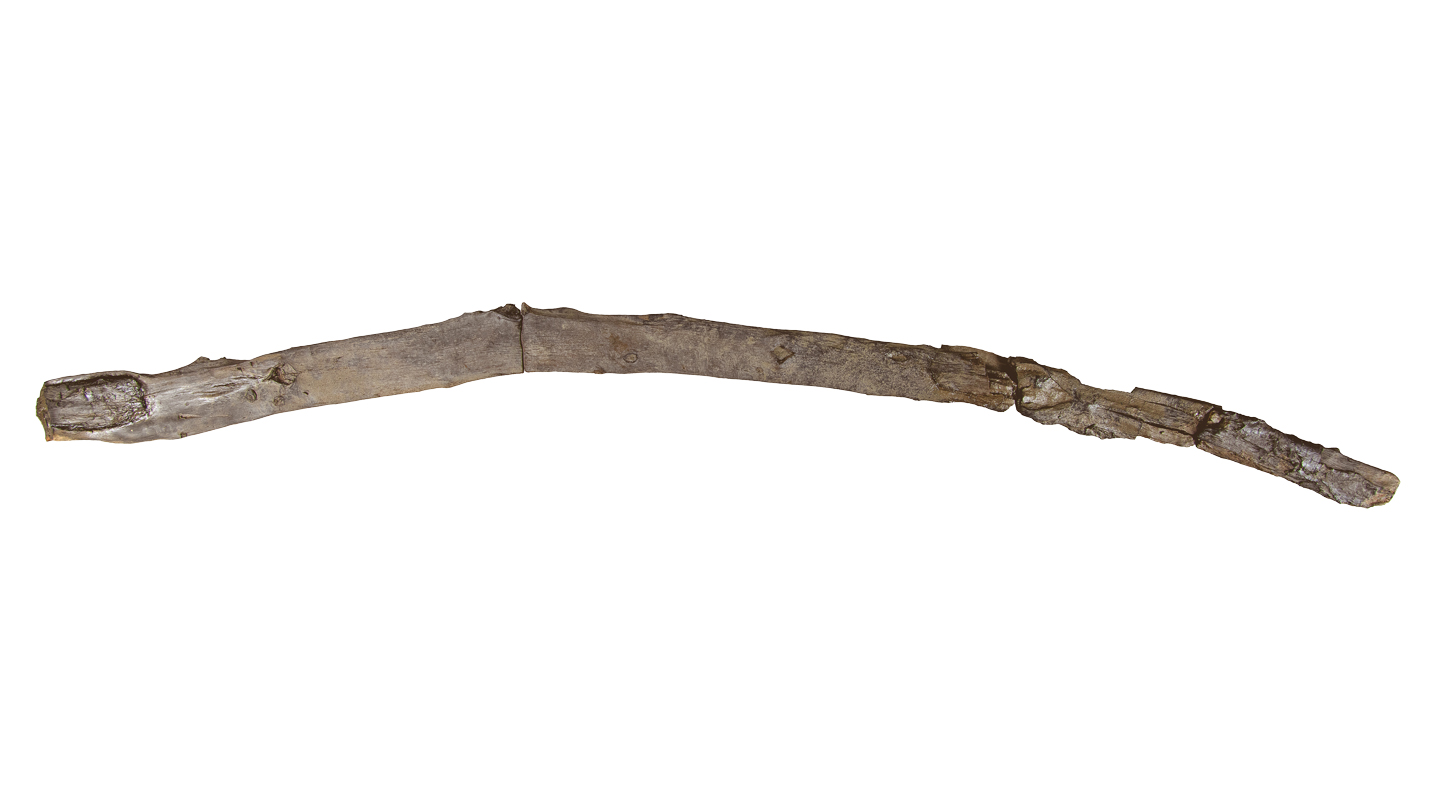
A digging stick and a tiny tool of unknown purpose are among the oldest handheld wooden tools ever found. The objects, from 430,000 years ago, indicate early human ancestors were using wood for tools, weapons and maybe shelters.
Our team was “so lucky, incredibly lucky” to have found objects like this, says paleolithic archaeologist Annemieke Milks of the University of Reading in England. Wood usually rots quickly, she says, but it was preserved at an ancient site in what’s now the Peloponnese Peninsula of Greece. That’s because the ground there was heavily waterlogged when the objects were made and because they were buried so deep — about 30 meters down, Milks and colleagues report January 26 in Proceedings of the National Academy of Sciences.
The objects are among thousands of pieces of wood, bone and stone recovered from a lignite (brown coal) mine at Marathousa, near the center of the peninsula. The site was an ancient lakeshore when the tools were made but it has since dried up. The discovery is one of several in recent years that have given scientists a new understanding of our ancestors’ use of wooden tools over hundreds of thousands of years.
Milks and her colleagues show that the stick, which was found in four pieces, was worked to remove branches and to create a handle. The tool is 81 centimeters (or about two-and-a-half feet) long. Use-wear analysis indicates it was used for digging, while geomagnetic and other analyses have confirmed the dating. Milks thinks the stick was fashioned from a thin alder trunk, but it has been so badly squashed that it is difficult to tell.
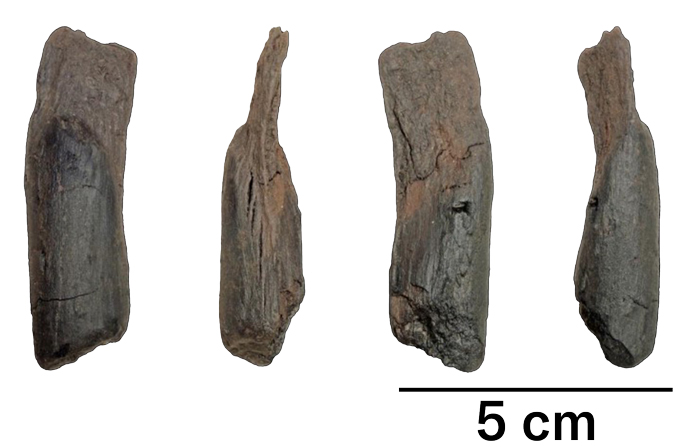
The second wooden tool is more mysterious. Less than eight centimeters long and made of willow, it has clearly been shaped for some reason, but its purpose is unknown. It may have been used with some of the ancient stone or bone tools found at the site, to “finish off” work on another object, Milks says.
Because they rot quickly, wooden artifacts are rare. In 2019, scientists found shaped logs at Zambia’s Kalambo Falls they dated to about 480,000 years ago (a digging stick there was dated to between 390,000 and 324,000 years ago). Early Neandertal wooden tools from Italy — a wedge, a digging stick and handles — are dated to about 171,000 years old, while Neandertal wooden spears from between 200,000 and 300,000 years ago have been found in Germany.
In 1989, a highly-polished piece of wood about the size of a book and dated to 780,000 years ago was found on the banks of the Jordan River. The archaeologist who led that excavation, Naama Goren-Inbar of the Hebrew University of Jerusalem, says that the object was part of a handheld tool, but both ends are now broken off, making that hard to confirm.
These finds hint at the wooden technologies once used by hominids but now lost, says anthropologist Bruce Hardy of Kenyon College in Gambier, Ohio. Neandertals, in particular, made tools and other objects from wood and plants. His own work includes research into a piece of Neandertal string. Other studies indicate Neandertals used glue.
“We’re finding only a very small amount of the material culture that was made by these peoples, because it’s all perishable,” Hardy says. “This is one of the areas where we can learn more new stuff, by finding and analyzing these perishable materials.”
Archaeologist Larry Barham of the University of Liverpool in England, who made the discoveries at Kalambo Falls, laments that so few wooden artifacts from humanity’s distant past have survived. “We are missing so much from the archaeological record of people’s day-to-day lives,” he says. The new finds give scientists a rare glimpse of what once was.
Read the full article here